If width is limited but there’s plenty of room above the appliance, a top-loading machine could be a good fit. If depth is limited but there’s enough space in front of the door, consider a shallower front-loader instead. A washer-dryer may be an option if there’s no room to air-dry clothes either, but the Verbraucherzentrale says it uses more electricity and water than separate appliances. Also check your shirts’ care labels, the load limits for the relevant programme and consumption figures based on the same comparison criteria.
Which type is right for you?
Households with a narrow space for an appliance
If the space is tight, check both the width and depth, as well as the clearance needed to open the lid or door. Top-loaders and shallower front-loaders solve different space problems; the Verbraucherzentrale describes top-loaders as machines that are loaded from above.
Households that wash shirts regularly
Choose a programme setting that matches the care labels on your cotton shirts. The Umweltbundesamt points out that maximum load sizes can vary by programme.
Smaller households that wash frequently
If your laundry loads are small or vary in size, it’s worth considering drum capacity alongside consumption figures for the Eco programme. The European Commission describes Eco 40–60 as a programme for normally soiled cotton that, according to its care label, can be washed at 40 °C or 60 °C.
What should you look for when buying?
Narrow top-loader
A better fit if: width is the main constraint and there’s enough clearance above the appliance to open the lid.
Things to weigh up: The depth and connections need to fit too; the machine’s design alone doesn’t guarantee it has a shirt programme.
Shallower front-loader
A better fit if: there’s enough width, depth is limited and there’s room in front to open the door.
Things to weigh up: The appliance’s dimensions may differ from its installation dimensions. Check the full depth, including connections.
Washer-dryer
A better fit if: there’s no room for a separate tumble dryer or clothes airer, and the shirts’ care labels allow tumble-drying.
Things to weigh up: The Verbraucherzentrale says washer-dryers use more electricity and water than separate appliances. They can also often dry only part of the wash load at a time.
| Priority |
What to check when buying |
Who it matters to |
| Space and access |
Measure the space, delivery route, connections and clearance for opening the machine; check the installation dimensions for the specific model. |
If I have a tight space, I want to make sure the machine will fit and its door or lid can open where I plan to put it. This is the main priority for around 33% of consumers. |
| Caring for shirts |
Compare the care labels with the model’s programme table, temperature and spin settings. The Umweltbundesamt lists different load limits for different types of laundry. |
If I want to wash cotton shirts according to their care labels, I need to choose a suitable programme. Around 27% of consumers say shirt care is their top priority. |
| Consumption for smaller loads |
Compare kWh per 100 Eco cycles and litres per Eco cycle using the same label criteria, and consider your usual load size. The European Commission explains the basis for the Eco 40–60 programme. |
If I wash smaller loads frequently, I want to assess drum capacity and consumption for the relevant Eco programme together. Around 20% of consumers prioritise consumption and capacity. |
| Spin noise and water protection |
Check spin noise in dB(A), the water-protection system and the connections available where you plan to put the machine. The Verbraucherzentrale recommends an integrated water-protection system. |
If the machine is near a living area, noise and protection against water damage are important checks for me. Around 20% of consumers put these priorities first. |
Common buying mistakes
-
Focusing on width alone when checking the space
A top-loader needs clearance above the lid, while a front-loader needs enough room in front for the door to open. Some models may also have different depth measurements listed.
Measure the space and opening clearance, then check the specific model’s full installation dimensions against your connections.
-
Assuming a quick programme is an energy-saving programme
The Umweltbundesamt points out that quick programmes save time but don’t automatically use less energy.
Compare consumption figures on the same label basis, and choose a programme that suits the care label and how soiled the laundry is.
-
Choosing a washer-dryer just because you live in a small flat
If there’s room for a clothes airer, you may not need the extra drying function. The Verbraucherzentrale says washer-dryers use more electricity and water than separate appliances, and they can often dry only part of the wash load at a time.
First check whether you have space to air-dry clothes and look at the shirts’ tumble-drying symbols. Then compare washing and washing-plus-drying separately.
-
Leaving water protection and connections until after delivery
The Verbraucherzentrale recommends an integrated water-protection system and warns of possible damage from water leaks.
Before buying, check that the connections, protection system and installation requirements are suitable. If you rent your home, discuss the planned installation with your landlord.
Brands and models to consider
AEG
The LTR6A41460 top-loader is an example of a 6-kg model for spaces where width is limited.
- For this model, AEG lists ProSense, 42 kWh per 100 Eco cycles and 43 litres per Eco cycle.
- There needs to be room above the lid to open it. These figures apply to this model, not the brand as a whole.
Bauknecht
The WMT 612 B6 is a top-loader option for a narrow space, with access from above.
- Bauknecht lists dimensions of 40 × 90 × 60 cm (W × H × D), a cotton programme and water protection for this model.
- Clearance above the lid is still essential. Claims about the stain-removal performance of the anti-stain programme are based on the manufacturer’s information and test conditions.
LG
The F2V3SLIM7 is an example of a slim front-loader for spaces where depth, rather than width, is more limited.
- LG lists a 7 kg capacity, plus cotton, Eco 40–60 and quick programmes.
- The model page lists different depth measurements: 47.5 cm and 450 mm. Before ordering, check which measurement applies to the complete installation. Claims about fabric protection and steam come from the manufacturer.
Beko
The WML61223EDR1 is a 6-kg front-loader with a listed depth of 44 cm.
- For this model, Beko lists energy class E and a spin noise level of 76 dB(A).
- Compare these figures with the corresponding specifications for other specific models. A short programme time doesn’t prove that the quick programme uses the least energy.
Suitable washing machines at Joybuy
This selection includes slim-fit front-loaders and narrow top-loaders for spaces where width or depth may be limited. Before buying, check the measurements at the installation site and the clearance in front of the door or above the lid.
 No image available
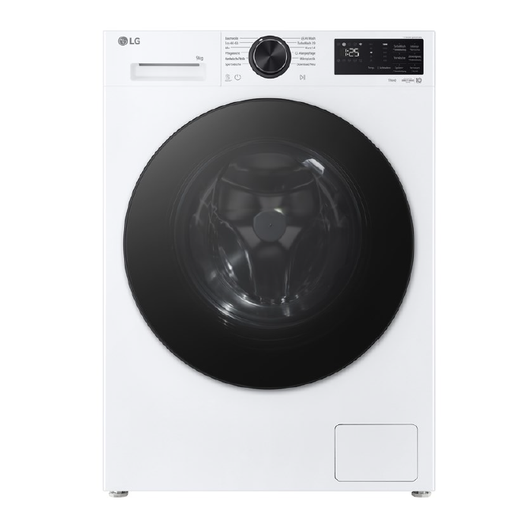
LG F2X7SLIM9W, 9 kg, Slim Fit
This slim-fit front-loader may suit your space if there’s enough room in front to open the door.
Listed in the product name: 9 kg, 1200 rpm, AI DD, Steam, TurboWash 360°, ThinQ and energy class A.
The listing also includes cotton and Eco 40–60 programmes. Check that the capacity suits the size of your usual laundry loads.
View at Joybuy
 No image available
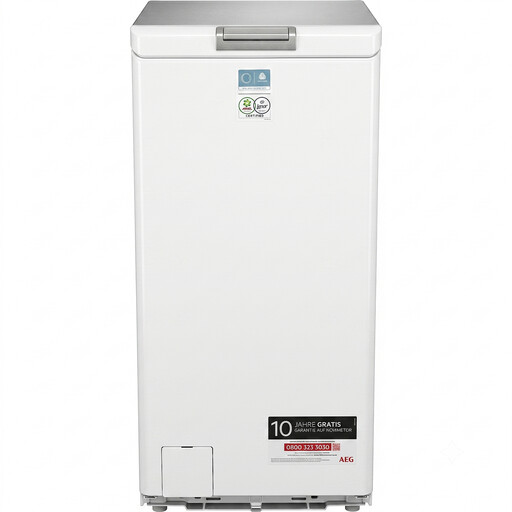
AEG LTR7A71370, 7 kg, top-loader
This top-loader may suit a narrow space, as long as there’s enough clearance above the appliance to open the lid.
The listing gives a 7 kg capacity, 1300 U/min, energy class A and an Aqua-Control system.
The model is described as having sensors that adjust to the load and a ProSteam function. Check that the stated capacity suits the amount of laundry you typically wash.
View at Joybuy
 No image available
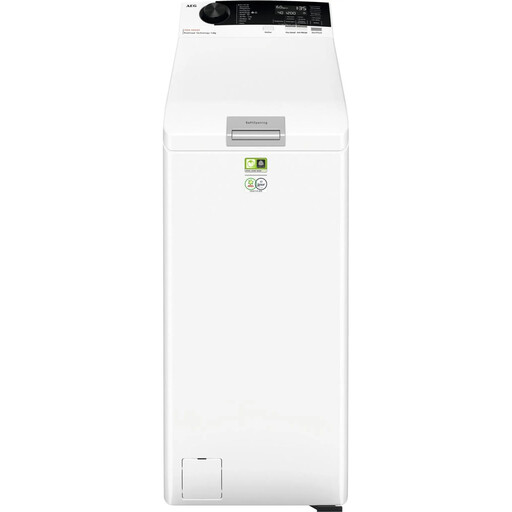
AEG LTR7A70260, 6 kg, top-loader
With a listed width of 40 cm, this top-loader may suit a narrow space; it needs clearance above the lid to open.
The listing gives a 6 kg capacity, 40 cm width and a spin noise level of 78 dB(A).
Cotton and Eco 40–60 programmes, as well as ProSense, are listed. The claim that the machine adjusts to the load comes from the product description.
View at Joybuy
 No image available
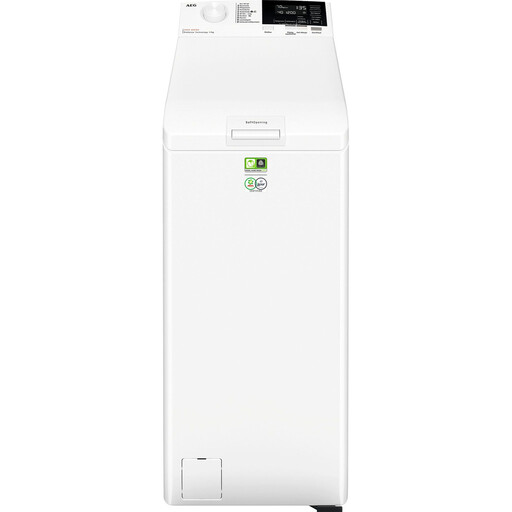
AEG LTR6A60370, 7 kg, top-loader
This top-loader may suit a narrow space, provided there’s enough room above the lid to open it.
The listing gives a 7 kg capacity, 40 cm width, energy class A and a spin noise level of 78 dB(A).
Cotton and Eco 40–60 programmes, along with ProSense, are listed. The product description says the settings adjust to the load.
View at Joybuy
 No image available
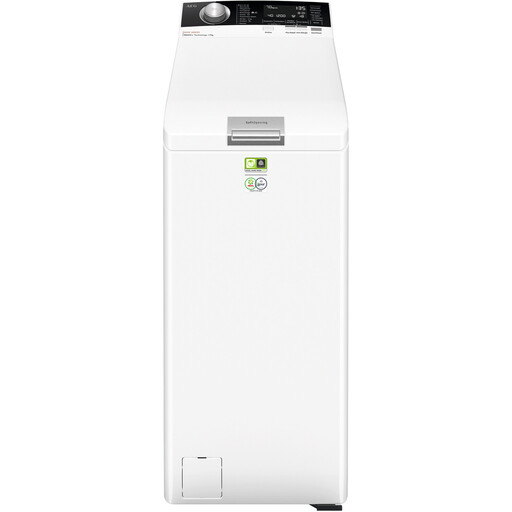
AEG LTR8A80370, 7 kg, top-loader
This top-loader may suit a space where width is limited, provided there’s enough clearance above the appliance for loading.
The listing gives a 7 kg capacity, energy class A and a maximum spin speed of 1300 U/min.
Cotton and easy-care programmes are listed. The product description mentions PowerCare at 30 °C.
View at Joybuy
Frequently asked questions
Is the Eco 40–60 programme suitable for cotton shirts?
Only if it’s suitable according to the care label and programme instructions. The European Commission describes Eco 40–60 as a programme for normally soiled cotton that, according to its care label, can be washed at 40 °C or 60 °C. That doesn’t mean it’s automatically suitable for every shirt.
How can I prevent smells if I often wash at low temperatures?
Remove wet laundry promptly, dry the door seal and detergent drawer, and leave the compartments open to dry. The Verbraucherzentrale also recommends cleaning the machine regularly and running a suitable 60 °C wash for whites about once a month, using a powder detergent for whites. Only include shirts if their care labels allow it.
What should I check about delivery and installation before ordering?
Check the specific listing to see whether delivery to the installation site, connection, removal of your old appliance and any necessary connection parts are included. Compare running costs only using consumption figures based on the same programme, and consider which programmes suit your laundry.
What are my rights if the appliance is faulty, and what happens to my old one?
When you buy from a trader in the EU, you have a legal guarantee of at least two years from the date you receive the goods. An additional manufacturer’s guarantee does not replace it. The Bundesumweltministerium explains the take-back obligations that also apply to online retailers. According to the ministry, free collection from your home of certain old appliances is conditional on having agreed this when you entered into the purchase contract.


