You don’t necessarily need a separate fridge just for portions of cheese. If your existing appliance is cool enough where you plan to store them and has enough space, you can keep using it. If you’re buying a new fridge, choose its capacity and dimensions to suit all your food storage needs. A freezer compartment is mainly useful if you also want to store frozen food. The German consumer advice centre recommends a usable capacity of 100 to 150 litres for one- to two-person households. The German Federal Institute for Risk Assessment recommends checking the temperature in different parts of the fridge.
Which appliance is right for you?
Keep portions of cheese safely chilled
If you only want to store small amounts of cheese, first check whether there’s space in your existing fridge and whether the temperature is suitable on the shelf you’ve chosen. The German Federal Institute for Risk Assessment recommends checking the temperature in several places, while the German Federal Centre for Nutrition suggests the top shelf as a possible place to store cheese.
Make the most of a small kitchen
For a one-person household, consider both the usable fridge space for all your fresh food and the appliance’s dimensions, including the room needed to open the door. The German consumer advice centre generally recommends a usable capacity of 100 to 150 litres for one- to two-person households.
Store fresh and frozen food
If you want to store frozen food as well as cheese, compare the fridge and freezer capacities separately. In a compact appliance, the freezer compartment takes up some of the total capacity.
What should you look for when buying?
For cheese, it’s the temperature where you actually store it that matters, not just the fridge setting. The German Federal Institute for Risk Assessment recommends a maximum of 7 °C, ideally below 5 °C, and regular checks in different parts of the fridge.
| Criteria |
What to check before buying |
Who is this important to? |
| Chilling cheese properly |
Check the temperature on the shelf where you plan to store the cheese and follow the storage instructions on the packaging. |
If I’m storing portions of cheese, I want to know whether the space in my fridge is suitable. Consumers who prioritise this are likely to make up around 36%. |
| Fridge capacity and available space |
Compare the usable fridge capacity and measure the width, height and depth, as well as the space needed to open the door. |
If I need to store fresh food for one person, I want the appliance and its interior to suit my needs and my kitchen. Consumers with this priority are likely to make up around 29%. |
| Energy consumption |
Compare the annual consumption figures in kWh for appliances that suit your space and cooling needs. |
If I’m going to run an appliance all the time, I want to take its stated energy consumption into account before buying. Consumers who are particularly concerned about ongoing electricity costs are likely to make up around 21%. |
| Freezer compartment |
Consider whether you want to store frozen food. If so, compare the fridge and freezer capacities, as well as the defrosting method. |
If I also want to store frozen food, I need space for it and want to know how much fridge space will remain. Consumers with this priority are likely to make up around 14%. |
Avoid common mistakes when choosing
-
Assuming total capacity is the same as fridge capacity
The manufacturer lists a total capacity of 109 litres for the Exquisit KS516-4-E-040E black, of which 95 litres is fridge space. So, for cheese and other fresh food, it’s the separately stated fridge capacity that matters.
For appliances with a freezer compartment, compare the fridge and freezer capacities separately and check that the fridge has enough room for all your fresh food.
-
Assuming a particularly small appliance will automatically use less energy
Appliance size and energy consumption are different things to compare. A smaller appliance isn’t automatically the right choice just because of its size.
First, choose a fridge with enough capacity, then compare the stated annual consumption in kWh for suitable models.
-
Putting a freestanding fridge in an alcove without checking first
Design, dimensions and door opening vary by model. For example, the instructions for the Bomann KS 2194.1 explicitly state that it isn’t designed for built-in installation. Exquisit also lists a greater depth for the KS516-4-E-040E black when the door is open.
Check the installation instructions and measure the available space, including the door-opening area, for the specific model.
A guide to relevant brands
Beko
The range includes compact freestanding table-top fridges with a freezer compartment and 101 litres of fridge space, including the TSE1284N and TSE1285N models.
- For the TSE1284N, Beko lists a reversible door and MinFrost.
- These details apply to this model. For the appliance you’re considering, also check the fridge and freezer capacities and installation dimensions.
Exquisit
The range includes compact larder fridges and table-top models with a freezer compartment.
- For the black KS516-4-E-040E, Exquisit lists 95 litres of fridge space and 14 litres of freezer space.
- According to the manufacturer, the freezer compartment in this version needs to be defrosted manually. These details don’t necessarily apply to other models.
Bomann
The white version of the KS 2194.1 combines a fridge compartment with a freezer compartment.
- Bomann lists 107 litres of fridge space and 13 litres of freezer space for this version.
- According to the manufacturer, the freezer compartment needs to be defrosted manually. These details refer to the white version.
Severin
The retro-style table-top models may be worth considering if the design of your freestanding appliance matters as well as its cooling function.
- For the RKS 8830, Severin lists 95 litres of fridge space and 13 litres of freezer space.
- According to the manufacturer, the door on this model isn’t reversible. Severin also lists annual consumption of 110 kWh. Compare this figure with your needs and the specifications of other suitable appliances.
Fridges for different needs
The following Joybuy models include compact fridges without a freezer compartment, as well as appliances with one. Check whether you need a freestanding appliance or a model designed for built-in installation.
 No image available
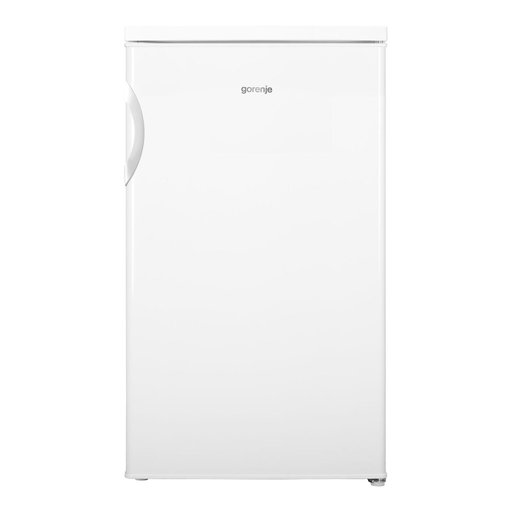
Gorenje G200 R49DPW, freestanding fridge, 133 l
For a one-person household that wants to store other fresh food as well as cheese and doesn’t need a freezer compartment.
The fridge has a capacity of 133 litres. The German consumer advice centre generally recommends a usable capacity of 100 to 150 litres for one- to two-person households. The product listing states annual consumption of 72 kWh, five shelves, a salad drawer and a reversible door. Energy efficiency class D.
View at Joybuy
 No image available
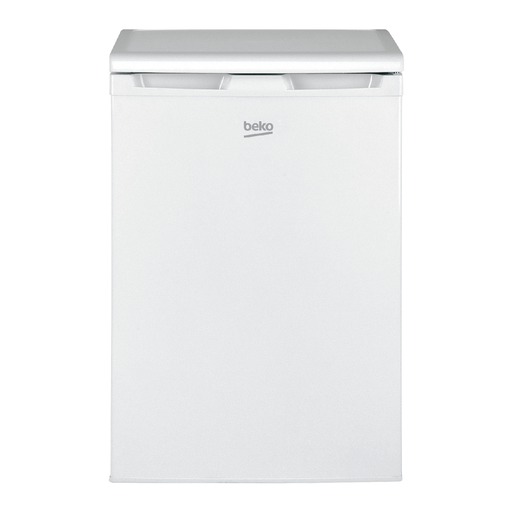
Beko TSE1284N b100 table-top fridge with freezer compartment
For a small household that wants to store some frozen food as well as chilled groceries.
It has 101 litres of fridge space and 13 litres of freezer space. The appliance is 84 cm high, 54 cm wide and 59 cm deep, with a reversible door. Beko lists MinFrost; however, the freezer compartment still needs to be defrosted manually if ice builds up. According to the product description, ventilation clearances are required when positioning the appliance.
View at Joybuy
 No image available
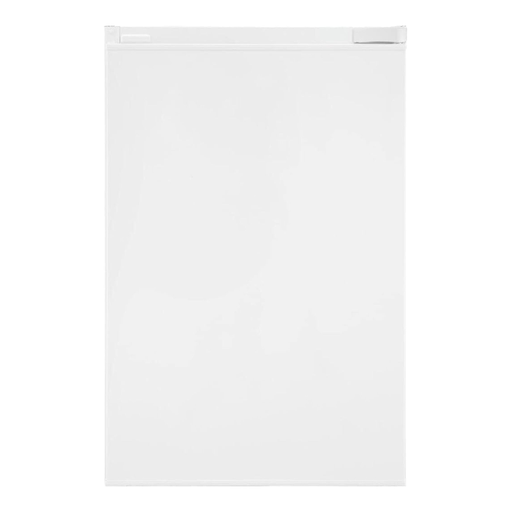
Beko B1804N built-in or under-counter fridge, 126 l
For fresh food without a freezer compartment, if you already have a suitable kitchen space for a built-in or under-counter appliance.
The stated fridge capacity is 126 litres. The listed features include adjustable glass shelves, door shelves, a salad drawer and LED interior lighting. This model isn’t designed to stand on its own. Energy efficiency class E.
View at Joybuy
 No image available
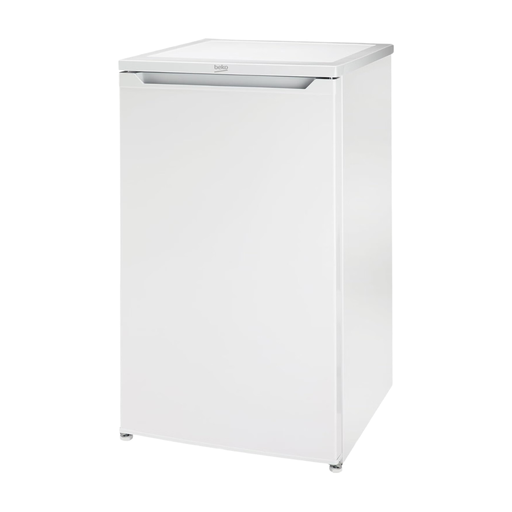
Beko TS190040N freestanding fridge, 88 l
For a narrow space and modest storage needs, provided 88 litres is enough for all your fresh food.
This freestanding model is 47.5 cm wide and 81.8 cm high, with a reversible door. It has three glass shelves, an automatic defrost system and stated annual consumption of 85 kWh. The German consumer advice centre generally recommends a usable capacity of 100 to 150 litres for one- to two-person households. Energy efficiency class E. No freezer compartment.
View at Joybuy
 No image available
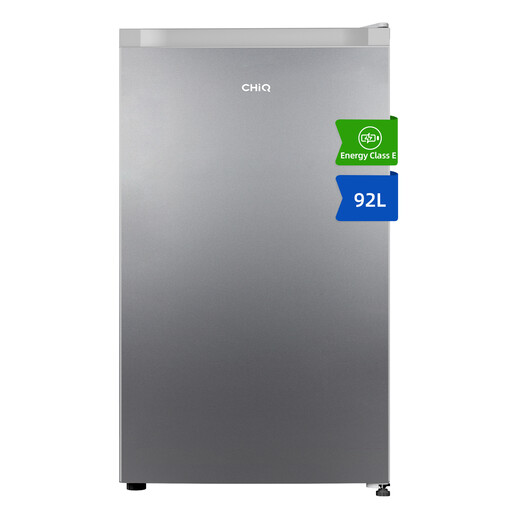
CHiQ JR92DSE compact fridge, 92 l
For a compact space, if its stated capacity is enough for the fresh food you need to store.
This model is listed as 47 cm wide and has a seven-level temperature control, adjustable glass shelves and a separate chiller drawer. The door is reversible. The German consumer advice centre generally recommends a usable capacity of 100 to 150 litres for one- to two-person households. Energy efficiency class E.
View at Joybuy
Frequently asked questions
What temperature should I check in my fridge?
The German Federal Institute for Risk Assessment recommends a maximum of 7 °C, ideally below 5 °C, and regular checks in different parts of the fridge. Also follow the storage instructions for the particular cheese. You can’t determine the temperature on a shelf just from the appliance setting.
Where in the fridge can I store portions of cheese?
The German Federal Centre for Nutrition suggests the top shelf as a possible place to store cheese. Always follow the instructions on the packaging and check the temperature at the exact spot where you plan to store it.
How should I store packaged or cut cheese?
Cheese maker Bergader recommends keeping packaged cheese in its original packaging where possible and protecting cut surfaces from drying out. The manufacturer recommends storing blue cheese separately. Always follow the instructions for the specific product you have.
How do I compare the energy consumption of different fridges?
Compare the stated annual consumption in kWh for appliances that suit your space and cooling needs. To estimate the cost for yourself, multiply this figure by your electricity price per kWh. The actual cost will depend on your tariff.
Do fridges have an EU energy label?
Yes. The European Union uses an energy label for refrigeration appliances, with a scale from A to G. The older plus-rating label has not been used for this category since 2021. As well as the rating, compare the stated consumption in kWh per year.


