Preparing fruit salad when space is limited
If you want to keep cut fruit covered and chilled until it’s ready to eat, check the available space and interior dimensions to make sure the container will fit comfortably.


For fruit salad, choose only an appliance designed for storing food that can maintain a temperature of 2 °C to no more than 7 °C where the food is stored. This is the recommendation from the German Federal Institute for Risk Assessment (BfR) for highly perishable foods in the fridge. Then check that the external dimensions and door clearance will fit your space, how much usable fridge space will remain for containers and other food, and the annual energy consumption stated for the specific model.
If you want to keep cut fruit covered and chilled until it’s ready to eat, check the available space and interior dimensions to make sure the container will fit comfortably.
If you need room for other fresh food as well as fruit salad, usable fridge space and energy consumption matter just as much as the appliance’s size.
For an integrated fridge, the space dimensions, door fitting and usable fridge capacity all need to suit your existing kitchen units.
These percentages relate to consumers choosing a fridge for this purpose. They can help you work out which buying consideration matters most to you.
| What matters | What to check when buying | Who should pay particular attention? |
|---|---|---|
| Chilling cut fruit | Check that the appliance is suitable for food storage and the temperature where you plan to store it; the BfR recommends 2 °C to no more than 7 °C. | If I want to keep cut fruit chilled safely until it’s ready to eat, the temperature where the container is stored is crucial. Around 31% of consumers prioritise reliable cooling. |
| Fit in the available space | Check the width, height, depth and door clearance, as well as the dimensions of the space for under-counter models. | If space is tight, you still need to be able to use the appliance with the door open. Around 31% of consumers put finding the right size first. |
| Usable interior space | Compare the container’s dimensions with the shelves and the stated fridge capacity. | If I need to store other food as well as fruit salad, I need fridge space with a practical layout. Around 19% of consumers prioritise flexible storage. |
| Energy consumption | When comparing appliances of a similar size, check their annual consumption in kWh on the EU energy label. | If the fridge will be running regularly, I want to take its ongoing energy use into account when choosing. Around 13% of consumers put running costs first. |
| Operating noise | Check the noise emissions for the specific model on its energy label, and separately assess whether it is suitable for storing food. | If your kitchen is close to a living or sleeping area, operating noise can affect day-to-day life. Around 6% of consumers prioritise quiet operation. |
A good fit if: you have very little floor space and only need to chill a few covered portions.
The trade-off: Interior space is limited, and a separate chiller compartment can reduce the usable fridge capacity further.
A good fit if: you regularly need space for other chilled food as well as fruit salad, and don’t need a freezer compartment.
The trade-off: Take the greater height and the space needed to open the door into account when planning your kitchen layout.
A good fit if: you have a suitable space and a matching furniture door.
The trade-off: The space dimensions and door fitting need to be just right. An integrated freezer compartment takes up room that could otherwise be used for chilled food.
A good fit if: the specific appliance is designed for storing food and reaches the required temperature where the food will be stored.
The trade-off: Shelves designed for drinks may not work well for fruit salad containers; silence alone does not prove that an appliance cools sufficiently.
Low noise and a focus on drinks don’t, by themselves, tell you whether an appliance will keep food sufficiently cool. In a test cited by F.A.Z. Kaufkompass, a tested silent mini fridge had cooling problems at high ambient temperatures.
Check that the appliance is suitable for food storage and measure the temperature where you plan to store it, rather than relying solely on its description, design or thermostat setting.
Shelves, a separate chiller compartment, door clearance and the route into your kitchen can all affect whether containers will fit through the doorway and inside the appliance.
Compare your container’s dimensions with the interior and check that both the open door and the appliance’s position will work in your kitchen.
An appliance that doesn’t fit can mean extra hassle. Before ordering, also check whether installation and removal of your old appliance are available.
For the Bomann KB 7245, the description of the compartment conflicts with the official EU product data sheet, which does not list a star-rated freezer compartment for this model.
Check the compartment type and star rating in the data sheet for the exact model; don’t assume it has a freezer function until you’ve confirmed this.
For ongoing energy use, the annual consumption in kWh shown on the EU energy label is more informative than the efficiency letter on its own.
Compare appliances that suit your needs for size and fridge space by looking at their stated consumption and your own usage.
A fridge runs regularly, so it uses electricity throughout its working life. Depending on the offer, installation and removal of your old appliance may also involve extra effort.
Compact freestanding cooling appliances; the KB 8879 is a cool box with a chiller compartment.
Compact larder and tabletop fridges; the KS585-V-090E offers fridge space without a freezer compartment.
Integrated under-counter options for existing kitchens; one example is the UIK 1514 Comfort.
Compact drinks fridges; the Beersafe M is designed for bottles and cans.
Compact freestanding models; the KB 7245 is sold as a 45-l mini fridge.
This Joybuy selection includes freestanding mini and tabletop fridges, as well as compact appliances with more fridge space. For each model, check separately whether it can maintain a suitable temperature for fruit salad where you plan to store it.
 No image available
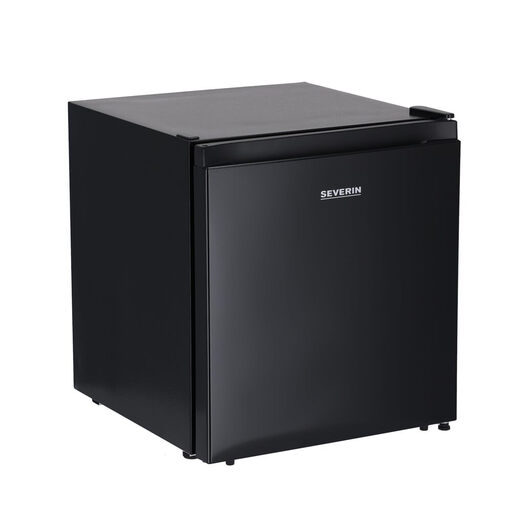
Its compact design could be a good option if space is limited. Before using it for fruit salad, check the temperature where you plan to store it.
45 l total capacity; dimensions: 41,8 × 44,8 × 47,8 cm; compressor cooling and adjustable thermostat; removable shelf and reversible door.
 No image available
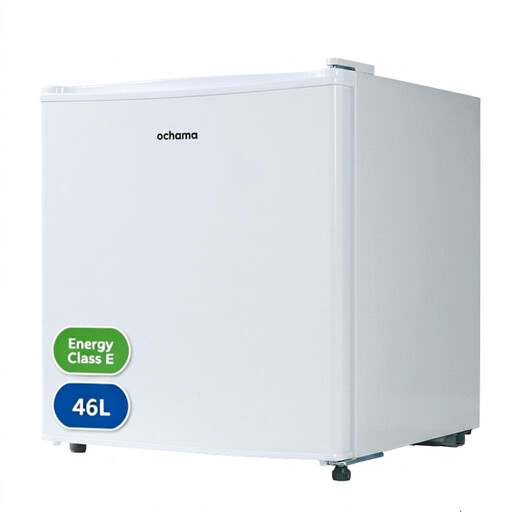
The stated temperature range is 2 °C to 8 °C, so it doesn’t consistently cover the BfR’s recommended range of up to 7 °C. Check the temperature where you plan to store food.
Dimensions: 440 × 470 × 510 mm; adjustable glass shelf; stated daily energy consumption: 0.35 kWh.
 No image available
The stated cooling range of 0 °C to 10 °C includes temperatures outside the BfR recommendation. Check whether it can maintain 2 °C to no more than 7 °C where you plan to store food.
External dimensions: 449 × 485 × 842 mm; three adjustable glass shelves; separate chiller compartment; energy efficiency class E.
 No image available
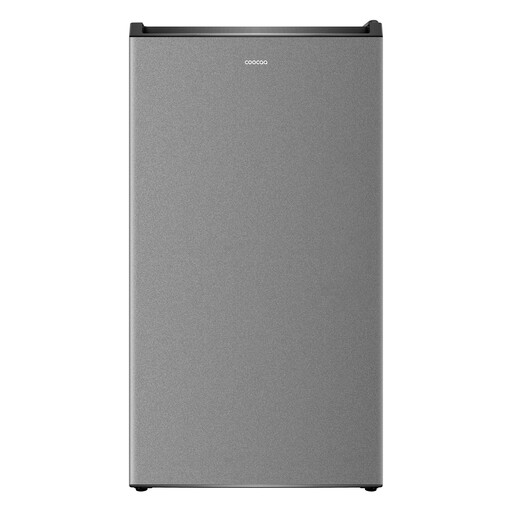
The adjustable shelves can help you fit containers of different heights. Whether it’s suitable for storing fruit salad depends on whether it can reach the required temperature where you plan to store it.
Dimensions: 444 × 456 × 850 mm; compressor cooling; adjustable glass shelves and crisper drawer; energy efficiency class E.
 No image available
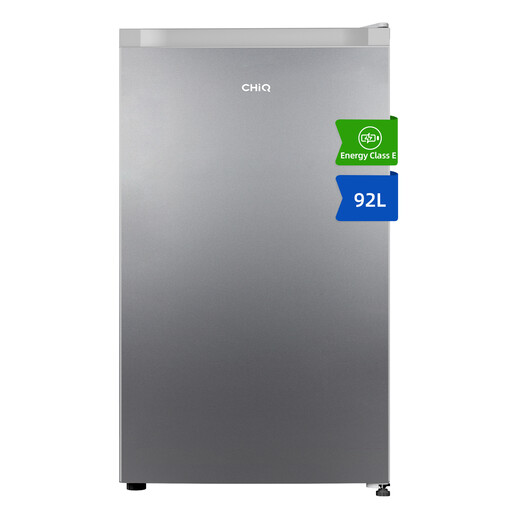
At 47 cm wide, this appliance could suit a limited space, but a seven-setting control doesn’t tell you what temperature the container will reach.
Adjustable glass shelves and a separate chiller compartment; check the temperature where you plan to store food before using it for fruit salad.
Not just because it’s described as a drinks fridge or because it’s silent. What matters is whether it’s suitable for storing food and the temperature it actually reaches where the food is stored. F.A.Z. Kaufkompass reported cooling problems at high ambient temperatures with a silent mini fridge it tested.
For highly perishable food in the fridge, the BfR recommends 2 °C to no more than 7 °C. Keep cut fruit covered and chilled until it’s ready to eat. For shop-bought Fresh-Cut products, also follow the use-by date and the manufacturer’s storage instructions.
Measure the appliance itself, and check the door clearance and installation requirements. For an integrated appliance, also check the space dimensions and furniture door fitting. The German Environment Agency also advises against placing fridges next to heat sources or in direct sunlight.
For appliances that suit your available space and storage needs, compare the annual consumption in kWh shown on the EU energy label. The European Commission says the label also gives information about the energy efficiency class, capacity and noise.