Cooks with limited worktop space
If you need chilled storage for leftover pasta but want to keep your worktop clear, you’ll need a suitable floor space or a suitable built-in niche.


If you want to keep your worktop clear, a slim freestanding appliance or a built-in model may be suitable, provided you have an appropriate place for it or a suitable niche. What matters is whether there’s room for shallow containers and whether the fridge reaches the required temperature. A freezer compartment can be useful if you need one, but it takes up space that could otherwise be used for chilled food.
If you need chilled storage for leftover pasta but want to keep your worktop clear, you’ll need a suitable floor space or a suitable built-in niche.
If you’re chilling several portions, focus on the usable space for shallow containers rather than just the appliance’s external dimensions. The Federal Institute for Risk Assessment recommends dividing larger quantities of food between several shallow dishes to cool them down.
If you only need to chill a few extra leftovers, weigh up the space available, usable fridge capacity, any freezer compartment and the stated annual energy consumption.
The Federal Institute for Risk Assessment recommends cooling leftovers to below +7 °C within a few hours, storing them in the fridge and eating them within two to three days.
| Buying consideration | What to check | Who should pay particular attention? |
|---|---|---|
| Space and installation type | Check the appliance’s width and depth, door clearance, intended installation type and installation instructions. | If I want to keep my worktop clear, I need a suitable floor space or a suitable space within the cabinetry; around 34% of consumers put available space first. |
| Chilling cooked leftovers | Allow space for shallow, covered portions and check the actual fridge temperature. | If I want to chill cooked pasta safely, I look for storage conditions I can check; around 33% of consumers prioritise keeping leftovers chilled. |
| Usable space for portions | Measure your containers and check the shelves, as well as the separate fridge and freezer capacities listed for the exact model. | If I need to fit several or larger containers, usable fridge space matters most to me; around 20% of consumers focus primarily on space for portions. |
| Annual energy consumption | Compare the stated consumption in kWh/year alongside the fridge capacity you need. | If I want to keep an eye on running costs, I compare the annual figures for appliances with suitable fridge capacity; around 13% of consumers focus on electricity consumption. |
Even compact freestanding appliances need floor space. According to the manufacturer, a larger tabletop model may have a sturdy top, but its external dimensions still need to fit the space available.
First, choose a suitable spot away from the worktop, then compare the dimensions and installation type of the specific appliance.
An appliance on the worktop takes up, permanently, exactly the space you want to keep free.
A freezer compartment and the layout of the shelves affect which containers will actually fit. Capacity in litres alone won’t tell you.
Measure your containers and check that they fit on the shelves. If you have larger quantities of leftovers, allow space for several shallow dishes.
Feature information may refer to different models or variants; a product listing doesn’t automatically confirm that a particular appliance has a specific function.
Check the full model number and the features you need against the manufacturer’s information.
The VKS 351 116 W is a slim, full-height freestanding fridge for a suitable space, if you don’t need a freezer.
The KB 7245 is a compact freestanding appliance with a small freezer compartment, for a suitable space.
The KB45-0-011E weiss is a compact freestanding appliance for small quantities and a suitable space of its own.
The KIL22NSE0 is a built-in alternative if you have a suitable kitchen cabinet niche.
The Rc 1400 Pure is a larger tabletop fridge for households that need more chilled storage and, according to the manufacturer, want a usable top surface.
The following Joybuy products include built-in appliances for suitable niches, as well as freestanding fridges and fridge-freezers for a suitable space.
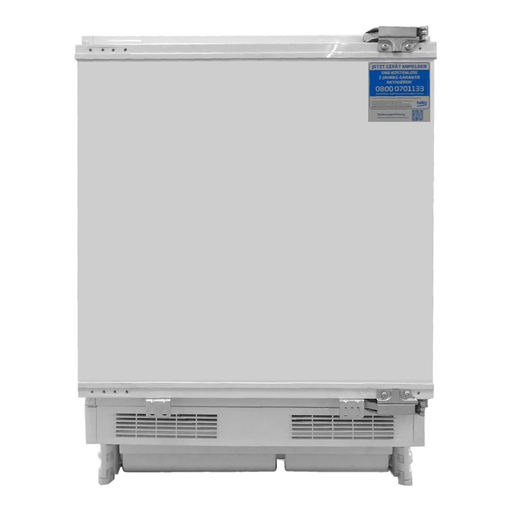 No product image available
For a suitable kitchen cabinet niche when you want to keep the work surface clear.
107 L total capacity; 92 l fridge space and a 15 l freezer compartment. The stated niche height is 88 cm; check the dimensions of the entire niche before buying.
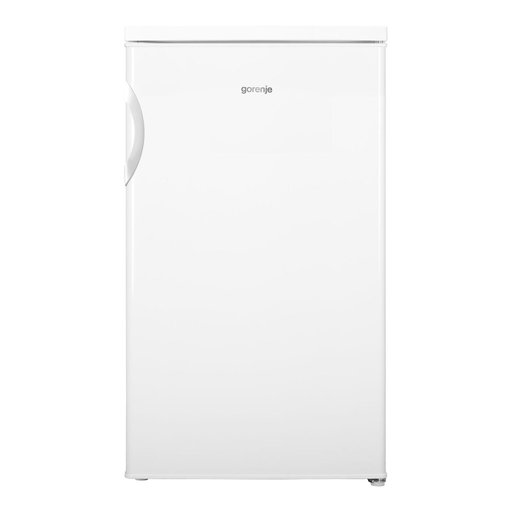 No product image available
For a suitable space of its own if you don’t need a freezer compartment.
133 l of fridge space with no freezer compartment; five shelves and a vegetable drawer are also listed.
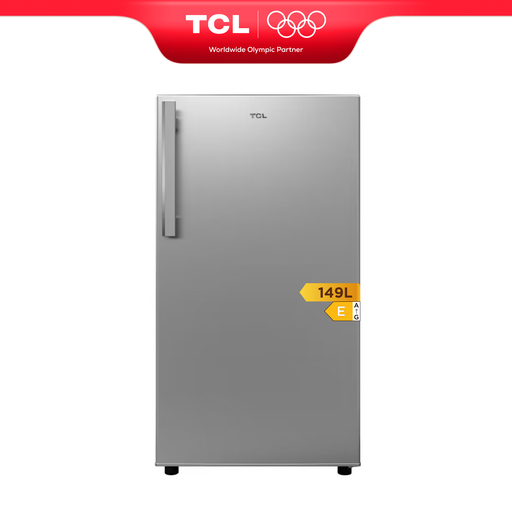 No product image available
For a space where you want to store chilled leftovers and frozen food together.
199 L total capacity, including 122 l of fridge space and a 27 l freezer compartment. The listed dimensions are 54 cm wide and 55 cm deep; also check the space needed to open the door.
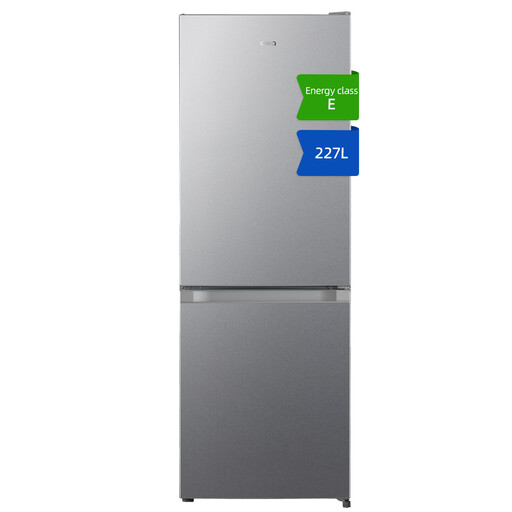 No product image available
For a suitable space if you need a freezer compartment as well as chilled storage.
153 l of fridge space and a 74 l freezer compartment; the listed width is 54 cm. Adjustable shelves and a reversible door are also specified.
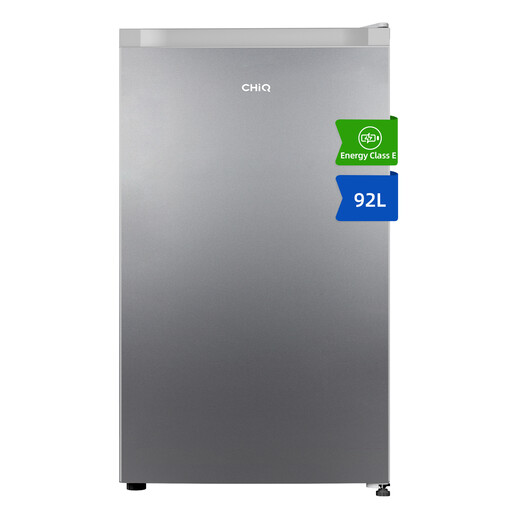 No product image available
For a limited space when you’re looking for a compact appliance with chilled storage.
92 l capacity and 47 cm wide; adjustable glass shelves, seven temperature settings and a reversible door are also listed.
The Federal Institute for Risk Assessment recommends cooling leftovers to below +7 °C within a few hours, storing them in the fridge and eating them within two to three days. Larger quantities can be divided between several shallow dishes. This is food safety advice, not a shelf life guaranteed by a particular fridge model.
Not just because its external dimensions fit inside the cupboard. The data sheet for the Exquisit KB45-0-011E describes it as a freestanding appliance, not an under-counter or built-in model. Check the installation type and instructions for the specific model, as well as the dimensions of any potential niche.
Compare the stated annual consumption in kWh for appliances with fridge capacity that meets your needs. To estimate your own costs, multiply the difference between the kWh figures by your electricity price per kWh; actual consumption in your home may differ from the standard figure.
EU energy-labelling rules apply to the relevant product group covering refrigeration and freezing appliances. According to information from the European Union, the label must also be visible in online shops. It shows a rating from A to G. The labelling requirement applies to suppliers.
No. The Federal Ministry for the Environment, Climate Action, Nature Conservation and Nuclear Safety explains that old electrical appliances must be collected separately and disposed of in an environmentally friendly way. According to the German Environment Agency, local collection points generally accept old appliances from private households free of charge; check the relevant retailer’s terms for take-back options.