Home cooks with very little kitchen space
If space is tight, measure the appliance’s width and depth, as well as the room needed to open the door, before comparing capacities. Manufacturers’ specifications for slim models can help you plan.


When storing cooked lentils in a small kitchen, the key things to consider are whether the appliance will fit in its space and whether shallow, covered portions will fit on its shelves. A fridge without a freezer compartment gives you more stated fridge capacity; a model with one is worth considering if you also want to freeze food. The Federal Institute for Risk Assessment (BfR) recommends cooling leftovers to below 7 °C within a few hours and eating them within two to three days.
If space is tight, measure the appliance’s width and depth, as well as the room needed to open the door, before comparing capacities. Manufacturers’ specifications for slim models can help you plan.
If you prepare several portions at once, check that your shallow, covered containers will fit on the shelves and leave enough room in the fridge. The BfR recommends dividing large quantities between several shallow dishes to help them cool more quickly.
If your fridge will be running all the time, compare its annual energy consumption in kilowatt hours with the capacity you actually need. The Verbraucherzentrale notes that the appliance’s size and the temperature setting also affect energy use.
A good choice if: You mainly want to keep lentils and other leftovers chilled for a few days and make the most of the interior space.
Things to consider: There’s no compartment for freezing food. Also check that your containers will fit on the shelves.
A good choice if: You want to freeze food as well as keep portions chilled.
Things to consider: The freezer compartment takes up space that would otherwise be available for chilling food. Compare the fridge and freezer capacities separately.
The figures represent consumers choosing a fridge for storing cooked lentils in a small kitchen.
| What matters | What to check when buying | Who is this especially important to? |
|---|---|---|
| Will the appliance fit in the kitchen? | Measure the available floor space, door clearance, and the appliance’s width and depth. Gorenje lists the RB39EPW4 as 47,5 cm wide; Beko gives the TSE1424N a width of 54 cm. | If space is tight, I want to check the measurements and door swing against my kitchen beforehand. Around 31 % of consumers are mainly concerned about the space it will take up. |
| Room for portions of lentils | Compare your containers with the shelves and stated fridge capacity. The BfR recommends shallow dishes to help large quantities cool more quickly. | If I prepare several portions, I want the covered containers to fit comfortably in the fridge. Around 31 % of consumers prioritise space for pre-cooked portions. |
| Energy use | Compare annual consumption in kWh and capacity. The EU energy label includes details such as annual consumption and noise emissions. | For an appliance that runs all the time, I want to compare the energy use of a suitably sized model. Around 23 % of consumers are mainly concerned about energy use during operation. |
| Additional freezer compartment | Check the stated fridge and freezer capacities separately. A freezer compartment can reduce the space available for chilled containers. | If I want to freeze food as well as chill lentils, I need both capacities in the right balance. Around 15 % of consumers prioritise having the option to freeze food. |
In appliances with a freezer compartment, not all of the stated capacity is available for fresh food. For the Gorenje RB39EPW4, the manufacturer lists a total capacity of 82 l, including 75 l for fresh food.
Compare the stated fridge capacity and shelves with your containers, rather than looking only at the overall figure in litres.
The BfR recommends dividing large quantities between several shallow dishes to cool them, and eating chilled leftovers within two to three days.
Allow space for shallow, covered portions and check the temperature inside the fridge.
The energy efficiency rating alone doesn’t show an appliance’s annual energy consumption. The Verbraucherzentrale notes that the appliance’s size and temperature setting also affect its energy use.
For appliances with a suitable capacity, compare the annual consumption in kWh shown on the EU energy label.
According to Beko Deutschland, the TSE1424N and TSE1284N under-counter models are 54 cm wide. The TSE1424N has a stated fridge capacity of 128 l, while the TSE1284N has 101 l.
Gorenje Deutschland lists the RB39EPW4’s external dimensions as 47,5 × 44,8 cm (width × depth), with 75 l for fresh food and a total capacity of 82 l.
Bosch Hausgeräte Deutschland lists the freestanding under-counter fridge KTR15NWEB as having 134 l of fridge capacity and external dimensions of 85 × 56 × 58 cm. The model has no freezer compartment.
Liebherr lists the Re 1201 Pure as 50 cm wide, with a total capacity of 98 l.
This Joybuy selection includes compact fridges for tight spaces, as well as models with a stated freezer compartment. Compare the dimensions and shelves with your containers, and check the fridge and freezer capacities separately.
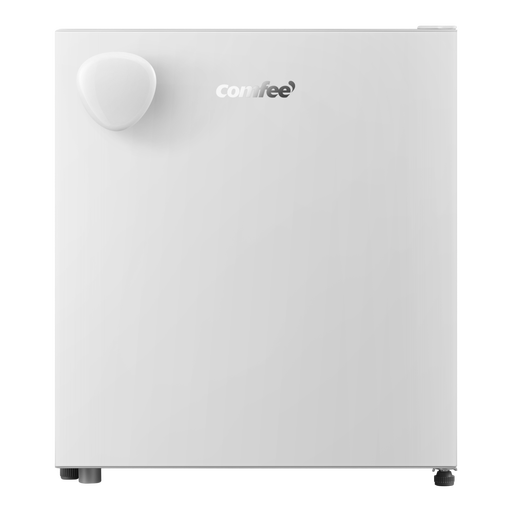 No image available
Its stated width may be useful where space is very limited. Check the measurements against the clearance needed to open the door.
43 l capacity; 44,5 cm wide; annual energy consumption of 110 kWh; energy efficiency class E; three temperature settings; adjustable shelves and a separate Chill Box.
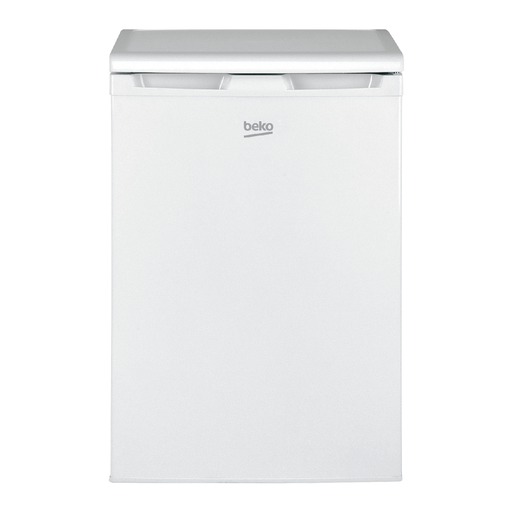
 No image available
The three adjustable glass shelves offer different ways to arrange your containers. Check their dimensions against the shelves.
90 l fridge capacity; dimensions 449 × 485 × 842 mm; three adjustable glass shelves; chiller compartment; energy efficiency class E.
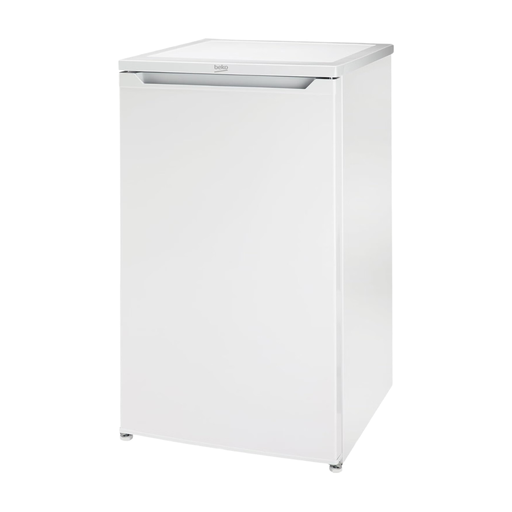
 No image available
This model combines fridge space with an additional freezer compartment. Check that both capacities suit your needs.
101 l fridge capacity; 13 l freezer compartment; 114 l total capacity; dimensions 59 × 54 × 84 cm; reversible door; glass shelves and salad drawer.
 No image available
This model is described as a fridge without a freezer compartment, making it an option for chilled portions rather than freezing food.
88 l capacity; 47,5 cm wide; annual energy consumption of 85 kWh; noise level of 38 dB; energy efficiency class E; reversible door, three glass shelves and salad drawer.
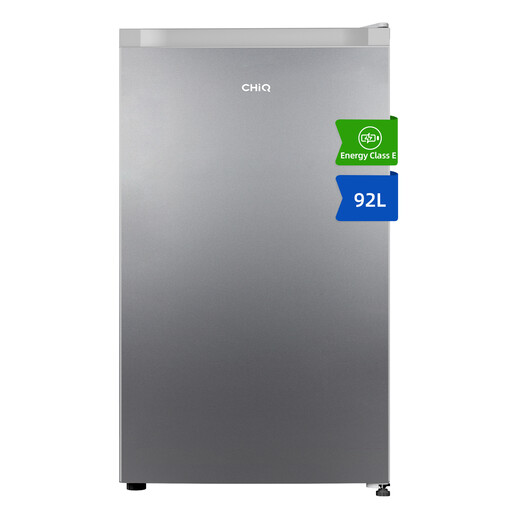 No image available
Its stated width may be useful for a narrow space. Remember to measure the clearance needed for the door to swing open, too.
92 l capacity; 47 cm wide; seven temperature settings; energy efficiency class E; adjustable glass shelves, salad drawer and reversible door.
The Federal Institute for Risk Assessment recommends eating cooked leftovers within two to three days. Larger quantities should be cooled to below 7 °C within a few hours; dividing them between several shallow dishes can help. This advice relates to food hygiene in the home and doesn’t guarantee the shelf life of every dish.
The BfR recommends a fridge temperature of 2 °C to no more than 7 °C for perishable food. Hot food that you plan to keep for longer should be cooled quickly to below 7 °C. Check the temperature inside the stocked fridge rather than relying on the dial setting alone.
The EU energy label for refrigeration appliances includes details such as the energy efficiency class, annual consumption in kWh, fridge and freezer capacities, and noise emissions. Compare annual consumption for appliances with a capacity that suits your needs.
Yes. Waste electrical appliances are collected separately. The German Environment Agency explains that local collection points generally accept these appliances free of charge. If you want to use a retailer’s take-back service, check the terms directly with the retailer concerned when arranging your purchase and delivery.
For products that require a label, EU rules state that the energy label must be clearly visible near the price in online and distance selling. It can be displayed in full or as an energy efficiency scale arrow linking to the label and product information sheet. Household refrigeration appliances are among the product groups covered by these rules.