
Lieferung heute & morgen

Qualitätsgarantie

Willkommens-Angebote freischalten: KOSTENLOSE Lieferung | Bis zu 80 % RABATT | Kostenlose 30-Tage-JoyPlus-Testphase
App herunterladen
A small fridge can be a practical solution in a studio flat, student accommodation or as a second appliance. However, compact dimensions alone say little about how suitable it is for everyday use. A mini fridge with too little usable capacity, an inconvenient door hinge or no freezer compartment can soon create more space problems than it solves.
The following points will help you assess marketing claims and choose a model using clear, practical criteria.
Although a slim fridge may fit into an alcove, that does not automatically mean it offers enough storage space inside. Figures such as 43 or 45 litres often refer to the total capacity. An integrated freezer compartment takes up part of that space. This may be sufficient for drinks and snacks, but a fridge with 80 to 100 litres is often more practical for the regular shopping needs of a single-person household.
Before buying, measure the width, depth and height of the intended location. You will also need space for the door to open and for the ventilation clearance specified by the manufacturer.
A fridge operates using a compressor, fan or other cooling components. Operating noise can be more noticeable in a bedroom, office or studio flat than in a separate kitchen. A specific figure in dB or dB(A) is therefore more meaningful than a general description such as “whisper-quiet”.
According to product specifications, models rated at 38 to 40 dB fall within a range that may be suitable for many living and working areas. Perceived noise also depends on the floor, distance from the wall and vibrations.
A small fridge with a freezer compartment is useful for ice cubes, frozen pizzas or small supplies. However, a 3- to 7-litre compartment offers only limited space. If you regularly store frozen food, check the separate freezer capacity and the stated freezing performance. A small internal compartment is not equivalent to a full-size freezer section in a fridge freezer.
When choosing a fridge for a small kitchen, it is not just the cabinet width that matters. Also check:
A reversible door hinge is helpful in confined spaces. Some models have a removable handle, which can make transport and installation easier.
For drinks, snacks and a small amount of fresh food, a tabletop fridge with around 43 to 45 litres may be enough. An appliance between 80 and 100 litres offers more room for vegetables, dairy products and supplies. For couples or users who do a large weekly shop, compact fridge freezers from around 180 litres may be worth considering.
Look for height-adjustable or removable glass shelves, door compartments and a vegetable drawer. These features determine whether tall bottles and larger containers can actually be stored inside.
The EU energy label uses a scale from A to G. However, the energy efficiency class alone is not enough for comparing running costs. The key figure is the stated annual consumption in kWh. A small appliance using 80 kWh per year may compare differently in everyday use with a larger appliance that has considerably more capacity.
For a rough cost estimate:
Annual consumption in kWh × your electricity price per kWh = estimated annual electricity costs
This is only an approximation. Ambient temperature, how full the fridge is, the temperature setting and how often the door is opened all affect actual consumption.
The following models have been matched to different user profiles based on their capacity, dimensions, features and stated intended use.
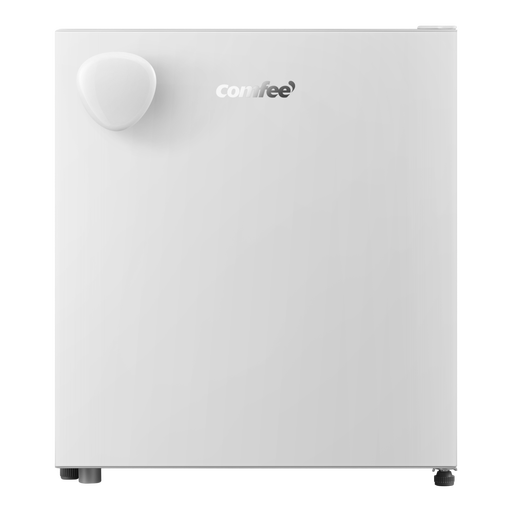
Why this product suits this profile: With a capacity of 43 litres and a width of 44.5 cm, this model is suitable for individuals, offices or rooms with limited floor space.
Annual consumption is stated as 110 kWh; three temperature settings and removable or adjustable shelves make the appliance's capabilities clearer.
Slim design, separate cooling compartment for drinks, vegetable compartment and removable handle.
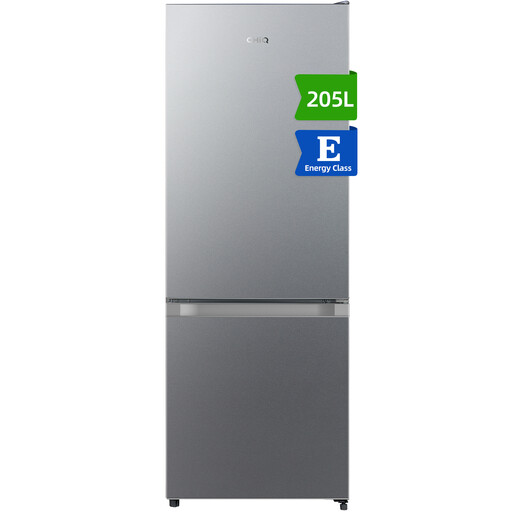
Why this product suits this profile: With 153 litres of fridge space and 52 litres of freezer space, this combination is designed for households that want to store regular supplies despite its 55 cm width.
The fridge and freezer capacities are listed separately. The reversible door and adjustable feet make it easier to adapt the appliance to its location.
Adjustable shelves, LED interior lighting and a compact width with separate compartments.
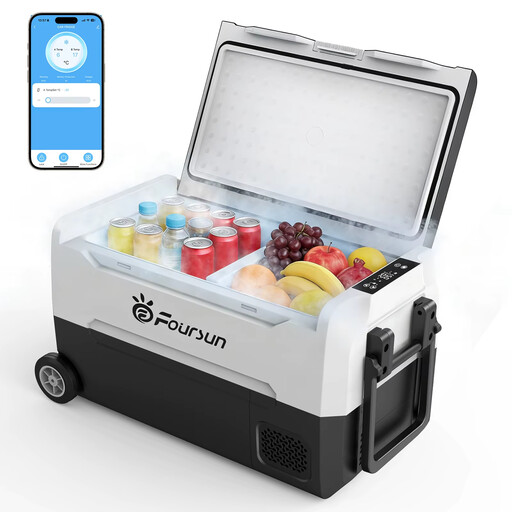
Why this product suits this profile: Designed for camping, travel and use in a vehicle, this mobile compressor cooler supports both 12/24-volt and 100–240-volt connections.
The power supply and temperature range of -20 °C to +20 °C are clearly specified. This makes its intended use clearer than that of a stationary household appliance.
Compressor cooling, Bluetooth app control, ECO mode and wheels for transport.
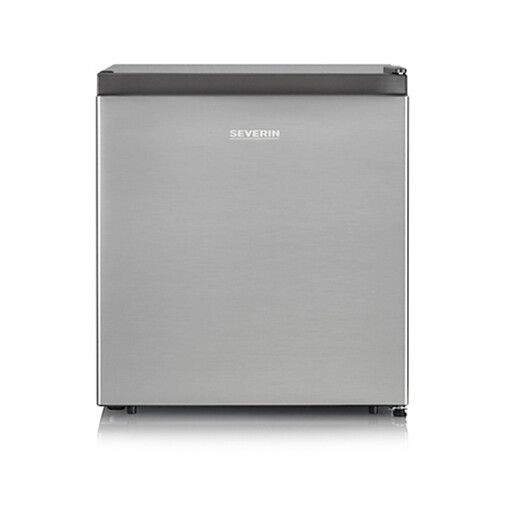
Why this product suits this profile: This appliance is intended for small kitchens, offices, bedrooms or use as a second appliance, with a stated noise level of 39 dB.
The noise level, annual consumption of 80 kWh and 5-litre freezer compartment are clearly stated, making the appliance easier to assess.
Reversible door hinge, adjustable thermostat, automatic defrosting and 5-litre freezer compartment.
We have put together a complete, regularly updated list of products that fully meet these strict selection criteria and the safety regulations applicable in the EU.
A small fridge should be placed on a stable, level and dry surface. Ventilation openings must not be covered. The clearance specified by the manufacturer must be maintained between the back, side walls and other appliances. Before switching the appliance on for the first time, it should be left upright in accordance with the operating instructions, particularly after transport.
Hot food should only be placed in the fridge once it has cooled down. An overcrowded interior can restrict air circulation. Door seals, shelves and the back of the appliance should be cleaned regularly. Appliances with a manual freezer compartment also need to be defrosted from time to time.
For drinks and a small amount of food, 40 to 50 litres is often enough. If you regularly store fresh food, you should choose a model with around 80 to 100 litres instead. For larger supplies or a separate freezer requirement, a compact fridge freezer with more than 180 litres is the more practical choice.
The cost depends on annual consumption and your individual electricity tariff. The figure in kWh per year shown on the energy label provides the basis for the calculation. An appliance with annual consumption of 80 kWh would cost around 28 euros per year at an electricity price of 0,35 euros per kWh. Actual consumption may vary.
This depends primarily on the stated noise level, positioning and your personal perception. Models rated at around 38 to 40 dB may be suitable for many rooms. For quiet operation, the appliance should be level, have sufficient clearance from the wall and not vibrate against nearby furniture.