What should you look for when choosing one?
Evaporative humidifier
A good fit if: You’ve measured the humidity and found that you need to add moisture, but don’t want visible water mist by your desk.
Bear in mind: Evaporative filters need looking after and may need replacing, depending on the model.
Ultrasonic humidifier
A good fit if: You want a compact design with adjustable mist output and can keep the tank and water clean.
Bear in mind: The US Environmental Protection Agency warns that minerals and microorganisms from the tank water can be released into the air.
Warm-mist vaporiser
Check first: Whether you specifically want this type of appliance and whether you can position the particular model safely.
Bear in mind: Check the model’s electricity consumption too; this does not automatically make it a better choice than the other types.
When choosing a humidifier for a dry home office in a small flat, four considerations are particularly important:
| What matters |
What to check before buying |
Who is it important to? |
| Humidity control |
Measure room humidity; check for a humidistat or selectable humidity settings, and make sure the appliance is suitable for the room size. |
If I want to counter dry air without making cold wall areas too damp, I need control rather than a simple promise of high output. Around 33 % of consumers put humidity control first. |
| Water hygiene |
Check access to the tank and care instructions; for evaporative models, also check the right filter and replacement guidance. |
If I use the appliance regularly, I want tank care and water changes to fit easily into my daily routine. Around 27 % of consumers prioritise water hygiene and practical cleaning. |
| Quiet operation |
Compare noise levels for each setting, whether the display can be dimmed or switched off, and the appliance’s footprint. |
If the appliance is close to my desk, I want to avoid distractions from noise or light while I’m working. Around 20 % of consumers prioritise quiet operation. |
| Ongoing upkeep |
Check replacement filters and change intervals, as well as water changes, cleaning and power consumption. |
If I use the appliance frequently, I want to factor filter care and running costs into my ongoing plans. Around 20 % of consumers focus mainly on maintenance and running costs. |
Humidifiers for different needs
The following Joybuy products include evaporative and ultrasonic humidifiers. The right choice depends on suitable controls, the level of upkeep involved and the conditions in your home office.
 No image available
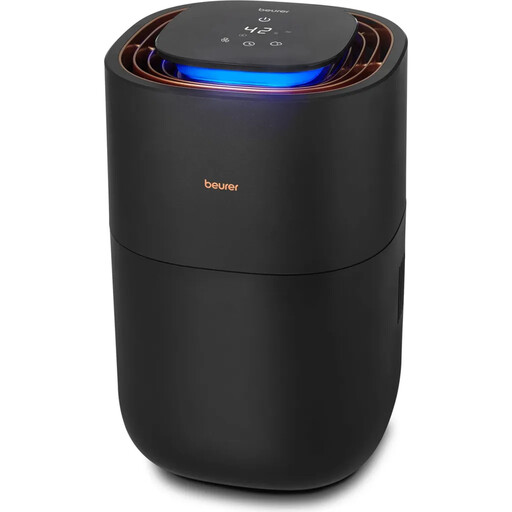
Beurer LB 300 Plus
This evaporative model is worth considering if you want automatic humidity control and a night mode for your workspace.
Beurer rates it for rooms up to 45 m² and lists a humidification output of up to 300 ml/h. The product description mentions selectable humidity settings and filter replacement approximately every six months.
View at Joybuy
 No image available
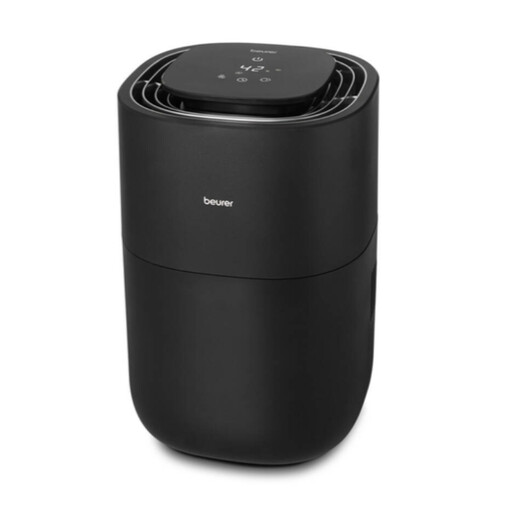
Beurer LB 200
This evaporative humidifier is an option if you’re looking for automatic humidity control and several selectable settings for your home office.
Beurer rates it for rooms up to 30 m². The product description lists three humidity settings, a night mode and an approximate filter replacement interval of six months.
View at Joybuy
 No image available
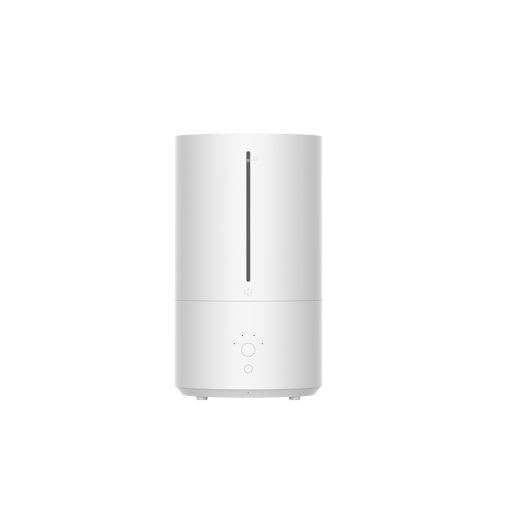
Xiaomi Smart Antibacterial Humidifier 2
This ultrasonic model may suit you if automatic humidity control is important and you’re prepared to keep on top of regular water care.
The product description lists a noise level of 32 dB and top-fill design. The US Environmental Protection Agency warns that ultrasonic humidifiers can release minerals and microorganisms from the tank water into the air.
View at Joybuy
 No image available
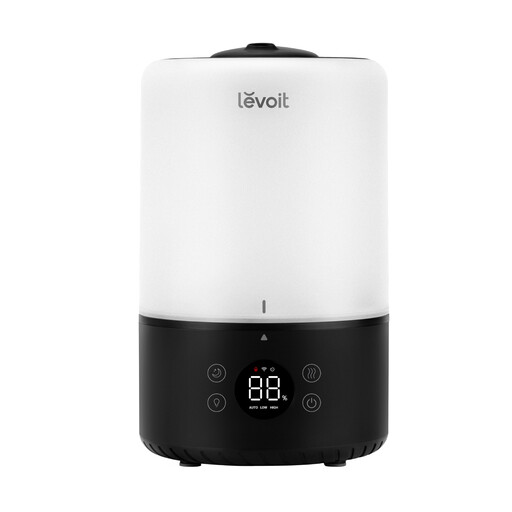
Levoit Top Fill Smart Humidifier, 3 L
This model could suit you if you want to control humidity automatically through the VeSync app and are happy to maintain the filter sponge.
The product title lists a 3-l tank and ≤28 dB. The description recommends cleaning or replacing the filter sponge every 1–2 weeks and using purified or distilled water.
View at Joybuy
 No image available
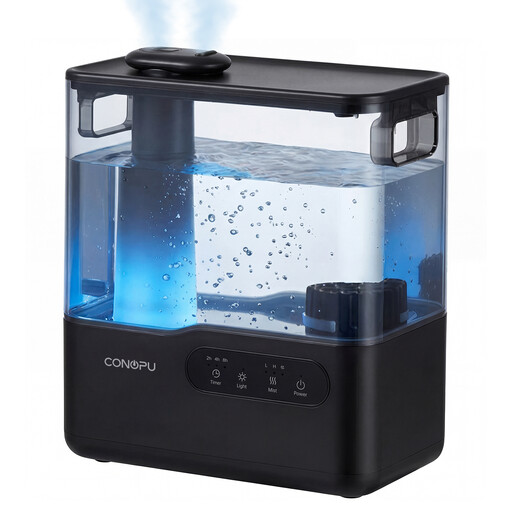
CONOPU 5L Top-Fill Ultrasonic Humidifier
This ultrasonic model is an option if you want to direct the mist outlet and adjust the mist settings.
The product title lists a capacity of 5 l. The description mentions an adjustable 360° outlet, a timer and automatic shut-off when the water level is low. Check the stated room size for your particular needs; ultrasonic humidifiers also require careful water maintenance.
View at Joybuy
Frequently asked questions about humidifiers
Should I switch on a humidifier straight away if the air feels dry because of the heating?
Start by measuring the relative humidity in your home office. The consumer advice centre recommends around 40–60 % as a guide; the German Environment Agency warns that humidity regularly above 50 % in winter can increase the risk of mould. A humidifier is no substitute for ventilating the room when needed.
How should I maintain a portable humidifier?
Always follow the instructions for the specific model first. As general care guidance, the US Environmental Protection Agency recommends emptying, drying and refilling the tank daily, and cleaning portable appliances every third day. Rinse the tank thoroughly after using cleaning products; this guidance is not presented here as a legal requirement in Germany.
Should I expect ongoing costs or need to replace the filter?
Filter replacement intervals for evaporative humidifiers depend on the model. Beurer sells replacement filters for the LB 200 and LB 300 Plus, while Stadler Form recommends replacing Oskar filters every 2–3 months. Check the exact filter type and care instructions before buying. Your statutory rights against the seller are separate from any voluntary guarantee.
What product safety checks should I make when buying an electric humidifier in Germany?
Check the labelling and information for the specific appliance, as well as for clear German-language instructions and warnings. The German Federal Network Agency lists the CE marking, manufacturer details, instructions and declaration of conformity among the criteria it checks when monitoring relevant electrical and electronic products on the market. A CE marking is the manufacturer’s declaration of conformity, not an independent EU safety certification.


