
Lieferung heute & morgen

Qualitätsgarantie

Willkommens-Angebote freischalten: KOSTENLOSE Lieferung | Bis zu 80 % RABATT | Kostenlose 30-Tage-JoyPlus-Testphase
App herunterladen
A small induction saucepan is practical for singles, couples, students and smaller households. It lets you prepare milk, soup, porridge, sauces or a single portion of pasta while taking up very little space. However, a compact size does not automatically mean you have made the right choice. The key factors are a suitable base, a sensible diameter and a surface that suits your everyday needs.
With induction hobs, the description “suitable for all hob types” is not enough on its own. The saucepan base must be magnetically conductive and should sit as flat as possible on the cooking zone. A base that is too small or unevenly made may prevent the hob from detecting the saucepan or may lead to uneven heat distribution.
Look for specific information such as “induction suitable”, “Induction Base” or a multi-layer bonded base. Aluminium saucepans often require an additional stainless steel plate, as pure aluminium does not work on induction hobs.
A small saucepan with a capacity of 1.5 litres is not equally suitable for every task. If it is filled to the brim, there is hardly any room left for stirring. A lower saucepan may be useful for milk or sauce, while a taller model is less likely to splash when cooking soup, porridge or small stews.
As a guide:
A coated saucepan can reduce food sticking to the surface. However, this does not mean that every surface is heat-resistant, scratch-resistant or dishwasher-safe. For ceramic coatings, manufacturers often recommend low to medium temperatures and cooking utensils made from wood, silicone or plastic.
Uncoated stainless steel, on the other hand, is robust and heat-resistant, but milk or starchy foods may be more likely to stick. Enameled cast iron retains heat for a long time, but it is heavier and should not be exposed to abrupt changes from hot to cold.
A 16 cm milk pan is suitable for many small cooking tasks and takes up less space than a 20 cm saucepan. Nevertheless, check the diameter of the actual base, not just the top opening. For a small induction hob, a well-matched base is more important than an especially wide rim.
A long handle makes pouring easier and is well suited to milk or sauce. Two short side handles, on the other hand, can provide greater stability when handling heavier saucepans and larger portions.
A small saucepan with a lid is useful when liquids need to simmer gently or food needs to be kept warm. A glass lid lets you monitor the contents without lifting it, while a metal lid will often withstand higher temperature ranges. Also check whether the saucepan and lid are dishwasher-safe. With wooden handles or delicate coatings, hand washing is often required or recommended.
Stackable models and sets are worth considering for small kitchens. An individual mini saucepan takes up very little space, but a set can cover several diameters and reduce the number of separate purchases required.
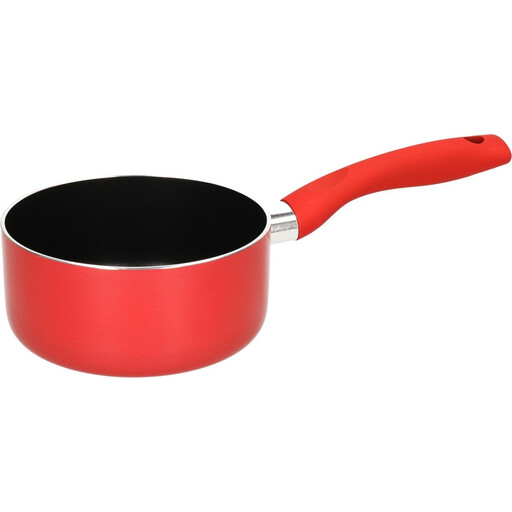
Why this product suits this profile: This 16 cm milk pan, with a capacity of 1.5 litres, is designed for anyone looking for a compact saucepan for milk, sauces and small portions. The aluminium body is fitted with a stainless steel induction disc.
Its induction compatibility is clearly described through the stainless steel base. This means buyers do not have to rely solely on a general statement about suitability for different hob types.
16 cm diameter, 1.5 litre capacity and compatibility with induction, gas, electric, ceramic and halogen hobs.
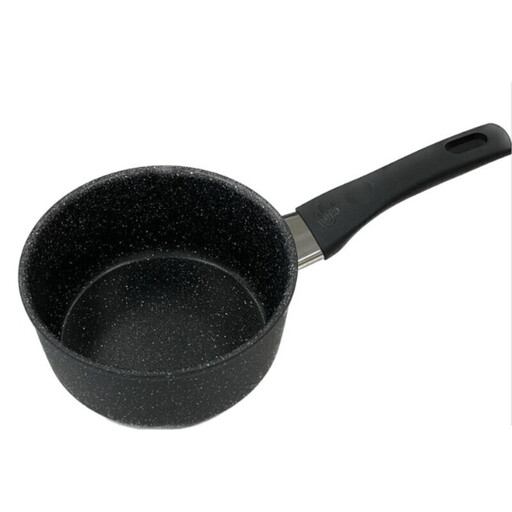
Why this product suits this profile: According to the product information, this milk pan or sauce pan features a glass lid, an aluminium body and a multi-layer Nerolite coating. The stated Thermotion indicator helps you monitor the temperature.
The product description explicitly states that it is suitable for induction and recommends low to medium temperature settings. This helps prevent unnecessary damage to the coating through overheating.
16 cm diameter, glass lid and compatibility with induction, gas, electric and ceramic hobs.
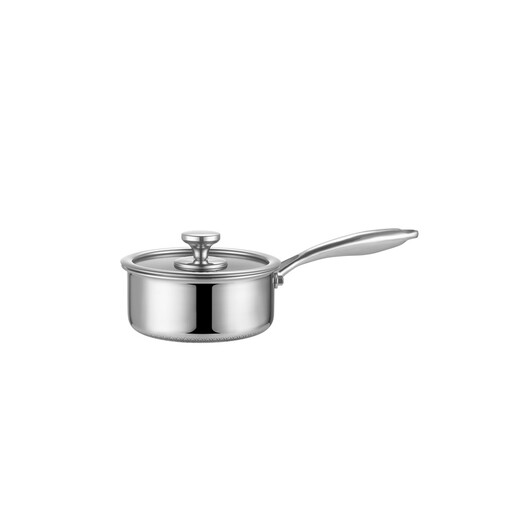
Why this product suits this profile: According to the product description, this 16 cm saucepan is 10.5 cm deep and has a three-layer construction with an aluminium core and ceramic surface. This makes it an appealing option for soups, sauces, braising and small portions of pasta.
The specifications state both the layered construction and its suitability for induction. Buyers can therefore assess heat distribution and hob compatibility based on specific features.
Three-layer construction, 16 cm diameter, ceramic coating and stated oven suitability up to 260 °C; the glass lid has a lower temperature rating.
We have put together a complete, regularly updated list of products that fully meet these strict selection criteria and the safety regulations applicable in the EU.
Service life depends heavily on the material, temperature and cleaning method. Allow a hot saucepan to cool before washing it and avoid sudden temperature changes with enameled cast iron. Coated models should not be heated empty on a high setting. Use soft sponges and suitable kitchen utensils.
White deposits or discolouration can develop on stainless steel. Diluted vinegar or lemon juice can help remove this type of residue; abrasive cleaners should only be used if the manufacturer expressly permits them. With milk pans, also check the handle attachment regularly.
For sauces, milk and small side dishes, 0.5 to 1.5 litres is often sufficient. A 16 cm model is a practical middle ground for many single-person households. For very small quantities, a mini saucepan holding around 250 ml may be more suitable.
Not always. The saucepan base must be magnetically conductive and large enough for the hob to detect it. Check the manufacturer’s information on induction compatibility and make sure the base is flat.
In many cases, food residue can be removed more easily from a coated surface. However, the exact cleaning method depends on the material and the manufacturer’s instructions. For delicate coatings, medium temperatures, soft sponges and plastic or wooden utensils are advisable.