
Lieferung heute & morgen

Qualitätsgarantie

Willkommens-Angebote freischalten: KOSTENLOSE Lieferung | Bis zu 80 % RABATT | Kostenlose 30-Tage-JoyPlus-Testphase
App herunterladen
Small kitchen appliances should save time in everyday life, work reliably and suit your existing kitchen. However, performance figures, accessory lists and claimed features are not always directly comparable. For example, a 1,000-watt appliance is not automatically better suited to every task than a 500-watt model. What matters is how you plan to use it, as well as its construction, capacity, ease of cleaning and safety features.
This guide explains what households, home cooks, keen bakers and coffee lovers should look for when buying electrical kitchen appliances.
Motor power is often prominently advertised. However, it is important to distinguish between rated power and peak power. A food blender or stand mixer may briefly reach a higher peak output, while the rated power provides a better indication of regular operation. For heavy yeast doughs, torque, the gearing and the recommended dough quantity are also relevant.
A bowl with a capacity of 6 litres provides enough room for larger portions. However, the actually recommended quantity may be lower. For example, the Monsga SM100 is specified as having a total volume of 6.0 litres and a recommended capacity of 5.0 litres. This distinction helps prevent overloading and unnecessary mess.
A multifunction appliance may combine a blender, chopper and meat grinder. This saves space if you use these functions regularly. On the other hand, if you only grind coffee or squeeze orange juice occasionally, a dedicated appliance is often easier to use. Before buying, consider which tasks you will carry out at least once a week.
For a stand mixer used for baking, speed control, low-speed settings and a suitable dough hook are particularly important. Low to medium settings are generally better for yeast dough, while a whisk at higher speeds can whip cream or egg whites. A hand mixer with five speeds and a turbo function offers a different level of control from a heavy stand mixer with a fixed bowl.
With a blender, the blade material, container shape and pulse function are just as important as wattage. Processing ice or fibrous vegetables places different demands on the appliance than blending soft fruit. A hand blender can be used directly in a saucepan or beaker, making it practical for soups, purées and smaller quantities.
All surfaces that come into contact with food should be made from clearly specified, food-safe materials. The Monsga SM100 is listed as having a bowl made from 304 stainless steel. For blender containers, features such as BPA-free material, a measurement scale and removable blades are useful for everyday use.
You should also look for:
A blade coffee grinder such as the Aigostar CG-200 is intended exclusively for dry coffee beans, according to the product information. The motor housing must not be immersed in water. Instructions like these are more important than having the longest possible list of accessories.
For Germany, suitable electrical specifications such as 220–240 volts and 50–60 hertz are relevant. A CE marking documents conformity with applicable EU requirements, but it is not an independent quality assessment.
Practical safety features include:
An induction hob requires cookware that is magnetically compatible. Aluminium or ceramic pans without a magnetic base will not work properly. The cooking surface can become hot during operation and should only be cleaned in accordance with the instructions.
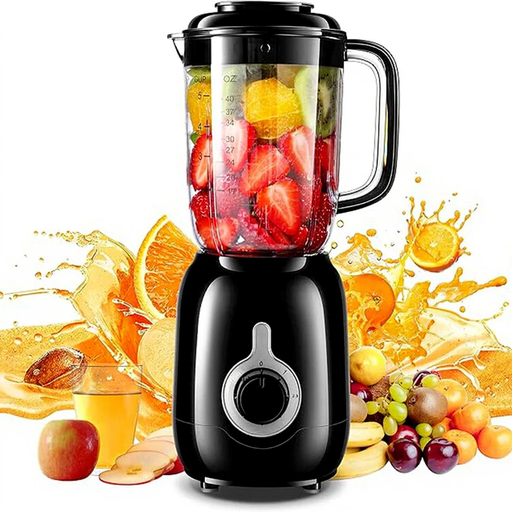
Why this product suits this profile: The 1.2-litre container and 500-watt motor are suitable for smoothies, drinks and smaller food preparation tasks at home.
The stated container size makes the usable quantity easy to understand. A safety lock prevents operation if the container has not been fitted correctly.
1.2-litre capacity, four stainless-steel blades according to the product description, plus an additional grinding or chopping attachment.
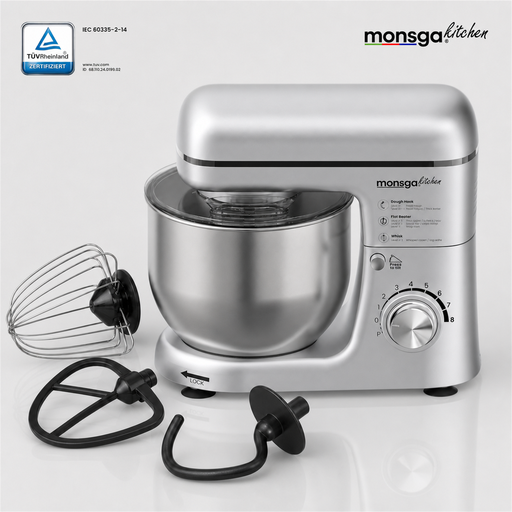
Why this product suits this profile: Keen bakers get a 6-litre stainless-steel bowl, eight speed settings and accessories for kneading, mixing and whisking.
The specifications distinguish between 1,000 watts of peak power and 600 watts of rated power. Overload protection, a tilting motor unit and a recommended filling quantity are also specified.
304 stainless-steel bowl, eight settings, dough hook with coated surface according to the product information, and dishwasher-safe accessories.
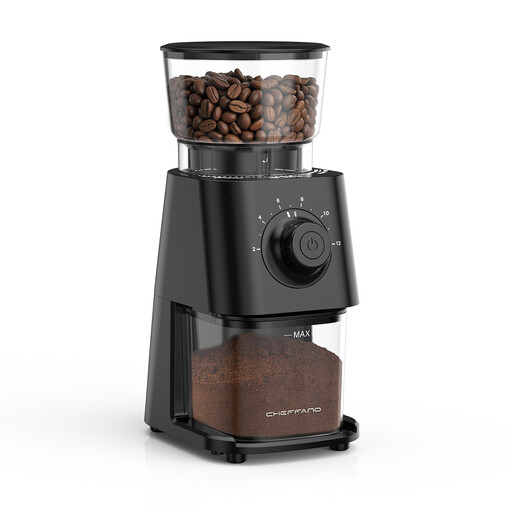
Why this product suits this profile: For coffee lovers who use different brewing methods, the specified 30 grind settings are particularly useful.
The grind settings are given as a specific number rather than being promoted simply as “precise”. The grinder is intended for dry coffee beans.
Conical burr grinder, 30 grind settings according to the product description, and capacity for up to twelve cups.
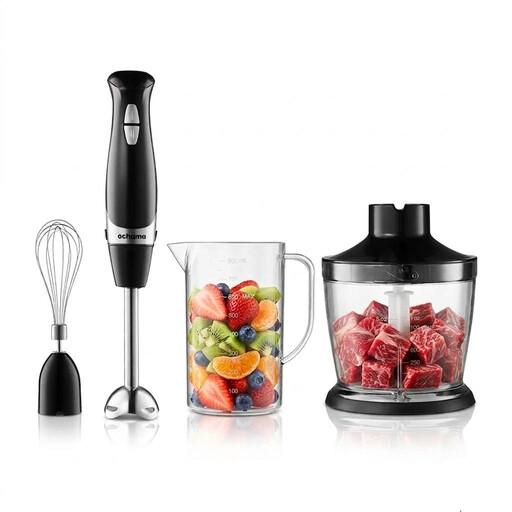
Why this product suits this profile: The hand blender takes up very little space and handles several daily tasks with its whisk, chopper and 800-millilitre beaker.
The package contents list the individual attachments and container sizes. This makes it easier to check whether the set can genuinely replace your existing blender or chopper.
600-watt motor, two speeds, removable parts and a 500-millilitre chopper according to the product description.
We have put together a complete, regularly updated list of products that fully meet these strict selection criteria and the safety regulations applicable in the EU.
For freshly squeezed juice, a citrus juicer with a 1.4-litre container and pulp separation can be a sensible choice. It should only be used with suitable citrus fruit. If you want to prepare mince, sausages or kibbeh yourself, you will need a meat grinder with suitable mincing discs and parts that are easy to dismantle.
An induction hob is practical for small kitchens, as an additional cooking zone or for use away from a permanent kitchen. Before buying, check pan compatibility, power settings, dimensions and the position of the ventilation openings. For baking recipes involving small quantities of dough, a hand mixer may be sufficient; if you regularly make bread or pizza dough, a stand mixer with a sturdy bowl provides greater convenience.
For limited space, a hand blender, compact blender or hand mixer is often easier to store than a stand mixer. A 4-in-1 hand blender can replace several individual appliances, provided the included attachments are suitable for the recipes you plan to make.
Their lifespan depends on how frequently they are used, the workload, cleaning and storage. Follow the recommended filling quantities, allow motors to cool down during longer applications, and clean the blades and accessories according to the instructions. The motor housing of electrical appliances must never be placed in water.
You can estimate running costs using the following formula: Power in kilowatts × operating time in hours × electricity price per kilowatt-hour. An appliance rated at 500 watts uses around 0.083 kilowatt-hours when operated for ten minutes. The actual cost depends on your individual electricity tariff and how long you use the appliance.