
Lieferung heute & morgen

Qualitätsgarantie

Willkommens-Angebote freischalten: KOSTENLOSE Lieferung | Bis zu 80 % RABATT | Kostenlose 30-Tage-JoyPlus-Testphase
App herunterladen
Small kitchen appliances are designed to make everyday life easier, but that does not necessarily mean they need little space or maintenance. Particularly with coffee machines, electric coffee grinders, smoothie blenders and food processors, lavish product promises often lead to unsuitable purchases. What matters is clear technical data, suitable capacities and a cleaning effort that fits your everyday routine.
A high wattage rating initially describes only the electrical power consumption or the motor power specified by the manufacturer. On its own, it says little about how evenly an electric coffee grinder grinds, how well a countertop blender processes ingredients or how long an appliance can run without a break.
You should also look at:
A combination appliance can save space if its accessories are used regularly. However, if it comes with numerous attachments that are difficult to clean or awkward to store, its practical benefits remain limited. A food processor with a meat grinder, blender and dough hook is mainly suitable for households that genuinely need these functions.
Removable containers, dishwasher-safe accessories and an easily accessible grinder reduce the maintenance effort. Appliances with milk systems, such as bean-to-cup coffee machines, also require cleaning and descaling programmes. Before buying, check which parts may be cleaned with water and which should only be cleaned dry or with a cloth.
For a smoothie blender, motor power, the pulse function and blade design are important. According to the product information, the HoninJoy Smoothie Blender features a 650-watt motor, a pulse function and overheating protection. A safety lock prevents operation if the cup and blade base are not fitted correctly.
With a spice grinder or electric coffee grinder, the amount it can process is often more important than the highest possible wattage. According to the product data, the ADLER AD 4446ws has 150 watts, a metal container for up to 75 grams of coffee beans and a safety lock on the transparent lid.
A manual coffee grinder or an electric conical burr grinder typically offers a finer grind adjustment than simple blade grinders. This is useful if you switch between espresso, French press and filter coffee.
According to the manufacturer, the HiBREW G3 Automatic Burr Mill Coffee Grinder offers 34 grind settings, a conical burr grinder, a bean hopper with a capacity of 210 grams and a grounds container for 100 grams. By contrast, a manual coffee grinder such as the Cuisync KMDJ-A4 is designed for 20 to 30 grams of beans. This is better suited to individual brewing sessions and does not require a power connection.
Measure the available surface area, including the height beneath wall units. A bean-to-cup coffee machine also needs space for removing the water tank and brewing unit. The Melitta Latticia OT F300-101 is listed as measuring 20 × 45.9 × 35.2 centimetres and has a 1.5-litre water tank as well as a bean hopper for 250 grams.
For small kitchens, offices or motorhomes, compact kitchen appliances with portion cups are often more practical. The HoninJoy Blender is supplied with two portable cups measuring 20 oz and 14 oz. According to the product information, the cups, lids and grinding cup are dishwasher-safe; however, you should still check the specific suitability in the instruction manual.
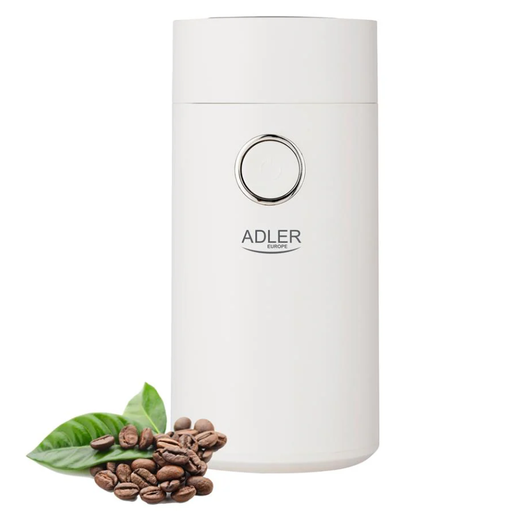
Why this product suits this profile: This compact electric coffee grinder is ideal for households that want to grind coffee beans in portions and have limited worktop space.
The stated maximum capacity of 75 grams makes the capacity clear. The lid lock and transparent lid make it easier to monitor the grinding process safely.
150-watt motor, metal container, compact dimensions of 9.6 × 9.6 × 19.6 centimetres and a retractable cable.
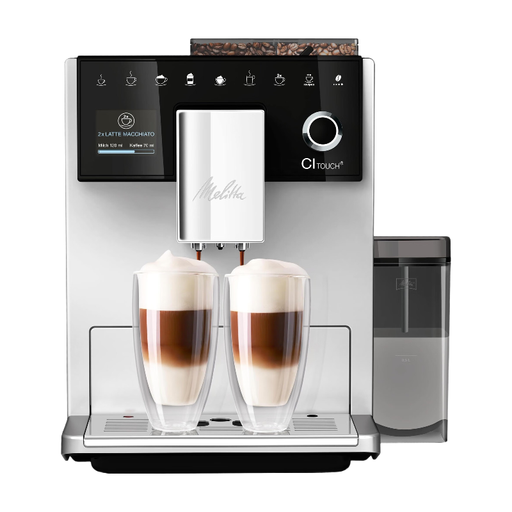
Why this product suits this profile: This bean-to-cup coffee machine is aimed at households with several coffee drinkers and different preferences for strength, recipes and beans.
The specifications list specific adjustment options: five grind settings, four coffee strengths, ten pre-set recipes and a removable brewing system.
1.8-litre water tank, two-cup function, dual-compartment bean hopper and programmable milk frother.
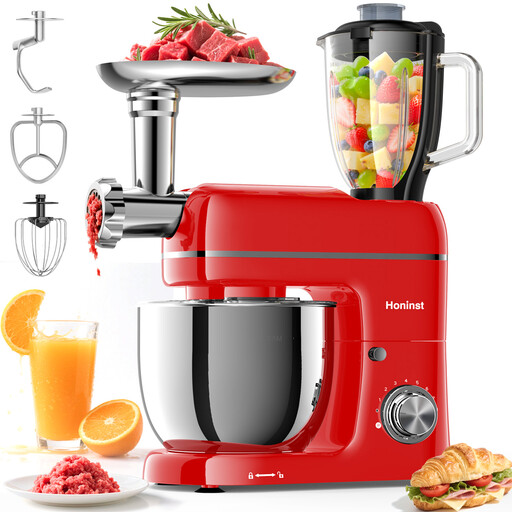
Why this product suits this profile: This food processor is appealing to people who regularly prepare dough, creams, minced meat or smoothies and want to combine several appliances in one.
The intended use and operating limit should be observed: according to the product information, the appliance should not run for more than six minutes at a time.
1,300-watt motor, 6-quart stainless steel bowl, eight speed settings, plus dough hook, whisk, blender and meat grinder attachments.
We have put together a complete, regularly updated list of products that fully meet these strict selection criteria and the safety regulations applicable in the EU.
For limited worktop space, personal blenders with portable cups, compact electric coffee grinders and manual coffee grinders are suitable. Pay attention to the height beneath wall units, cable storage and stackable accessories. A bean-to-cup coffee machine or large food processor, on the other hand, permanently requires more worktop and storage space.
It is not possible to give a general fixed lifespan. It depends on the materials, frequency of use, cleaning and adherence to operating times. Regular descaling of coffee machines, dry cleaning of certain grinders and avoiding overfilling can help support the intended service life. The instruction manual and warranty terms remain the key references.
Ongoing costs include electricity, coffee beans, filters, descaler, cleaning products and, where applicable, spare parts. Appliances with milk systems usually require additional care. With a manual coffee grinder, there is no electricity consumption, while a bean-to-cup coffee machine may require more maintenance because of its convenience features and automatic programmes.