
Lieferung heute & morgen

Qualitätsgarantie

Willkommens-Angebote freischalten: KOSTENLOSE Lieferung | Bis zu 80 % RABATT | Kostenlose 30-Tage-JoyPlus-Testphase
App herunterladen
A dish drainer should hold plates, glasses and cutlery neatly after washing up, keep water off the worktop and take up as little space as possible. In small kitchens, flats or households without a dishwasher, design is therefore not the only consideration. Dimensions, stability, water drainage and easy cleaning are what really matter.
Many products look very similar at first glance. However, certain design details can lead to unnecessary follow-up costs or limit how the drainer can be used day to day.
A two-tier dish drainer makes good use of vertical space, but it often requires more depth than a flat model. The position of the water outlet must also be taken into account. So, measure not only the available width next to the sink, but also the depth, height and distance from wall-mounted cupboards.
A draining tray collects water and protects the worktop. However, if it is not emptied and cleaned regularly, limescale deposits or stagnant water can build up. Look for a removable tray with easily accessible edges. Some models are not dishwasher-safe, meaning they need to be cleaned by hand with mild washing-up liquid.
An inexpensive dish rack can tip over or become misshapen if it is loaded unevenly. Plates and heavy pans in particular should not be placed entirely on one side. Information about the maximum load, non-slip feet and an even frame are therefore more important than decorative coatings.
Compare the external dimensions with the space next to your sink. A flat dish drainer with draining tray is suitable for households that mainly need to dry plates, cups and cutlery. A two-tier dish rack can hold more, but requires sufficient height and a stable base.
Examples of different formats:
Capacity figures should be treated as a guide. The actual amount depends on plate diameter, the shape of the crockery and how the weight is distributed.
For areas that remain damp, steel, stainless steel and suitable plastic components are commonly used materials. A stainless steel dish rack may be appealing thanks to its moisture-resistant construction. Even so, any remaining water should be removed and surfaces cleaned regularly.
Coated steel can also be a suitable choice, provided the coating remains undamaged. Scratches or chips should not be ignored, as moisture can remain in these areas for longer. Plastic trays made from PP, ABS or comparable materials are lightweight and easy to wipe clean. Check the relevant care instructions rather than assuming that a product is dishwasher-safe.
A cutlery drainer should hold knives, forks and spoons upright and, where possible, separately. Several compartments make sorting easier and improve air circulation. A spout or defined drainage opening can direct water away more effectively, but it does not remove the need to empty and clean the drainer.
For a small worktop, a space-saving dish drainer with a removable cutlery holder is practical. This allows the rack to be adapted to your daily washing-up needs or stored away more easily when required.
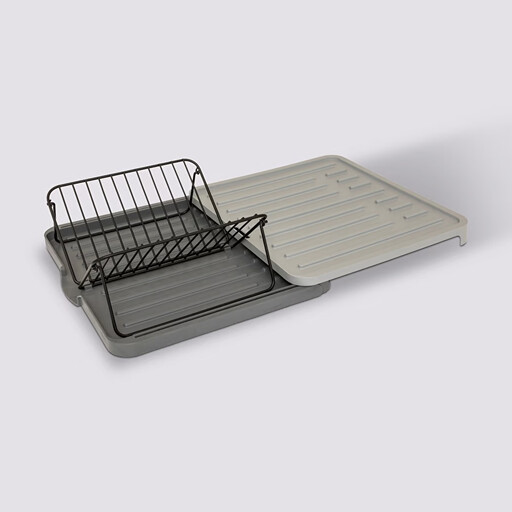
Why this product suits this profile: This flat model offers a straightforward solution for households that want to dry plates and glasses next to the sink.
The removable polypropylene tray catches draining water. The dimensions are clearly stated, making it easy to check the available footprint before buying.
Steel rack, draining tray and space for six glasses according to the product details.
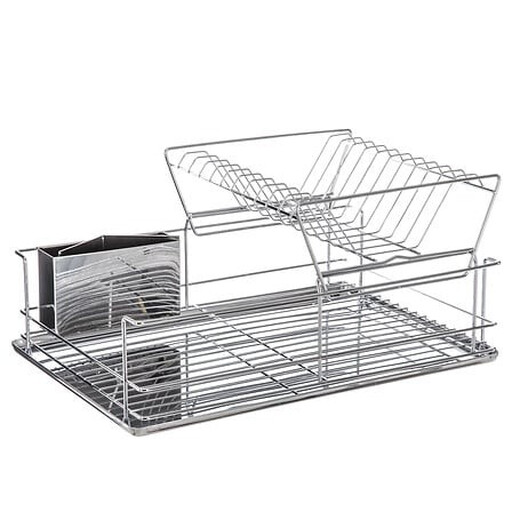
Why this product suits this profile: Two tiers and a steel and stainless steel construction appeal to households that want to dry different types of crockery in an organised way.
The dimensions of 47 × 32,3 × 22,5 cm and the material information make it easier to assess the product objectively before buying.
According to the product details, it can hold up to ten plates and twelve cups; the two tiers make good use of vertical space.
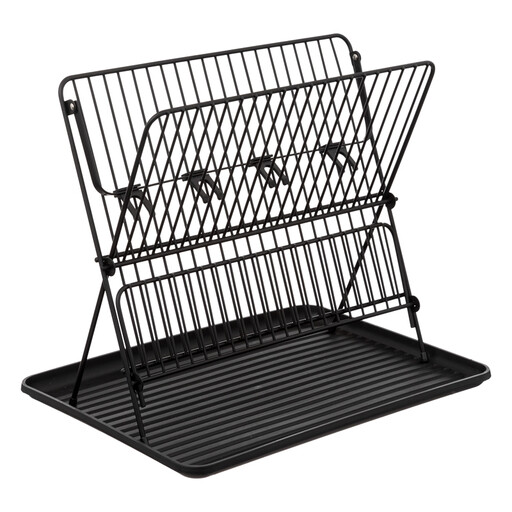
Why this product suits this profile: The foldable design is suitable for kitchens where the available space changes or for occasional use.
The removable tray helps reduce stagnant water on the worktop. When loading it, avoid placing too much weight on one side of the upper tier.
Two tiers, steel and PP components, plus flat storage when not in use according to the description.
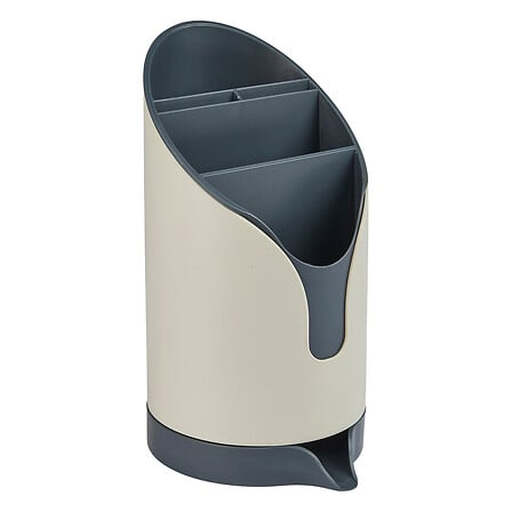
Why this product suits this profile: As a separate cutlery drainer, this model is ideal for kitchens where knives, forks and small kitchen utensils need to be kept neatly organised.
Several compartments prevent cutlery from becoming jumbled together. The integrated spout helps drain away water.
ABS plastic, 12,8 × 11 × 20,2 cm and several separate sections according to the product description.
We have put together a complete, regularly updated list of products that fully meet these strict selection criteria and the safety regulations applicable in the EU.
First, measure the available space next to the sink. For small kitchens, compact models around 40 to 50 cm wide are often easier to accommodate. With a two-tier dish drainer, you must also consider the height up to wall-mounted cupboards or shelves.
Stainless steel is suitable for damp environments, but its specific resistance depends on the quality of the material, the construction and how it is cared for. Water, salt or cleaning-product residue should not be left on the surface for long periods. Even with a stainless steel dish rack, regular drying is recommended.
Empty the tray after every use, rinse it regularly and dry the contact surfaces. A model with a spout can direct water away more effectively. The key point is to ensure that the dish drainer is positioned correctly and that the tray can be removed easily.