What should you prioritise when buying?
First check that the appliance and its open door will fit in your kitchen. Then compare fridge and freezer capacity separately, and finally consider the defrosting method and energy consumption.
| Criteria |
What to check when buying |
Who is this most important for? |
| Fit and door opening |
Measure the alcove, access route, wall clearance and depth with the door open, then check these against the specifications for the exact model. |
If my kitchen has only a narrow alcove, I want to be able to reach the containers even when the door is open. Around 40% of consumers put fit first. |
| Usable fridge space |
Compare fridge and freezer capacity separately, and take shelf space and container height into account. |
If I’m chilling fruit salad and other fresh food, I need enough room for suitable containers. Around 30% of consumers prioritise fridge space. |
| Freezer compartment and defrosting |
Check the freezer capacity and cooling system using the full model number. |
If I regularly freeze food for later, I want enough freezer space and to know how much defrosting is required. Around 20% of consumers focus first on freezer needs and maintenance. |
| Energy consumption |
For appliances of a suitable size, compare annual consumption in kWh and the energy label. |
If running costs are particularly important to me, I compare the energy consumption of appliances that are the right size. Around 10% of consumers put running costs first. |
Joybuy products for small kitchens
The fridge-freezers below include compact appliances, a range of fridge capacities, and models with No Frost or Low Frost. Compare the stated dimensions with your kitchen, and the fridge and freezer capacities with what you actually need.
 No image available
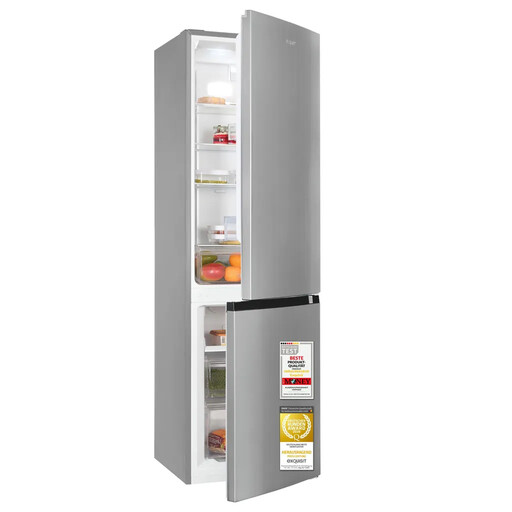
Exquisit KGC5265-70-NF-040C inox look
The separate fridge compartment has room for fruit salad containers and other fresh food, provided the appliance fits in your kitchen.
253 l total usable capacity: 182 l fridge compartment and 71 l freezer compartment.
No Frost; energy class C; 141 kWh/year; 54.5 cm wide; 39 dB.
Joybuy
 No image available
Exquisit KGC5232-60-E-040C inoxlook-az
At 49.5 cm wide, this model may suit a tight-fitting alcove. Check that the fridge has enough room for your containers and shopping.
173 l total usable capacity: 121 l fridge compartment and 52 l freezer compartment.
Freestanding; LED lighting; reversible door.
Joybuy
 No image available
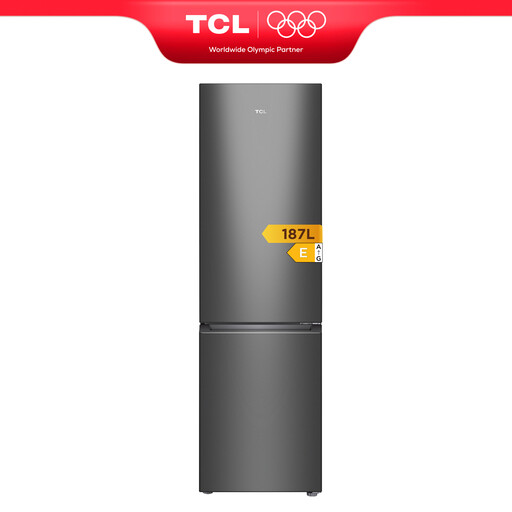
TCL RF366BSE0DE
The stated fridge capacity suits households looking to store fresh food as well as fruit salad, provided the appliance fits in their kitchen.
282 l total capacity: 202 l fridge compartment and 80 l freezer compartment.
Compact size, 55 cm wide; Total No Frost; inverter compressor; reversible door.
Joybuy
 No image available
CHiQ JR263LGE, black
At 54 cm wide, with separate fridge and freezer compartments, this model can be compared with the space available and the amount of food your household stores.
262 l total capacity: 187 l fridge compartment and 75 l freezer compartment.
54 cm wide, 55 cm deep and 176 cm high; reversible door.
Low Frost; occasional manual defrosting may be required.
Joybuy
 No image available
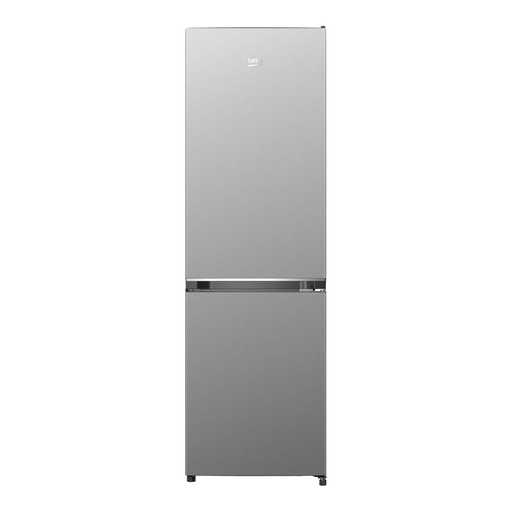
Beko B3RCNO255XB, Inox
This No Frost model may suit you if you store frozen food and want to avoid manual defrosting. Check that its annual energy consumption meets your needs.
250 l total capacity: 180 l fridge compartment and 70 l freezer compartment.
54 cm wide; No Frost; energy class D; 172 kWh/year.
Reversible door and adjustable glass shelves.
Joybuy
Frequently asked questions
Where should I store prepared fruit salad?
Eat cut fruit promptly, especially melon, or keep it chilled in the fridge. The German Federal Institute for Risk Assessment recommends this approach. For shop-bought fresh-cut products, also follow the manufacturer’s instructions on chilling and the use-by date.
What should I measure before installation?
Measure the space available and the access route. For the specific model, check the wall clearance and the depth with the door open. For example, the manufacturer gives a depth of 107 cm with the door open for the Exquisit KGC5265-70-010E weiss; this measurement does not apply to other models.
Do all small fridge-freezers need to be defrosted manually?
No, the defrosting method depends on the model. The Exquisit appliances listed are specified as requiring manual defrosting, while Beko describes the B3RCNO255XB as No Frost. Check the full model number and the specifications for that appliance.
How can I compare appliances’ energy consumption?
Compare the stated annual energy consumption in kWh for appliances that are the right size for your needs. To estimate your annual electricity costs, multiply the consumption by your own electricity price per kWh. The consumer advice centre points out that larger fridges can use more electricity.


