First, check that the appliance will fit the available space and that the door can open fully. Then make sure the specific freezer compartment is suitable for freezing fresh food: the Verbraucherzentrale recommends a four-star compartment for this. A small compartment may be enough for the occasional small portion; if you regularly freeze larger quantities, compare fridge-freezers with a dedicated freezer section. Freezer capacity, annual energy consumption and the effort involved in defrosting can help you weigh up the right size and features.
Who might be looking for the right appliance
Limited space
If there’s little room for an appliance in your small kitchen, its external dimensions, door opening and usable freezer space all need to work together. The Verbraucherzentrale recommends checking the star rating of any freezer compartment.
Regular portions for the freezer
If you regularly freeze bananas or other food, you’ll need room for portion-sized containers. Compare the freezer capacity with the amount you usually store. The Bundeszentrum für Ernährung explains how to freeze overripe bananas, cut into thin slices, in freezer bags.
Keeping running costs in mind
If you’re choosing an appliance that will be running all year round, compare its stated annual energy consumption and make sure its size suits your needs, rather than basing your decision on the purchase price alone. The EU energy label shows annual energy consumption.
What to consider when buying
When freezing fresh banana slices, freezer space isn’t the only thing to consider: the Verbraucherzentrale recommends a four-star compartment for freezing fresh food.
Small four-star freezer compartment
A good fit if: you only freeze small portions occasionally and don’t store many other things.
The trade-off: limited freezer space means you can only fit a certain number of portions in at once.
Fridge-freezer with a separate freezer section
A good fit if: you regularly freeze bananas and other food, and the appliance’s height works in your kitchen.
The trade-off: check that the space available and freezer capacity suit your household, rather than choosing a larger appliance just for extra storage.
| What to consider |
What to check when buying |
Who is this important to? |
| Appliance dimensions and door opening |
Compare the width, height and depth with the space available, and allow room for the door to open. |
If my kitchen has limited space, the appliance must fit in the available alcove, with enough room to open the door. Around 33% of consumers put finding an appliance that fits their space first. |
| Freezing and food storage |
For a freezer compartment, check that it has a four-star rating. Compare the freezer capacity and, for larger quantities, the stated freezing capacity. |
If I regularly freeze portions of banana slices or other food, I need enough freezer space. Around 27% of consumers prioritise freezing and food storage. |
| Energy consumption |
Compare the annual energy consumption in kWh and the capacity shown on the energy label for specific models. |
If I want to estimate running costs, I compare annual energy consumption with my electricity tariff. Around 20% of consumers put running costs first. |
| Care and portioning |
Check how the specific model needs to be defrosted; store banana slices in suitable freezer bags or containers in portion-sized amounts. |
If I want to take out portions easily and factor in the effort of defrosting, how easy the freezer section is to maintain matters to me. Around 20% of consumers prioritise easy care. |
Common buying mistakes
-
Assuming an icebox is suitable without checking
Not every small icebox is suitable for freezing fresh portions.
Check the star rating of the specific compartment. The Verbraucherzentrale recommends a four-star compartment for this.
-
Measuring only the appliance’s width
A slim appliance might still be too tall or too deep for the space you have in mind. The way the door opens also affects how easily you can reach the compartments and drawers.
Compare the specific model’s width, height and depth with the available space, and check that the door can open far enough.
-
Considering only the purchase price
A fridge-freezer usually runs all year round, so its annual energy consumption affects your ongoing electricity costs.
Compare models of a suitable size and check their annual energy consumption in kWh on the energy label.
Your ongoing electricity costs depend on the stated annual energy consumption, how long you use the appliance and your electricity tariff.
Brands and specific model examples
The details below apply to the models mentioned and aren’t a general assessment of each brand.
Amica
The KGC 15630 R is a freestanding fridge-freezer, 55 cm wide, with the freezer section at the top.
- Amica lists static cooling and energy class E for this model.
- These details apply to the KGC 15630 R and may not apply to all Amica appliances.
Beko
The B3RCNO255XB is a freestanding fridge-freezer with the freezer section at the bottom and a width of 54 cm.
- Beko lists energy class D, NoFrost and a reversible door for this model.
- If you’re planning to store portions and other food, check the freezing specifications for the specific model.
Liebherr
According to Liebherr, the KGwe 1455 2,6 is 55 cm wide and 137.2 cm tall.
- Liebherr lists a total capacity of 210 l and SmartFrost for this model.
- According to the manufacturer, SmartFrost reduces frost build-up, but doesn’t rule out the need for manual defrosting altogether.
Joybuy product selection
The fridge-freezers below combine refrigeration with freezer space. For occasional portions, compact external dimensions are important; if you regularly store food, freezer capacity and the rating of the specific freezer section matter too.
 No image available
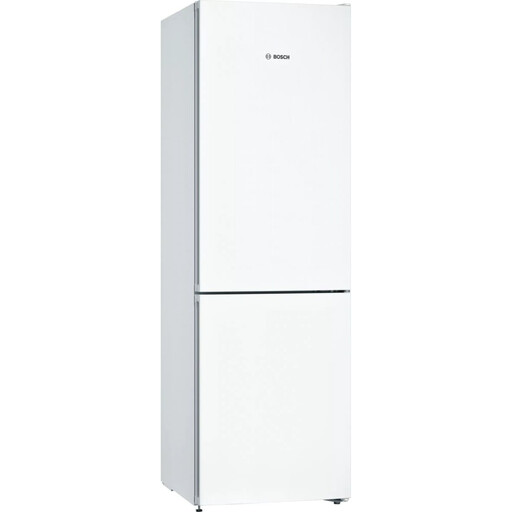
Bosch Serie 4 KGN36VWED, 326 l, NoFrost, energy class E
According to the product details, the four-star freezer section is suitable for freezing fresh portions and has a stated capacity of 89 l.
Dimensions: 60 × 66 × 186 cm; the door is reversible. NoFrost is listed for both the fridge and freezer sections.
View on Joybuy
 No image available
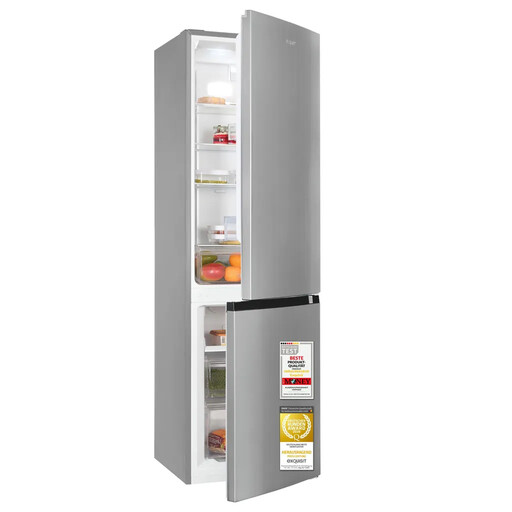
exquisit KGC5265-70-NF-040C, 253 l, No Frost, inox look
The stated freezer capacity of 71 l provides a separate space for storing portions.
The product details list a width of 54.5 cm, energy class C and a noise level of 39 dB. The door is reversible.
View on Joybuy
 No image available
exquisit KGC5232-60-E-040C, 173 l, four-star freezer compartment
According to the product details, the four-star freezer compartment is suitable for freezing fresh food and has a capacity of 52 l.
The listed dimensions are 49.5 cm wide and 142.5 cm high, with energy consumption of 124 kWh/year. The door is reversible.
View on Joybuy
 No image available
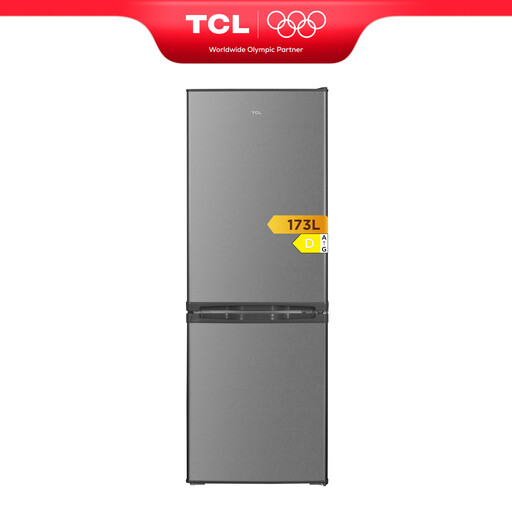
TCL RF225BID0DE, 173 l, energy class D
The separate fridge and freezer sections may be useful for storing portions separately from chilled food.
The product details list a fridge capacity of 121 l and a freezer capacity of 52 l. If you want to freeze fresh banana slices, check the star rating of the freezer section before buying.
View on Joybuy
 No image available
CHiQ JR263LGE, 262 l, Low Frost
According to the product details, the freezer section has a four-star rating and a capacity of 75 l.
The stated dimensions are 54 × 55 × 176 cm; the model has three freezer drawers and Low Frost.
View on Joybuy
Frequently asked questions
How can I tell if a small freezer compartment can freeze fresh banana slices?
Check the star rating of the specific compartment: the Verbraucherzentrale recommends a four-star compartment for freezing food. It recommends a freezer temperature of −18 °C for storage.
How should I prepare banana slices for freezing?
The Bundeszentrum für Ernährung recommends cutting overripe bananas into thin slices and freezing them in freezer bags overnight. Suitable packaging and portion-sized quantities make storage and taking out what you need easier.
What information can help me compare electricity costs?
The EU energy label shows information including the energy class and annual energy consumption. To estimate the cost, multiply the stated kWh per year by your electricity price per kWh. The actual consumption may vary depending on where the appliance is installed and how you use it. Plus-sign energy classes have not been used for refrigeration appliances since 2021.
Can an old fridge go in household rubbish in Germany?
No. The Umweltbundesamt recommends that old electrical appliances are not disposed of with household rubbish. You can take one to a recycling centre or return it to a retailer, for example. If you’re having a new appliance delivered, check separately how the specific old appliance can be taken back.


