Parents with school clothes to dry in a hurry
If you need certain suitable items again soon after a rainy day, it’s worth checking the load limit and what a quick programme is designed for.


If there’s room in your laundry nook for a separate appliance, a heat pump tumble dryer with a moisture sensor is a sensible choice. For items you need in a hurry, a quick or small-load programme may help, as long as it’s suitable for the care label and load size. Measure the appliance, door access and installation space, then compare the Eco cycle duration and kWh per 100 Eco cycles. A quick programme isn’t automatically suitable for a full drum or every type of school clothing.
If you need certain suitable items again soon after a rainy day, it’s worth checking the load limit and what a quick programme is designed for.
As well as the appliance depth, check the door opening, route into your home and installation clearances. If you’re planning to stack a washer and dryer, make sure the specific appliances are compatible.
Compare the capacity you need, energy consumption on the Eco programme and the programmes available for the fabrics you regularly want to dry.
First, decide whether you really have room for a separate appliance. Then consider the programmes, capacity and energy consumption that suit your household.
A good fit if: You have room for a separate appliance beside or on top of a suitable washing machine, and regularly dry suitable laundry.
Things to weigh up: The dimensions, access through the doorway and installation space must all work. The Eco cycle duration and programme limits aren’t the same as the duration of a quick programme.
A good fit if: There’s no space for a separate tumble dryer and the amount of laundry that can be dried suits the load size.
Things to weigh up: Compared with separate appliances, the Verbraucherzentrale notes that washer-dryers use more electricity and water. Check the washing and drying capacities separately, as well as the label for the full wash-and-dry cycle.
| Priority | What to check when buying | Who is it most important for? |
|---|---|---|
| Drying clothes in time | Check the care label, programme description and load limit for the items you need to dry. | If I need certain school clothes again soon, I want to know whether the specific quick programme suits the fabric and load size. Around 29 % of consumers say their top priority is having suitable clothes ready in time. |
| Space requirements | Measure the appliance, door swing and route into your home. If stacking, check that the appliances and stacking kit are compatible. | For a compact laundry nook, I want to know whether the appliance will actually fit and whether I can access it. Around 29 % of consumers say their main concern is limited space for an appliance. |
| Running costs | Compare kWh per 100 Eco cycles and the Eco cycle duration for the same model variant. The Verbraucherzentrale recommends using the energy label as the basis for comparing consumption. | If we dry clothes frequently, I want to include electricity use in our running costs. Around 24 % of consumers prioritise low running costs above all else. |
| Different fabrics | Check the care label and programme description for each fabric. Only apply manufacturers’ claims about specialist programmes to the specific model in question. | If I have a mix of school clothes, including delicate fabrics, I want to find programmes that suit their individual care instructions. Around 18 % of consumers say fabric care is their main priority. |
The door opening, route into your home and installation space all need to work too. If you’re stacking appliances, you’ll also need to check that the specific models can be connected.
Measure the alcove and access route, and check the installation instructions for both appliances. You may need a stacking kit that’s compatible with your models.
A compatible stacking kit may be an additional purchase if you plan to stack your appliances.
Quick programmes are designed for specific settings and load sizes. Different fabrics and full drums may need a different approach to drying.
Check the care label and programme description first, then allow enough time for the programme that suits your laundry.
A washer-dryer saves space, but its drying capacity may be lower than its washing capacity. Compared with separate appliances, the Verbraucherzentrale notes that washer-dryers use more electricity and water.
Compare the washing and drying capacities, as well as the energy consumption for a complete wash-and-dry cycle. A washer-dryer is especially worth considering if you don’t have room for a separate appliance.
Beko offers heat pump tumble dryers in a range of capacities. For the B3T41239, the manufacturer lists a depth of 54,3 cm and a capacity of 7 kg.
According to Bosch, the Bosch Serie 6 WQG235D00 combines an 8 kg capacity with Auto Dry and an Extra-Kurz-40 programme.
According to the manufacturer, the Siemens iQ500 WQ35G2D90 has an 8 kg capacity, with options for half loads and outdoor clothing.
According to AEG, the AEG 8000 AbsoluteCare TR8T70680 has an 8 kg capacity, MixDry and programmes for different fabrics.
The Miele T1 TWC640WP is an 8 kg heat pump tumble dryer. Product information includes app control among its features.
These are separate heat pump tumble dryers for households looking to dry suitable clothes on rainy days. Compare their programmes and dimensions with your laundry and the space available.
 No image available
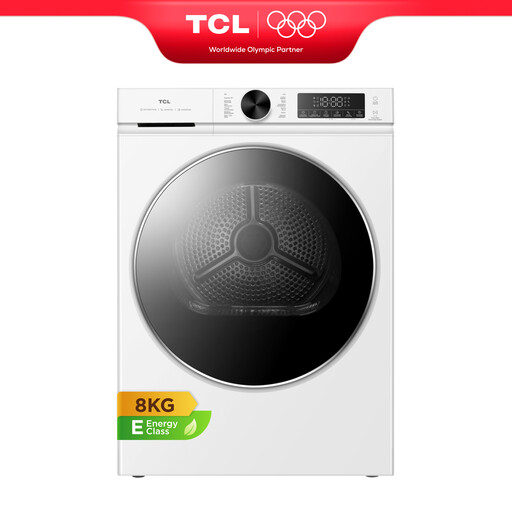
An option if you need a clearly specified quick programme and a suitable load size.
The product description lists Quick Dry in 30 minutes, Auto Dry, 3D Drying and Gentle Dry.
 No image available
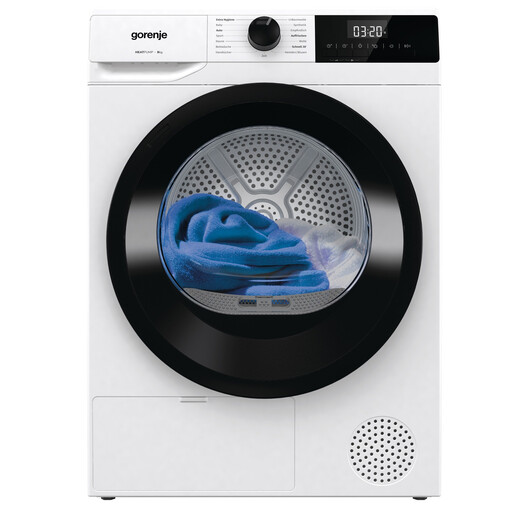
The listed quick programmes may be useful if they’re suitable for your laundry and load size.
The product description lists Speed 30’, Quick Pro and AutoDry. Dimensions listed: 595 × 845 × 550 mm; door opening: 135°. Check these measurements against your alcove and access route.
 No image available
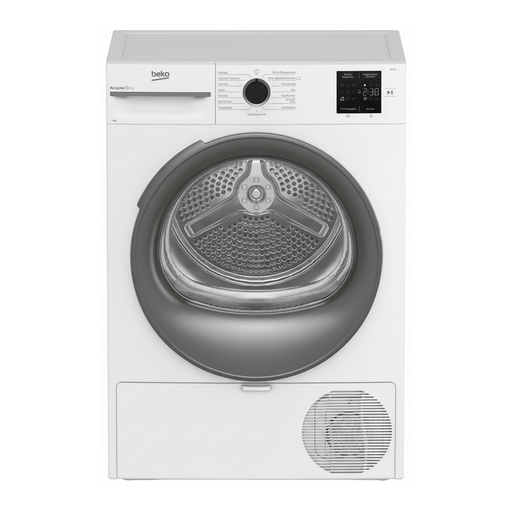
Could be worth considering for a laundry nook with limited depth, provided the listed dimensions and door access work for you.
The product description lists a depth of 54,5 cm, width of 59,8 cm and height of 84,6 cm, as well as Express and Outdoor/Sports programmes.
 No image available
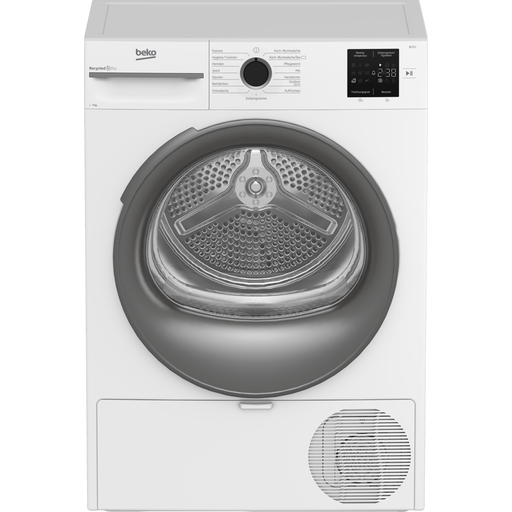
The listed depth could suit a smaller laundry nook. Be sure to check the door access and available space too.
The product description lists dimensions of 84,6 × 59,8 × 54,5 cm, 15 programmes, and Express and Outdoor/Sports programmes with sensor drying.
 No image available
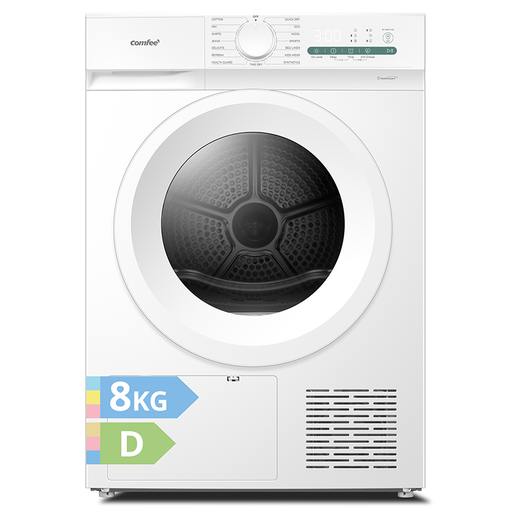
A programme with a specified duration could be useful when you need to dry clothes in a hurry, provided the fabric and load are suitable.
Product information lists energy class D and a 30-minute drying cycle.
Compare the capacity with the loads you actually want to dry, and check the load limit for the specific quick or specialist programme. The stated capacity doesn’t automatically mean that every programme setting can handle that amount.
Only if both specific appliances are suitable for stacking and you use a compatible stacking kit. Bosch specifies that the tumble dryer goes on top. Before installation, check the dimensions, door access and installation instructions.
Clean the lint filter regularly and follow the care labels. An outdoor programme on a particular model doesn’t automatically mean that every coated jacket or delicate fabric can go in the tumble dryer.
To estimate running costs, multiply the energy label figure in kWh per 100 Eco cycles by your expected number of cycles and electricity tariff. A different mix of programmes may give a different result. For a commercial purchase in the EU, consumers are generally entitled to a minimum two-year legal guarantee from the seller, starting when the goods are received. Your Europe explains how this differs from a voluntary manufacturer’s warranty.
Since 1 July 2025, household tumble dryers sold in shops and online must display an A to G energy label, as explained by the European Commission. Washer-dryers have a separate label. The new ecodesign requirements don’t apply retrospectively to appliances already placed on the market before 1 July 2025.