If floor space is narrow
If width is limited but there’s room above the appliance, a top-loader could be worth considering. The Verbraucherzentrale describes top-loaders as machines that are loaded and unloaded from above.


First, measure the width, depth and height of your laundry area, as well as the space needed for doors and connections. A slim top-loading machine solves a different space problem from a shallow front-loader. Then choose a rated capacity to suit your usual T-shirt loads and compare the EU label figures based on the Eco 40–60 programme. These figures are not a general guide to every cotton programme.
If width is limited but there’s room above the appliance, a top-loader could be worth considering. The Verbraucherzentrale describes top-loaders as machines that are loaded and unloaded from above.
If there’s room for a front-loader across the width but depth is limited, consider not only the appliance dimensions but also the connections and space needed for the door. The Verbraucherzentrale recommends checking installation conditions before you buy.
If you often wash modest loads of cotton laundry, you can weigh up a smaller rated capacity against the space the appliance takes up. The Verbraucherzentrale recommends choosing an appliance size to suit your household.
A good fit if: width is the main constraint and there’s room above the appliance to open it. The AEG and Bauknecht examples reviewed are 397 mm and 40 cm wide respectively.
Keep in mind: The models listed are 599 mm and 60 cm deep respectively, so a top-loader won’t automatically solve a lack-of-depth problem.
A good fit if: you have around 60 cm of width but limited depth. Haier lists dimensions of 595 × 468 × 850 mm for the HW70-BP14657TU1.
Keep in mind: Make sure the porthole, hoses and door-opening area will also fit in the available space.
A good fit if: width or height is also limited, and a rated capacity of 5 kg is enough for your usual loads. Haier lists dimensions of 510 × 488 × 700 mm for the HW50-BP12307AU1.
Keep in mind: Check that it can handle your typical loads and that the door will open where you plan to put it.
A good fit if: your laundry area offers more depth. According to the manufacturer, the Beko WMOFE741 is 60 cm wide and 52 cm deep; the Bosch WAN28127 is 598 mm wide and 590 mm deep.
Keep in mind: Check the dimensions and allow room for the door. Bosch explicitly states that the WAN28127 does not have AquaStop.
| Criteria | What to look for when buying | Who should pay particular attention |
|---|---|---|
| Width and loading access | Measure the alcove and appliance width, as well as the clear space above a top-loader. | If my laundry area is narrow, I need a design that I can load where it’s going to stand. Around 28% of consumers are likely to have width as their main space constraint. |
| Alcove depth | Check the appliance depth separately from the additional space needed for hoses and the door to open. | If my alcove is shallow, I want to know whether there’s room for the connections and porthole too. Around 22% of consumers are likely to consider depth their most important criterion. |
| Capacity and cotton care | Choose a rated capacity to suit your usual loads and follow garment care labels. | If I mainly wash cotton T-shirts, the drum needs to suit my usual load sizes and the care instructions. Around 22% of consumers are likely to have load size and T-shirt care as their main concerns. |
| Consumption and spin noise | Compare kWh per 100 Eco cycles and litres per Eco cycle on the same programme basis, and check the noise rating in dB(A). | If energy use, water consumption or noise is a priority, I want to be able to compare the relevant figures for each model. Around 17% of consumers are likely to have running costs as their main concern. |
| Connections and water protection | Check the connection options, the water protection on the specific model, and what’s included in delivery and installation. | If I need to plan the installation and connections, I want to know what protection is provided and which services are included. Around 11% of consumers are likely to have connections and water damage risks as their main concerns. |
The EU energy label bases its consumption figures on Eco 40–60. The European Commission lists this programme as the basis for washing machine labels. You can’t use these figures as a general guide to the consumption of other programmes.
A top-loader needs space above its lid, while a front-loader needs space in front of its door. The depth and position of the connections also need to work with your alcove.
Measure the width, depth and height separately. Also check the route for delivery, the space needed to open the machine and the connections.
The consumption figures on the EU label are based on Eco 40–60. They don’t directly show the consumption of every other cotton programme.
Compare kWh per 100 Eco cycles and litres per Eco cycle on the same basis, and take into account the programme you actually need.
For the Bauknecht DTL 6B BK W FF, the manufacturer distinguishes between kerbside delivery and a separate installation package.
Before ordering, check which services have been agreed for delivery to the installation location, connection, disconnection and removal of your old appliance.
The models listed suit different space requirements and rated capacities.
The LTR5N30260 top-loader is an example of a model for narrow spaces.
The DTL 6B BK W FF top-loader is an example for a narrow laundry area with room to open upwards.
The WMOFE741 front-loader is an example of a model for spaces with more width and depth available.
The WAN28127 front-loader is a comparison model for an installation with more depth available.
The Joybuy products below include shallow and extra-compact front-loaders, as well as top-loaders for narrow spaces. For each model, check that the dimensions, rated capacity and opening space suit your laundry area.
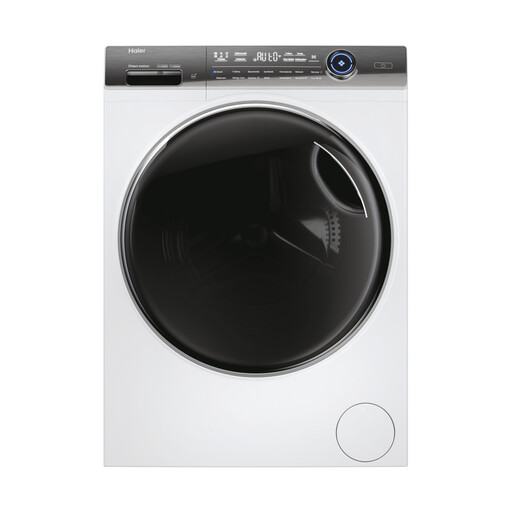 No image available
This front-loader could suit a shallower alcove, provided there’s also room for the door to open and for the connections.
Haier lists a rated capacity of 8 kg and an appliance depth of 50 cm.
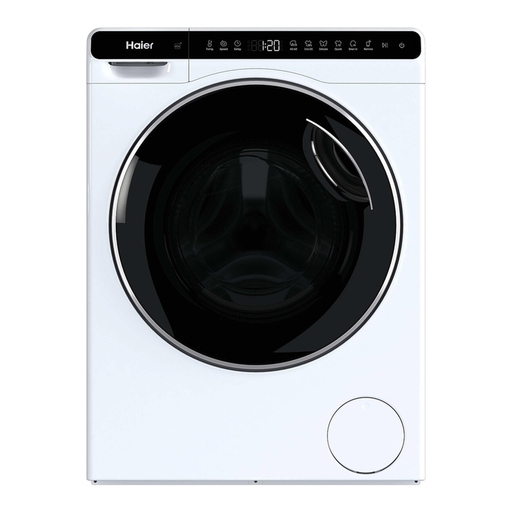 No image available
This compact design could work in a small laundry area if a rated capacity of 5 kg suits your usual loads.
Haier lists dimensions of 70 × 51 × 49 cm and a rated capacity of 5 kg. Check the opening space and connections at the installation location.
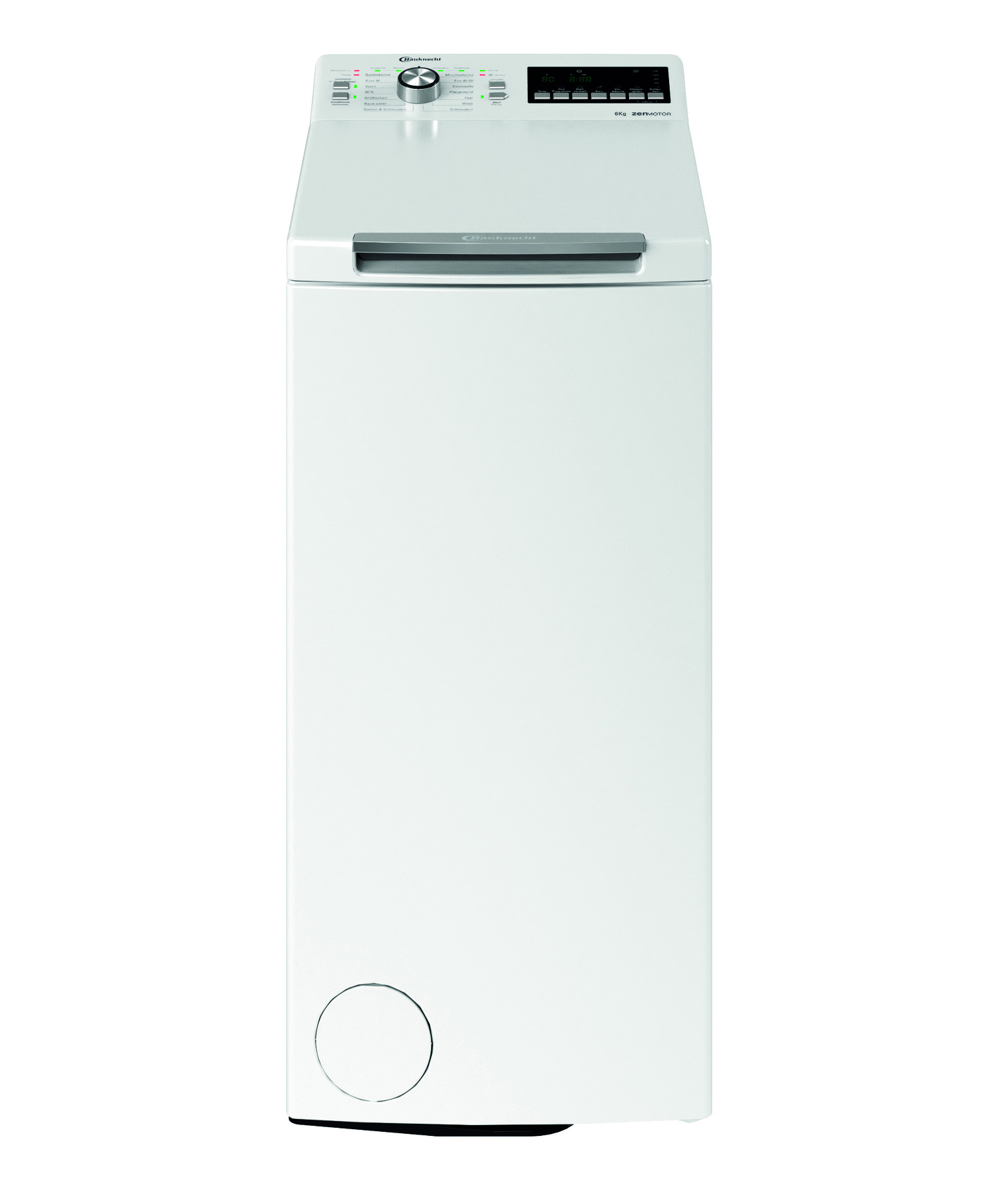 No image available
This top-loader could be a good fit if width is limited and there’s enough clear space above to open the lid.
Bauknecht lists a rated capacity of 6 kg and dimensions of 90 × 40 × 60 cm. The appliance is 60 cm deep, and the lid needs room to open upwards.
 No image available
This front-loader is only an option for a small laundry area if there’s enough depth and space for the door to open fully.
LG lists a rated capacity of 13 kg, a cotton programme and an appliance depth of 615 mm. According to the product details, 1,145 mm of space is needed with the door open.
 No image available
This combination is only suitable if you need a washer-dryer and have enough space for its greater depth.
Samsung lists a washing capacity of 9 kg and a drying capacity of 6 kg. The product details give an appliance depth of 64,5 cm.
Eco 40–60 is designed for normally soiled cotton laundry that the care label says can be washed at 40 °C or 60 °C. Check the label on each T-shirt; the programme name alone doesn’t mean it’s suitable for every garment.
If you’re unsure about the installation or connections, discuss your plans with your landlord. The Verbraucherzentrale highlights the potential for water damage and insurance implications. Also check the water protection features on the specific model and what’s included in the agreed installation service.
Don’t leave damp laundry in the machine for long, and leave the machine to dry out. To help prevent odours, the Verbraucherzentrale recommends running a suitable 60 °C white wash with powdered all-in-one detergent around once a month. This is a care recommendation, not a requirement for every T-shirt.
Your statutory rights against the seller are separate from any voluntary manufacturer’s guarantee. Waste electrical appliances must be taken to authorised collection points or returned to authorised take-back providers. If the retailer is collecting your old appliance, check the applicable requirements and what you agreed when you bought it.