Quiz fans with limited space
You want to be able to read questions and on-screen graphics from your usual seat, without the TV taking up too much room. The consumer advice centre recommends choosing a screen size to suit your viewing distance.


For quiz shows in a small living room, your viewing distance, available space and TV reception method should all suit your television. The consumer advice centre recommends choosing a screen size to match your viewing distance. You should also be able to hear speech clearly at your usual volume. Whether a compact LCD/LED or OLED model is right for you will also depend on the light in your room, where you sit and your budget; a high refresh rate alone won’t make a difference for this type of viewing.
You want to be able to read questions and on-screen graphics from your usual seat, without the TV taking up too much room. The consumer advice centre recommends choosing a screen size to suit your viewing distance.
You want to watch programmes via aerial, cable, satellite or an existing set-top box, and avoid unnecessary extra equipment. The consumer advice centre points out that the tuner you need depends on how you receive your TV signal.
You want to understand presenters and answers at a normal volume, so sound options and, where available, subtitles matter to you. Subtitles can offer another way to follow along, provided they’re available for the programme in question (ARD Digital).
First, measure your viewing distance and the space available, then check how you receive your TV signal. Next, make sure the picture and speech work well in your room and from your usual seat.
| What matters when buying | What to look for | Who is this particularly important to? |
|---|---|---|
| Screen size and available space | For HDTV, the consumer advice centre gives 1.20–1.60 m for 32 inches and 1.60–2.10 m for 42 inches as guide distances. Also measure the TV’s width and stand. | I want to read questions from my usual seat and make sure the TV and stand will fit on my furniture. For around 29% of consumers, screen size and available space are the most important buying considerations. |
| Receiving the programme | Check whether you use an aerial, cable, satellite or a set-top box, and make sure the tuner or connection is suitable (consumer advice centre). | I want to watch quiz shows using my existing connection, without having to add an unnecessary receiver. For around 24% of consumers, having the right reception method is the top priority. |
| Speech clarity | Check the sound options on the specific model and whether the broadcaster offers subtitles for the programme (ARD Digital). | I want to understand the presenter at a normal volume, so I’ll check the sound options and any available subtitles. For around 18% of consumers, speech clarity is the main concern. |
| Picture quality in daylight | Consider how much light enters the room and whether people sit to the side. If possible, assess the picture in lighting conditions similar to those at home. | If I often watch during the day or sit to the side with other people, I want to assess the picture from the angles we usually watch from. For around 12% of consumers, picture quality in daylight is the most important buying consideration. |
| Purchase and running costs | Compare the EU energy label and consumption figures for suitable models. Also check whether your reception method requires extra equipment or services (European Commission). | I want to consider electricity use and any extra equipment or services, as well as the purchase price. For around 17% of consumers, purchase and running costs come first. |
Screen diagonal, TV width and the space it takes up are different measurements. A TV may suit your viewing distance but still not fit on your furniture.
Measure your viewing distance and furniture, and check the full dimensions of the model, including its stand.
If it doesn’t fit, finding another way to position it may require extra installation planning.
Smart TV features don’t automatically mean that the built-in tuner is compatible with your aerial, cable or satellite connection. The tuner you need depends on how you receive your TV signal (consumer advice centre).
Before buying, check which channels and signal method you use, then review the details for the exact model.
Depending on your reception method, you may need a receiver, connection or subscription.
The EU energy rating is no substitute for comparing consumption figures under suitable conditions. The energy label for electronic displays ranges from A to G (European Commission).
Compare models with similar screen sizes and consider how long you’ll use the TV. Actual consumption also depends on usage and settings.
Similar names or membership of the same model range don’t prove that two complete model versions are identical. Differences may affect the features and what’s included.
Compare the full model number, specifications and what’s included before you decide.
The OLED42C5ELB is a 42-inch OLED model for buyers considering OLED features as well as TV programmes (LG Germany).
The GQ43Q7FAAUXZG is an example of a 43-inch QLED smart TV (Samsung Germany).
According to Philips, the 43PUS8500/12 combines a 43-inch screen with QLED and Ambilight (Philips Germany).
The KD-43X75WL is a 43-inch LCD model. Its dimensions may be useful when planning where to put it (Sony Germany).
The models listed have screen sizes from 24 to 43 inches. Check each screen size and the model details against your viewing distance, available space and reception method.
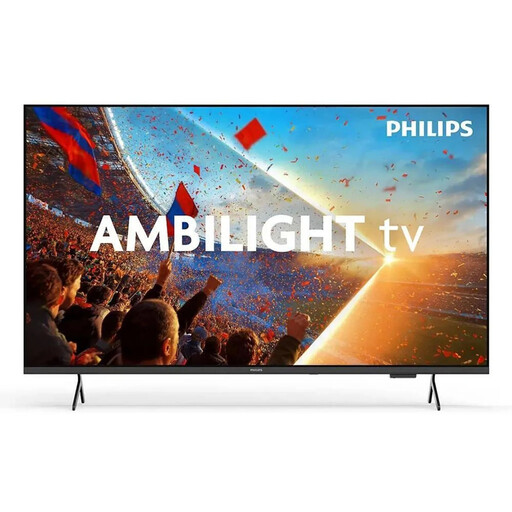 No image available
An option if a 43-inch TV with Ambilight suits your viewing distance and available space.
43 inches; 4K; QLED; smart TV; Ambilight.
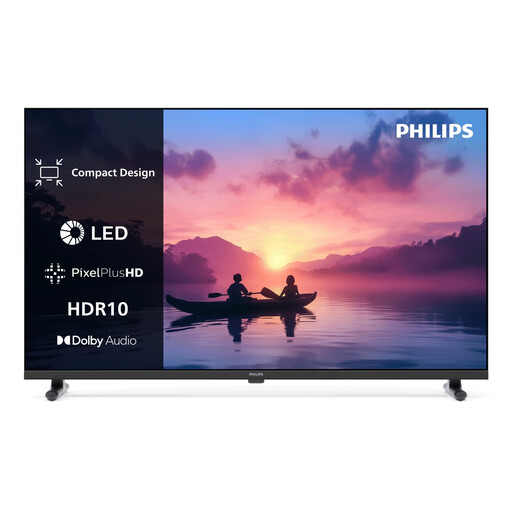 No image available
A compact option if a 24-inch screen is easy to read from your viewing distance.
24 inches; HD; LED; smart TV.
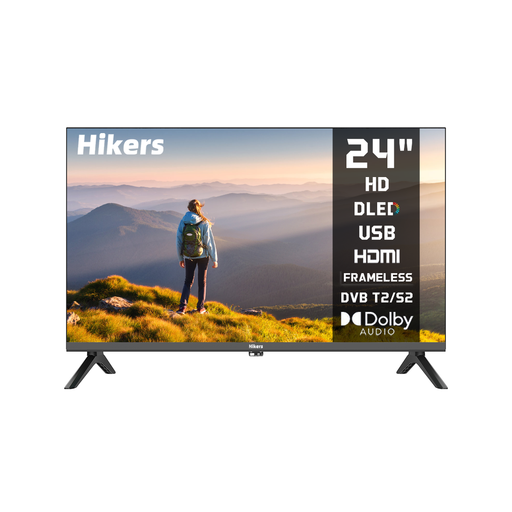 No image available
A space-saving option if HD and a TV without smart features suit your needs.
24 inches; HD; HDMI and USB; DVB-S2, DVB-T2 and DVB-C; Dolby Audio.
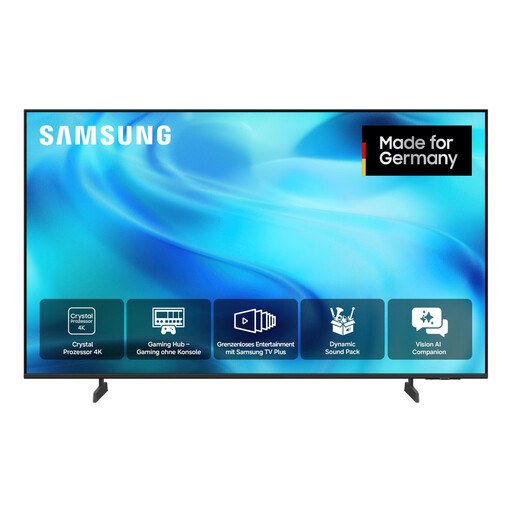 No image available
An option if a 43-inch smart TV suits your viewing distance and available space.
43 inches; UHD 4K; smart TV.
 No image available
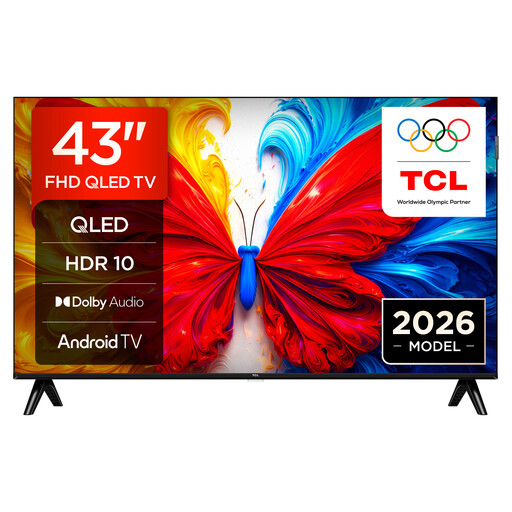
A 43-inch option if Full HD and Android TV meet your needs.
43 inches; QLED; Full HD; Android TV; 60 Hz.
It can work if your viewing distance is short and space is limited. For HDTV, the consumer advice centre gives 1.20–1.60 m as a guide distance for a 32-inch screen. Measure your usual viewing distance and check that you can read the questions and on-screen graphics.
Not necessarily: depending on your coverage, you can receive live TV via an aerial, cable or satellite. An internet connection is needed for online services and HbbTV features. Check how you receive your TV signal before choosing a model (consumer advice centre).
Choose your reception method, run a channel scan if needed, then check the picture and sound from your usual seat. ARD and ZDF stopped broadcasting in SD in 2025, so HD compatibility may be essential if you have older reception equipment (consumer advice centre).
Compare the energy label and consumption figures, and check whether your reception method requires extra equipment or services. The broadcasting fee is generally charged per household, not per television (The Broadcasting Fee).