If you bake small loaves
If you only want to bake a small amount of bread at a time, look for a model that clearly states a small loaf size. Panasonic lists a loaf size of around 400 g for the SD-PN100.


If you can’t rely on having the shared oven free, choose a bread maker that bakes the small loaf you want from start to finish. What matters is the stated loaf size, not just the appliance’s dimensions. A dough programme is a good option if you can plan a slot in the oven for baking afterwards. Panasonic lists a loaf size of around 400 g for the SD-PN100, while Rommelsbacher specifies 700 and 900 g loaf sizes for the BA 550.
If you only want to bake a small amount of bread at a time, look for a model that clearly states a small loaf size. Panasonic lists a loaf size of around 400 g for the SD-PN100.
If you can’t count on the oven being free, a complete baking cycle in a bread maker means you won’t need to use it. If you’d rather bake the loaf yourself, you can prepare the dough in the machine and plan a slot in the oven; Rommelsbacher says the BA 550 can be used both ways.
In a shared kitchen, consider the worktop space available, the room needed to open the lid and how easy it is to remove the bread pan. Panasonic lists dimensions of 255 × 307 × 290 mm for the SD-PN100; Unold says the pan and kneading paddle can be removed from the Backmeister Bernd.
Best if: you can’t rely on the oven being free and want the machine to bake your small loaf from start to finish.
Consider: The smallest loaf size you can select needs to suit your recipe. Also check whether the timer is available with the programme you want to use.
Best if: you can plan a slot in the oven and would prefer to bake the loaf yourself.
Consider: You’ll still need the shared oven to finish the loaf. Rommelsbacher lists 700 and 900 g loaf sizes for the BA 550; according to Rommelsbacher Support, smaller quantities need enough dough for the machine to knead properly.
| What you need | What to check before buying | Who it matters most to |
|---|---|---|
| The right amount of bread | Check the stated loaf weight and find a suitable recipe. Rommelsbacher lists 700 and 900 g for the BA 550; according to Rommelsbacher Support, smaller quantities need enough dough for the machine to knead properly. | If I only need a small loaf, I want a suitable loaf size rather than relying on the appliance’s compact dimensions. Around 31% of consumers have a small loaf size as their main concern. |
| A predictable finish time | Check the instruction manual to see whether the timer works with the bread programme you need. Don’t leave perishable ingredients unrefrigerated for a long time. | If I need the bread to be ready at a specific time, I want to know that the timer works with my chosen programme. Around 31% of consumers prioritise when their bread will be ready. |
| Not having to rely on the oven | Check whether the bread programme you want bakes the loaf all the way through in the machine or only prepares the dough. | If the oven is often in use, I want the machine to bake the loaf completely rather than just prepare the dough. Around 23% of consumers have oven independence as their main concern. |
| Worktop space and cleaning | Check the appliance’s dimensions and the space available to open it where you plan to use it. Also consider the bread pan, kneading paddle and cleaning instructions. | In a shared kitchen, I want to know whether there’s room for the machine and whether the pan and kneading paddle are easy to handle. Around 15% of consumers prioritise worktop space and cleaning. |
An appliance’s external dimensions don’t tell you how much dough it can knead reliably or what size loaf it can make. Rommelsbacher lists 700 and 900 g loaf sizes for the BA 550; for smaller quantities, Rommelsbacher Support says there needs to be enough dough for the machine to knead properly.
Check the selectable loaf sizes and find a suitable recipe before choosing an appliance.
A dough programme prepares the dough, but you’ll still need to use the shared oven to bake it afterwards.
If you can’t count on having an oven slot, look for a programme that bakes the loaf completely in the machine.
The timer won’t necessarily work with every programme. Don’t leave perishable ingredients unrefrigerated for a long time; the German Federal Institute for Risk Assessment recommends keeping these foods sufficiently chilled.
Check the programme instructions and ingredients before setting a long delay.
According to Panasonic Germany, the SD-PN100 has a stated small loaf size of around 400 g and a timer of up to 13 hours.
According to Unold, the Backmeister Bernd has a stated 500 g setting as well as larger loaf sizes.
According to Tefal, the Pain Dore PF2101 is designed for bread and dough; the Pain Delice PF240E38 is another documented option with a 500 g setting.
The BA 550 can bake bread completely in the machine and also has a separate dough programme.
This selection includes bread makers with bread programmes and timer functions for baking in the machine to a schedule. Check that the smallest loaf size on each model suits your recipe.
 No image available
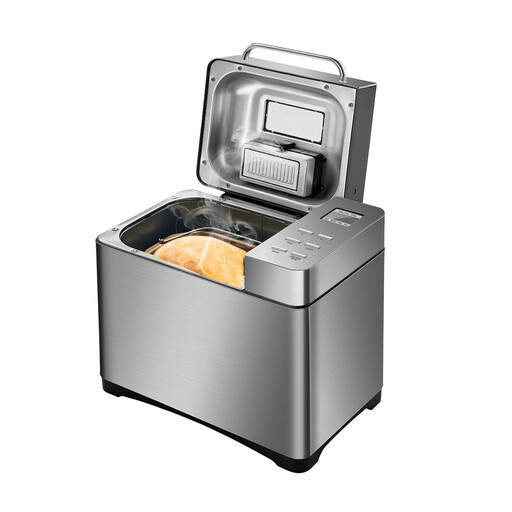
The timer could be useful if you want to schedule when baking starts; check that the smallest loaf size suits your recipe.
Specifications: three loaf sizes, three crust settings, 15-hour timer, keeps warm for one hour, non-stick bread pan and a capacity of 2.2 lbs.
 No image available
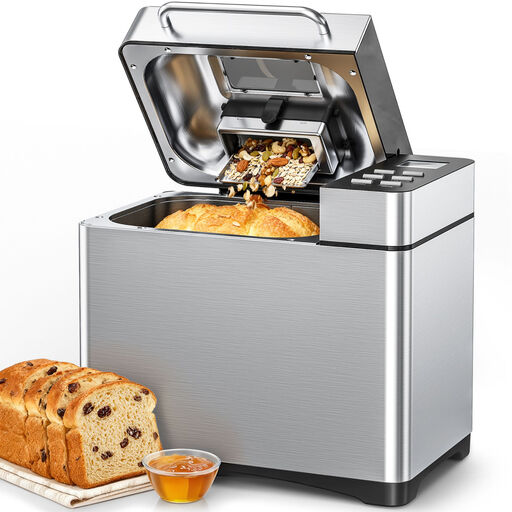
The stated 500 g setting could suit small loaves; check that it works for your recipe and the programme you want to use.
Specifications: loaf sizes of 500, 750 and 1,000 g, three crust settings, 15-hour timer and automatic ingredient dispenser.
 No image available
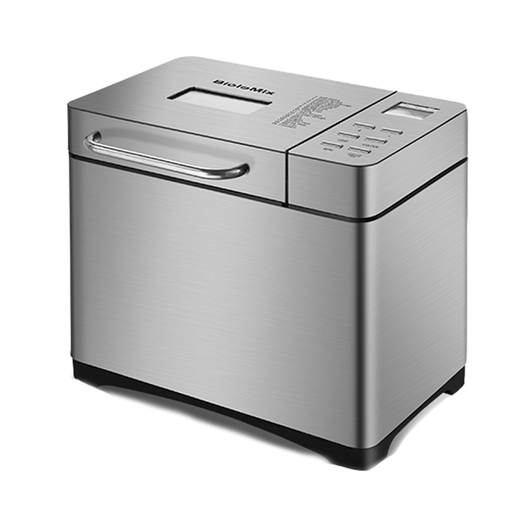
The bread programmes and delayed start are useful for scheduling baking in the machine; check the smallest loaf size for your recipe.
Specifications: 17 menus, 15-hour delayed start, automatic ingredient dispenser and keeps warm for one hour.
Only if you can count on having an oven slot later. If you’d rather not depend on the oven, choose a programme that bakes the loaf completely in the machine; Rommelsbacher says the BA 550 has both types of programme.
No. Check the instructions for the specific programme and don’t leave perishable ingredients unrefrigerated for a long time. The German Federal Institute for Risk Assessment recommends keeping perishable foods sufficiently chilled.
Measure the space available, including the room needed to open the lid and remove the pan. Unold says the Backmeister Bernd has a removable bread pan, as does Tefal’s PF2101; clean the pan and kneading paddle according to the relevant instructions.
No. According to consumer information from the European Union, when you buy goods from a trader in the EU, you’re entitled to a statutory guarantee of at least two years from the date you receive them. A commercial guarantee is separate.
If the appliance is covered by harmonised EU product legislation, the manufacturer uses the CE marking to declare that it meets the relevant requirements; the mark isn’t an independent quality certification. In Germany, end-of-life electrical appliances are collected separately and must not be put in household waste.