If you have a small household and only need a few sandwiches for packed lunches, choose a pack size based on how much you’ll actually use. REWE sells sliced sandwich bread in 375 g packs, while some product ranges also offer 750 g versions. If you specifically want wholemeal bread, check the product name and ingredients list: spelt and seeded varieties aren’t automatically wholemeal. For lunchboxes, taste and storage instructions matter too, as does checking the latest allergen information if you have any dietary requirements.
Who might find a smaller pack useful?
Small households
If you only pack a few sandwiches each week, a 375 g pack is easier to match to your plans than a larger one. A smaller quantity won’t prevent bread from going stale by itself, though: the Verbraucherzentrale recommends storing bread at room temperature.
Households looking for wholemeal bread for school
The Bundeszentrum für Ernährung lists wholemeal bread or rolls as options for a lunchbox. With sliced sandwich bread, it’s worth checking the specific product name and ingredients list, as spelt and seeded varieties don’t necessarily have the same wholemeal content.
Households that need to check ingredients carefully
If you’re shopping for a child with an allergy or who needs to follow a gluten-free diet, check the labelling on each current pack. The standard wholemeal, spelt and multigrain sandwich breads discussed here aren’t automatically gluten-free alternatives; other allergen information varies by product.
What should you look for when buying?
Start by working out how much you’ll actually need before your next shop. Then compare the type of bread and its ingredients with the preferences and requirements of the person who’ll be eating it.
| Criteria |
What to check |
Who it matters to |
| Pack size |
Compare the net weight with the number of packed lunches you’re planning; consider 375 g and 400 g packs if they suit your needs. |
If we only need a few slices at home, I don’t want to keep leaving a large pack open. For around 36% of consumers, finding a suitable smaller quantity comes first. |
| Wholemeal content |
Check the product name and ingredients list; compare nutritional information on the same basis, such as per 100 g. |
For a sandwich that’s packed for school regularly, I want to choose wholemeal bread specifically, rather than relying on the word ‘seeded’. Around 29% of consumers prioritise this feature. |
| Ingredients and allergens |
Check the current ingredients list for gluten-containing cereals and any other relevant allergen or ‘may contain’ information. |
If a particular ingredient needs to be avoided, the labelling on the specific pack determines what I choose. Checking ingredients is the top priority for around 21% of consumers. |
| Taste and texture |
If you’re trying a new variety, choose a suitable pack size and check whether it contains seeds or other types of grain. |
The bread needs to be something you’ll enjoy with your usual filling; a seeded variety won’t suit everyone. Around 14% of consumers put this first. |
Common bread-buying mistakes
-
Assuming ‘half a pack’ means ‘half a loaf’
Some sandwich bread ranges include both 375 g and 750 g options. But that doesn’t mean there’s a standard size for every ‘half loaf’.
Compare the net weight with the number of packed lunches you’re planning, and follow the storage instructions on the pack once it’s opened.
-
Assuming spelt or seeded bread is wholemeal
The type of grain or the addition of seeds doesn’t tell you how much wholemeal flour a bread contains. For example, REWE describes Harry Körner Balance Sandwich as multigrain bread with 8% wholemeal content.
If you’re specifically looking for wholemeal bread, check the product name and ingredients list. You can compare nutritional information such as fibre and salt per 100 g between similar products.
-
Judging allergens by the product name alone
Spelt is a type of wheat, so it isn’t a gluten-free alternative. Other ingredients and possible ‘may contain’ warnings can vary, even between breads with similar names.
If you have an allergy or need to follow a gluten-free diet, check the current packaging before every purchase.
-
Throwing away only the slice with visible mould
According to the Verbraucherzentrale, mould may already have spread through the bread beyond the area you can see.
If you spot mould, throw away the whole loaf. Choosing a pack size that suits how much you’ll use and freezing portions can help reduce waste.
Brands and product ranges to consider
Golden Toast
REWE stocks several 375 g Golden Toast sandwich breads, including wholemeal and spelt varieties.
- For Golden Toast Vollkorn Sandwich 375 g, REWE lists 59% wholemeal wheat flour and 6.2 g of fibre per 100 g.
- Dinkel Harmonie Sandwich has a different recipe. If you’re looking for wholemeal bread or need to avoid particular allergens, check each variety individually.
REWE Beste Wahl / REWE Bio
These two REWE ranges include different sliced sandwich breads in 375 g packs.
- For REWE Beste Wahl Vollkorn Sandwich 375 g, REWE lists 66% wholemeal wheat flour and 7.7 g of fibre per 100 g.
- REWE Bio Körner-Sandwich is a multigrain sandwich bread. Its name doesn’t replace checking the ingredients if you specifically want wholemeal bread.
Harry
The Körner Balance Sandwich listed by REWE is a seeded 375 g option.
- REWE lists ingredients including linseeds and sunflower seeds for this product.
- The product page describes it as multigrain bread with 8% wholemeal content. So the word ‘seeded’ is no substitute for checking the specific recipe.
Mestemacher
EDEKA24 stocks the brand’s organic wholemeal wheat and organic spelt toast breads in 400 g packs.
- The 400 g packs are another option for households that need more than 375 g.
- The two toast breads are made with different grains. Organic spelt toast bread isn’t a gluten-free option.
Sliced bread at Joybuy
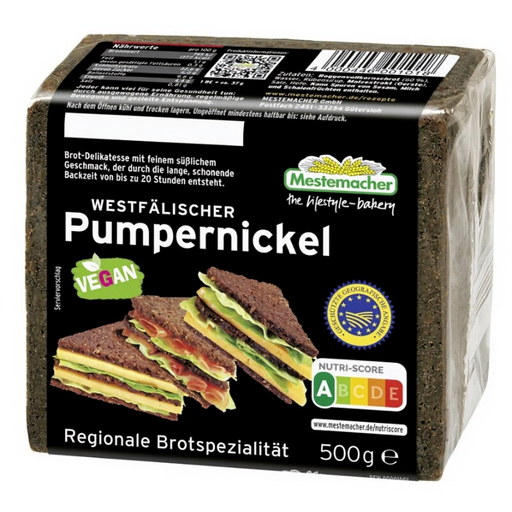
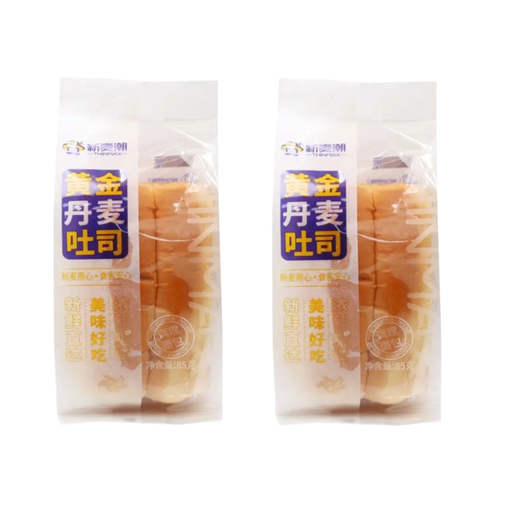
These products may suit different packed lunch needs: a 500 g pack of pumpernickel and toast in two 85 g units. Check each size against how much your household uses; neither is a direct equivalent to the 375 g sandwich breads discussed above.
 No image available
Mestemacher Traditional Westphalian Pumpernickel Bread 500 g
A good option if you want pumpernickel for a lunchbox and will use 500 g before your next shop. This pack contains more bread than the 375 g and 400 g options discussed above; if you have any allergies, check the current labelling.
View at Joybuy
 No image available
Thinmax Golden Danish Toast 85 g x2
The two 85 g units are better suited to a small appetite than to making several packed lunches over the week. If you specifically want wholemeal sandwich bread or need to avoid certain ingredients, check the product labelling before choosing.
View at Joybuy
Packed lunch questions
Is a 375 g sandwich loaf always half a loaf?
No. ‘Half a loaf’ isn’t a reliable way to describe the size. REWE stocks both 375 g and 750 g versions in some sandwich bread ranges; when you’re shopping, the net weight of the specific pack is what matters.
What else can you put in a school lunchbox with bread?
A filling, along with fruit or vegetables packed separately, can round out a packed lunch. The Bundeszentrum für Ernährung suggests fillings such as cheese or vegetarian spreads, and recommends using separate compartments to keep everything appetising.
How should you store opened bread?
The Verbraucherzentrale recommends keeping bread at room temperature in a dry place away from light; you can also freeze leftovers in portions. If you spot mould, throw away the whole loaf.
Is spelt or seeded sandwich bread automatically wholemeal?
No. ‘Spelt’ refers to a type of grain, while ‘seeded’ doesn’t automatically mean the bread has a high wholemeal content. To choose wholemeal bread, compare the product name and ingredients list. For example, REWE lists Harry Körner Balance Sandwich as having 8% wholemeal content.


