
Lieferung heute & morgen

Qualitätsgarantie

Willkommens-Angebote freischalten: KOSTENLOSE Lieferung | Bis zu 80 % RABATT | Kostenlose 30-Tage-JoyPlus-Testphase
App herunterladen
As an owner of rabbits, guinea pigs, or other rodents, you want to provide a species-appropriate and safe environment for your pets. An indoor small animal playpen is an excellent solution, but the sheer number of options can be overwhelming. Many products overpromise and underdeliver, leading to frustration instead of joy. This guide will help you avoid common purchasing pitfalls and make an informed decision.
The biggest problems when choosing a free-roam enclosure for small animals are often not apparent at first glance. Three typical pitfalls are:
To avoid these problems, it's crucial to pay attention to a few key features before you buy.
Instead of being swayed by marketing promises, you should base your decision on objective criteria. The following three parameters are critical for the safety, functionality, and longevity of an enclosure.
A modular small animal enclosure offers decisive advantages. With a modular rodent cage system, you can flexibly adapt the shape and size of the run to your living situation and your pet's needs. Whether it's a long run in the hallway, a corner in the living room, or a multi-level structure—a modular system grows with your requirements. Ensure that the connectors are robust and hold the panels firmly together. Additional reinforcements like zip ties can significantly increase the stability of a DIY rodent enclosure.
The material determines not only stability but also safety. Metal grids are sturdy, while plastic panels have the advantage that animals cannot climb them. However, the most important safety feature is the bar spacing. For guinea pigs and rabbits, this should not exceed 4.5 cm. For smaller rodents like hamsters or young animals, a maximum spacing of 1.5 cm is required.
Height is just as critical. Rabbits are agile jumpers and can easily clear obstacles of 50 cm or more. For them, an enclosure height of at least 70 cm is recommended to prevent escapes. For guinea pigs or an indoor puppy playpen, a lower height of 35-45 cm is often sufficient.
Placing a run directly on parquet or carpet is not a good idea. Urine and droppings can permanently damage the floor. Look for models that include a waterproof floor mat or are equipped with smooth, washable plastic panels. These not only protect your floor but also make cleaning uncomplicated. A smooth surface can be easily wiped down and disinfected with a damp cloth, ensuring a hygienic environment.
Based on the criteria mentioned, we have identified a few models that are suitable for different owner profiles.
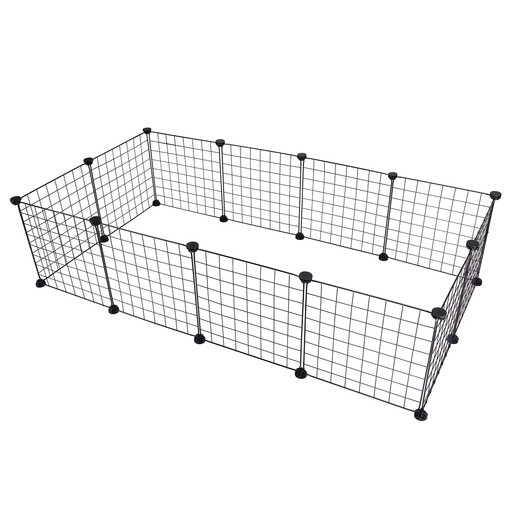
Why This Fits Their Persona: Ideal for owners of guinea pigs, puppies, or other animals not prone to jumping who are looking for a flexible and straightforward entry-level solution. The modular system is easily adapted to smaller living spaces.
The structure is reinforced with included zip ties and non-slip pads, counteracting the pitfall of instability. The bar spacing of 4.0 cm is suitable for guinea pigs and dwarf rabbits.
Flexible DIY modular system for custom shapes. Easy to assemble and disassemble for space-saving storage.
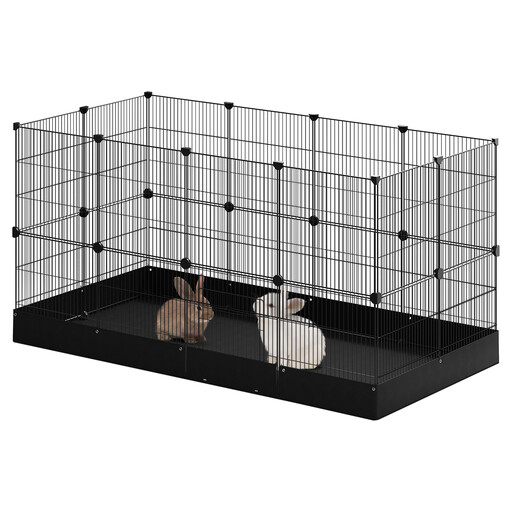
Why This Fits Their Persona: Perfect for rabbit owners who need maximum security against escapes. Its height and narrow bar spacing also make it suitable for households with various small pets.
With a height of 71 cm, it's escape-proof for rabbits. The extremely narrow bar spacing of just 1.5 cm reliably prevents even the smallest animals from escaping or getting stuck. The included Oxford fabric mat solves the floor cleaning problem.
High security thanks to its tall height and minimal bar spacing. Includes a practical floor mat for easy cleaning.
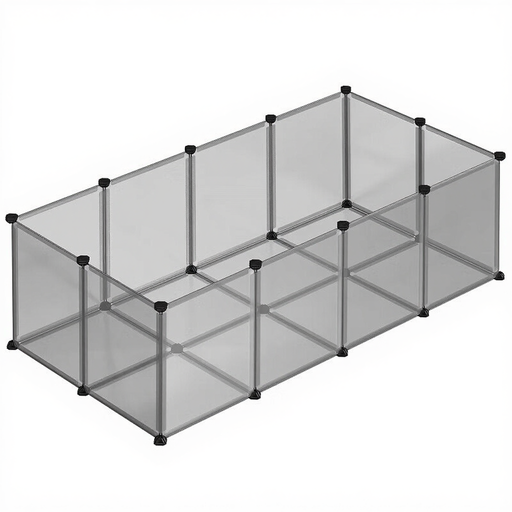
Why This Fits Their Persona: An excellent choice for owners who want to protect delicate flooring and prioritise maximum hygiene. The smooth walls also prevent pets from chewing on or climbing the bars.
The solid plastic panels completely eliminate the risk of getting stuck. The material is waterproof and extremely easy to clean, preventing the pitfall of poor hygiene. The modular system with floor panels is inherently stable.
Smooth plastic walls for easy cleaning and protection against climbing. The modular design allows for flexible expansions, including vertically.
We've compiled a complete, up-to-date list of products that fully meet these strict selection criteria and safety requirements.
The size depends on the species and the number of animals. As a rule of thumb, the base area should be at least 1 m? for two guinea pigs and at least 2 m? for two dwarf rabbits. More important than the sheer area, however, is that the animals have the daily opportunity to move freely in an even larger, secured space. A modular enclosure can be flexibly expanded for this purpose.
The stability of a modular enclosure depends on the quality of its connectors. High-quality systems use robust ABS plastic connectors and often offer additional reinforcements like zip ties. When assembled correctly, with all elements firmly seated in the connectors, these enclosures are perfectly stable for small animals. However, they are not designed for larger or very boisterous animals like large dog breeds.
Cleaning is easiest if the enclosure has a waterproof floor or a removable floor mat. Remove droppings and leftover food daily. For a weekly deep clean, wipe the floor pan and the grid or plastic elements with a mild, pet-safe cleaning solution (e.g., a vinegar-water mix) and dry everything well before adding fresh bedding. This prevents odour and bacteria buildup.