
Lieferung heute & morgen

Qualitätsgarantie

Willkommens-Angebote freischalten: KOSTENLOSE Lieferung | Bis zu 80 % RABATT | Kostenlose 30-Tage-JoyPlus-Testphase
App herunterladen
A small pill organiser keeps medicines, vitamins and food supplements neatly stored and easy to carry. In practice, however, compact models can differ considerably: some compartments are too small for larger capsules, lids can pop open in your bag, or a design described as waterproof may be mistaken for storage that keeps medicines permanently protected from air and moisture.
This buying guide will help you choose the right small medicine organiser for your needs and avoid common buying mistakes.
A mini pill organiser may fit in your pocket, but that doesn’t mean it has enough room inside. Large tablets, fish oil capsules or several food supplements can get stuck or put pressure on the lid. So it’s important to consider more than just the organiser’s external dimensions. Check:
If you only need to carry a few tablets for one day, you could choose a daily pill organiser with two to four compartments. For a longer trip, a model with compartments for several days may be more practical.
For the products mentioned, the term waterproof pill organiser or “moisture proof” describes a design feature according to the product information. It does not automatically mean that the organiser can be submerged or that it will protect sensitive medicines from humidity over a prolonged period.
Before you buy, check:
Only transfer medicines to another container if the packaging instructions allow it or after checking with a pharmacist. For longer-term storage, light, moisture and temperature requirements may matter more than choosing the smallest possible format.
A tablet splitter can be useful for tablets that are suitable for splitting. However, not every tablet can be divided. Capsules, liquid-filled medicines and certain types of tablets are not suitable. You should not change your dose without professional advice.
The product description for the JORDAN&JUDY model specifically states that its integrated splitter should not be used for capsules or liquid-filled pills. The blade is sharp and should be kept out of children’s reach.
For everyday use, an organiser with just a few compartments is often enough. If you want to keep your morning, lunchtime and evening medicines separate, look for clear divisions. For a pill organiser for seniors, easy-to-read labels and simple-to-use fastenings are particularly important.
A weekly organiser with seven compartments makes it easier to sort medicines by day of the week. However, it takes up more room than a daily organiser. For travel, a pill organiser with compartments for several days can be useful if you want to prepare doses in advance.
A snap-lock lid, sliding mechanism or hinged lid each has its own advantages and disadvantages:
Especially if you’re choosing a small travel pill case, check the fastening several times before putting it in your handbag, rucksack or suitcase.
The models mentioned are mostly made of plastic. The JORDAN&JUDY organiser combines ABS plastic with a stainless steel blade. ABS is lightweight and suitable for portable storage cases, although durability depends on how the organiser is used and cleaned, as well as its fastening design.
For care and cleaning:
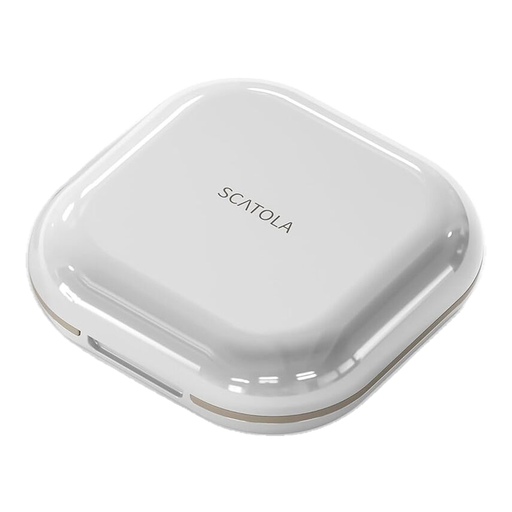
Why it suits this profile: The four separate compartments make it easy to organise a day’s doses and carry vitamins or medicines in your bag or luggage.
With a clearly defined number of compartments, you won’t end up buying an unnecessarily large weekly organiser when all you need is a compact option for one day.
Four compartments and a compact design for daily doses, vitamins and short trips.

Why it suits this profile: Seven daily compartments with deeply engraved day labels help you plan your medicines for the week. The sliding mechanism is designed for people who prefer a fastening that’s easy to grip.
The day labels reduce the risk of having to rely on your memory to keep track of doses. Even so, check that the compartments are large enough for your medicines before buying.
Seven compartments, engraved labels and a sliding lid, according to the product description.
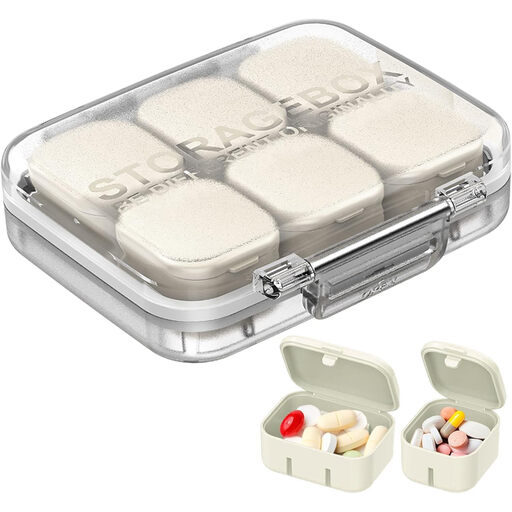
Why it suits this profile: The interchangeable four- or six-compartment inserts and stated capacity for up to ten days make this a good fit for frequent use and trips with different medication schedules.
The adjustable layout means you don’t have to put every day’s medicines together in one confusing compartment. Treat the waterproof claim as a product feature, rather than assuming the organiser is safe to submerge.
A 4/6-grid system, designed for up to ten days, with a “waterproof” claim for use on the go.
We’ve put together a complete, regularly updated list of products that meet these strict selection criteria and fully comply with the safety regulations in force in the EU.
It depends on your medication schedule. Two to four compartments are often enough for one day’s doses. If you take medicines at several different times or want to plan a whole week in advance, seven or more compartments make things easier to organise. If you have larger capsules, check the internal dimensions too.
There’s no single time limit that applies to every medicine. Follow the instructions on the packaging or in the patient information leaflet. Depending on the medicine, moisture, heat and light may affect it. If you’re unsure, ask a pharmacist.
Yes, as long as the labels, compartment size and fastening suit the person who’ll be using it. Clear day labels and a smooth-sliding lid can make it easier to use. Before buying, check that the organiser can be opened and closed without too much effort.