What to consider when buying
Fan heater
A good choice if: you want a quick burst of warm air in the room or directly by your seat, and don’t mind the sound of a fan.
What to consider: The fan distributes heat quickly, but can be noisy. Check the controls and make sure you can position the specific model safely.
Convector heater
A good choice if: you want extra warmth in the room without a fan running and have a clear space to put it.
What to consider: It mainly warms the air in the room rather than directing heat at one particular seat. Make sure air can circulate freely and check that the controls suit your needs.
Oil-filled radiator
A good choice if: you want a portable heater and don’t mind waiting for it to warm up.
What to consider: The oil stores heat generated using electricity and continues to release it for a while after the heater is switched off. Remember to consider its weight and how much space it takes up.
Infrared panel
A good choice if: you usually sit in one place and have a suitable spot to mount it.
What to consider: Infrared heat can reach people and surfaces in the right position, but that doesn’t mean the whole room will be sufficiently warm.
| Priority |
What to check before buying |
Who it matters most to |
| Quick warmth for short periods |
Heat settings, thermostat, fan noise and a clear, safe position for the heater. |
If I only need a little warmth after getting home or at my desk, how quickly it heats up matters most to me. Around 36% of consumers are likely to prioritise quick warmth for short periods. |
| Quiet warmth for the room |
A design without a fan, the space it takes up and the thermostat; for an oil-filled radiator, also consider its weight and how long it takes to heat up. |
If I’m working or relaxing in my room, I want extra warmth without a fan that’s constantly audible. Around 29% of consumers are likely to prioritise quiet warmth for the room. |
| Ongoing electricity costs |
Rated power in kW, actual time switched on and your electricity price in €/kWh. |
If I want to estimate the running costs, I compare the power rating and actual time in use with my electricity tariff. Around 21% of consumers are likely to put ongoing electricity costs first. |
| Targeted warmth with little floor space |
Mounting options, dimensions, position relative to your seat and the manufacturer’s fitting instructions. |
If I usually sit in one place and have little floor space to spare, I check whether a panel can be safely mounted and positioned to suit. Around 14% of consumers are likely to prioritise targeted warmth for a particular spot. |
For a rough cost estimate, multiply the power in kW by the actual number of hours the heater is switched on, then multiply that figure by your electricity price in €/kWh. Thermostat breaks can reduce the time it’s actually switched on. A lower wattage alone doesn’t prove that it will cost less to provide the same amount of heat. The ADAC considers electric heaters primarily a supplementary source of warmth.
Heaters at Joybuy
The range includes infrared panels, convector heaters, oil-filled radiators and fan heaters, offering different ways to add warmth to a room.
 No image available
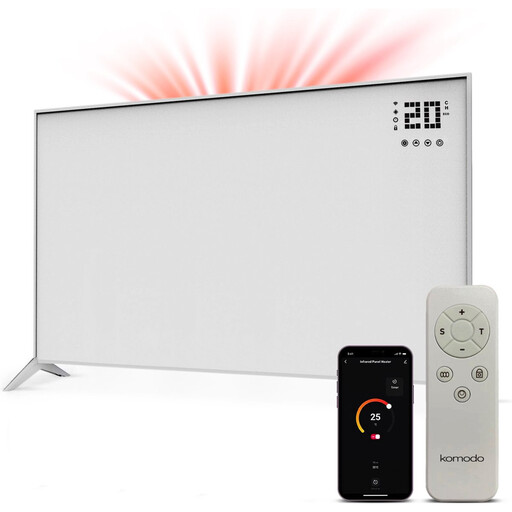
Komodo Blazi 800 W infrared panel, 100 × 80 cm
Could suit you if you’re looking for a panel to warm a regular spot, with the option of wall-mounted or freestanding use.
The product description lists 800 W, a thermostat, timer, app control and IP24, as well as coverage of up to 20 m². Wall-mounted and freestanding use are both specified.
View at Joybuy
 No image available
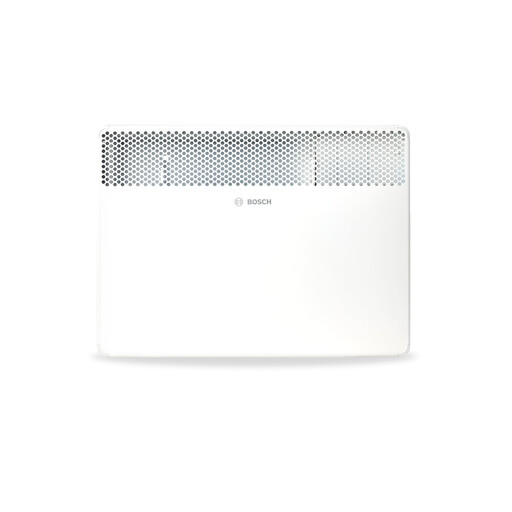
Bosch HC 4000-15 convector heater, 1500 W
Could suit you if you want adjustable extra warmth for the room with a timer programme, and have a suitable space for it to stand or be mounted.
The product description lists 1500 W, seven preset settings, Eco mode, temperature control, a weekly programme and open-window detection. Feet for freestanding use are available separately.
View at Joybuy
 No image available
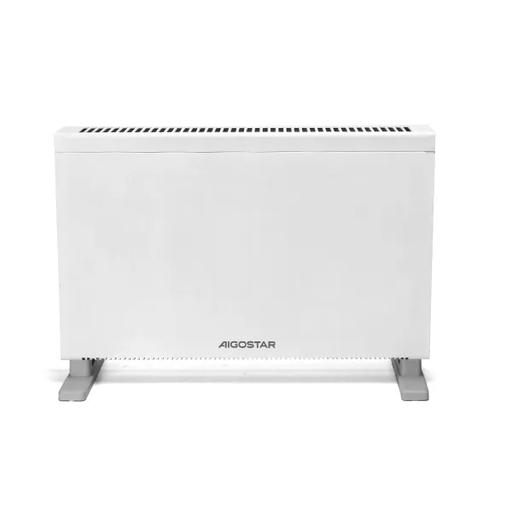
Aigostar convector heater, 2000 W, with remote control
Could suit you if you want extra warmth in the room without a fan, with thermostat-controlled operation.
The product description lists 2000 W, natural convection, a thermostat and remote control, with a recommended area of 20–25 m². It’s specified for well-insulated, enclosed rooms or occasional short bursts of heating.
View at Joybuy
 No image available
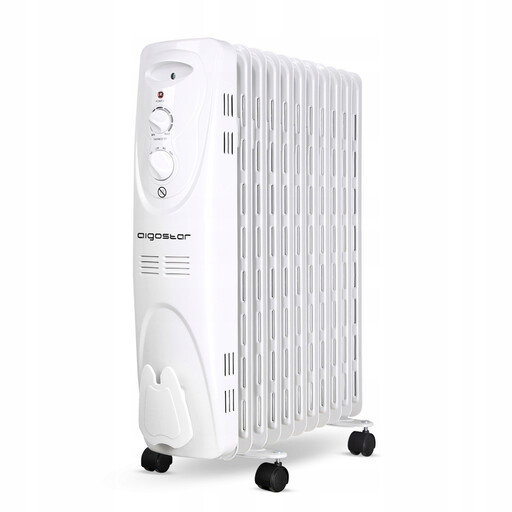
Aigostar 11-fin oil-filled radiator, 2300 W
Could suit you if you’re looking for a portable heater with a thermostat and can allow for the time it takes to warm up and the space it needs.
The product description lists 2300 W, three heat settings, an adjustable thermostat and four castors, with a recommended area of 20–24 m². According to the description, it’s intended for well-insulated, enclosed rooms or occasional short bursts of heating.
View at Joybuy
 No image available
DREO Atom 416 fan heater, 1500 W
Could suit you if you want a quick boost of warmth and are looking for a fan heater with temperature control.
The product description lists 1500 W, three heat settings, a timer and a coverage area of 10–20 m². It also specifies a noise level of 34 dB, plus tip-over and overheat protection.
View at Joybuy
Frequently asked questions
How much does it cost to heat with electricity?
For a rough estimate, multiply the power in kW by the actual number of hours the heater is switched on, then multiply by your electricity price in €/kWh. Thermostat breaks can reduce the time it’s switched on compared with the total time you spend in the room. The actual cost also depends on your tariff and how much heat you need.
How do I position a portable heater safely?
Keep the clearances and airways specified in the manual for the specific model unobstructed, and check the cable and heater for damage. Follow the safety instructions in German and watch out for potentially hot surfaces. The clearances specified for another model won’t necessarily apply.
Does a supplementary heater mean I don’t need to ventilate?
No. Let moist air out by opening the windows wide or creating a through-draught. The Verbraucherzentrale recommends airing rooms regularly; heating and ventilation serve different purposes.
Which product regulations apply in Germany?
The relevant ecodesign requirements under Regulation (EU) 2024/1103 have applied since 1 July 2025 to electric local space heaters that fall within its scope and are newly placed on the EU market. The requirements of the Low Voltage Directive are also relevant to applicable electrical products. Check the labelling and required safety information in German for the specific product. The CE mark alone is not an independent quality or safety certification.
What if the product is faulty?
For consumer purchases, the German Federal Government states that you have a two-year statutory warranty claim against the retailer. Any additional manufacturer’s guarantee is separate and subject to its own terms and conditions.


