Flat-dwellers who care about bass
You listen to electronic music with plenty of low frequencies and want to assess the bass without overlooking speaker placement or the possible impact on neighbouring flats.


If you only have room for one speaker, a compact active or streaming speaker is an obvious place to start. The key is to check which connections and controls you need. If you have space for two separate speakers, an active stereo pair could be a better fit. Only consider adding a subwoofer once you’ve checked where it can go, how it connects and whether it suits your living situation. A manufacturer’s bass specifications are no substitute for listening in the spot where you plan to use it.
You listen to electronic music with plenty of low frequencies and want to assess the bass without overlooking speaker placement or the possible impact on neighbouring flats.
You have room for one device to start with and want the convenience of streaming. The connections available and the option to expand your setup later also matter when choosing.
You can position two speakers separately and want to consider both the stereo image and the connections on your existing audio sources.
In a small living room, the number of available spots for speakers is a good place to start. Adding bass also depends on your room, connections and living situation.
A good fit if: you only have room for one speaker and mainly stream from your smartphone. Sonos lists Wi-Fi and Bluetooth for the Era 100; JBL lists the same connections for the Authentics 200.
Consider: one speaker can’t replace two speakers positioned separately. Also check whether you need an adapter for your audio source; Sonos specifies an input adapter for AUX on the Era 100.
A good fit if: you have space for separate left and right speakers and want a ready-to-use pair without a separate amplifier. KEF describes the LSX II LT and Teufel describes the ULTIMA 25 AKTIV 2 as active speaker systems.
Consider: two speakers need space and a connection between them. Connections vary: KEF lists HDMI ARC and USB-C, while Teufel lists HDMI, Bluetooth and AUX, among others.
A good fit if: you already own a compatible stereo amplifier or receiver and want to use its connections. Teufel describes the ULTIMA 20 as a passive stereo pair.
Consider: without a suitable amplifier, the pair isn’t ready to use. Don’t confuse the passive ULTIMA 20 with the active ULTIMA 25 AKTIV 2.
| Priority | What to check when buying | Who is it particularly relevant to? |
|---|---|---|
| Bass and room | Check whether there’s a subwoofer output if you plan to use one. Assess the setup in the spot where you intend to use it. | If I care about low frequencies, I also want to know how placement and my neighbours might affect how I use the speakers. Around 26% of consumers say bass is their top buying priority. |
| Space | Measure the available space and check whether you can fit one or two speakers. | If you’re choosing between one or two speakers for a small living room, you’ll want to work out where they’ll go before buying. Around 21% of consumers say space is their top priority. |
| Stereo image | Check whether the product includes a pair or a single device. Sonos has specific model requirements for creating a stereo pair. | If I want to position two separate channels, a suitable pair matters more than stereo drivers in a single enclosure. Around 21% of consumers say a spacious stereo image is their top priority. |
| Connections and audio sources | Check your devices against the specific inputs and find out whether you need an adapter. | If you want to play music from devices you already own, you’ll want to know whether you can connect them without having to buy extra accessories. Around 16% of consumers say compatibility with their audio sources matters most. |
| Total system cost | Check whether the offer is for one speaker or a pair, and whether you’ll also need an amplifier, adapter or subwoofer. | If I’m comparing a complete, usable system rather than a single device, any extra components I need also count towards the cost. Around 16% of consumers say total cost is their top priority. |
Even if a single device advertises stereo technology, its channels aren’t positioned in two separate places. You need two suitable speakers for a pair positioned separately.
First, decide whether you really have room for two speakers. Before expanding a Sonos system later, check the manufacturer’s requirements for creating a pair.
Where you place a subwoofer affects the bass. Genelec points out that placing one against a wall or in a corner increases the level, but doesn’t necessarily deliver the most even frequency response.
First, assess the speakers in the spot where you plan to use them. Only add extra deep bass if you find you really need it.
Teufel describes the ULTIMA 20 as passive, so it needs a compatible amplifier or receiver. The ULTIMA 25 AKTIV 2, on the other hand, is listed as an active model.
Check the full model name and whether it has a built-in amplifier. Also make sure the offer includes a pair.
For an AUX source on the Era 100, Sonos specifically states that you need an input adapter.
Check your audio sources against the connections on the specific model and find out whether you’ll need any accessories.
The Era 100 is a single speaker with Wi-Fi and Bluetooth, designed to fit in one spot.
The LSX II LT is an active stereo pair for two spots, with connections for several digital audio sources.
The ULTIMA 25 AKTIV 2 is an active stereo pair, while the ULTIMA 20 is a separate passive option.
The Authentics 200 is a single home speaker with Wi-Fi and Bluetooth.
The R1280DBs is an active pair of bookshelf speakers with Bluetooth and wired inputs.
The Stanmore III is a single Bluetooth home speaker with easily accessible tone controls and analogue inputs.
These products are designed for compact music playback at home or at your desk, ranging from single Bluetooth and smart speakers to PC stereo sets and a soundbar. Check that their connections and compatibility with your audio sources suit your planned living-room setup.
 No image available
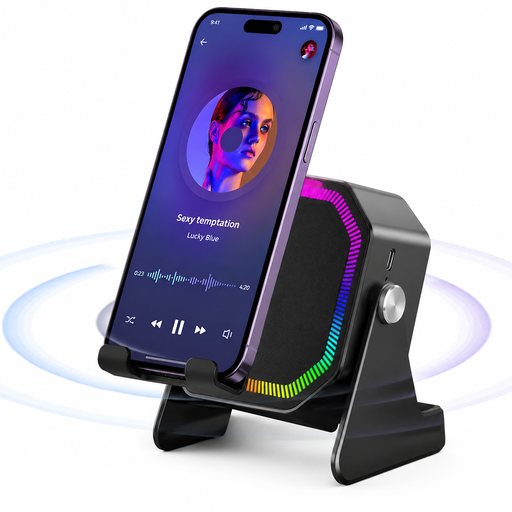
A good option if you want to listen to music over Bluetooth and keep your smartphone in a holder at the same time.
The product title lists Bluetooth 5.4, a 1500 mAh battery, RGB lighting and an induction audio feature.
 No image available
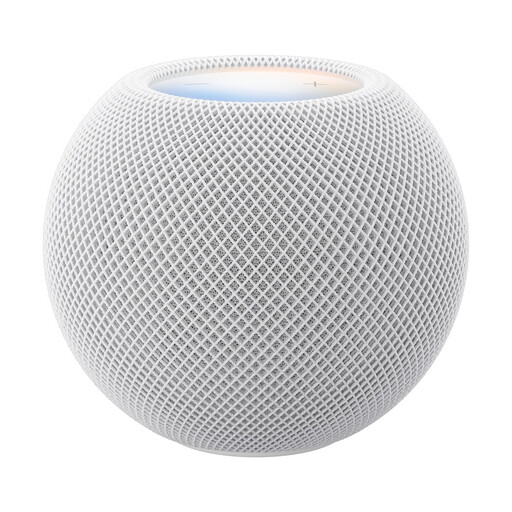
The product description says it can be used on its own at home, or paired with a second device for stereo sound.
According to the description, setup requires a compatible iPhone or iPad, Wi-Fi and an Apple Account.
 No image available
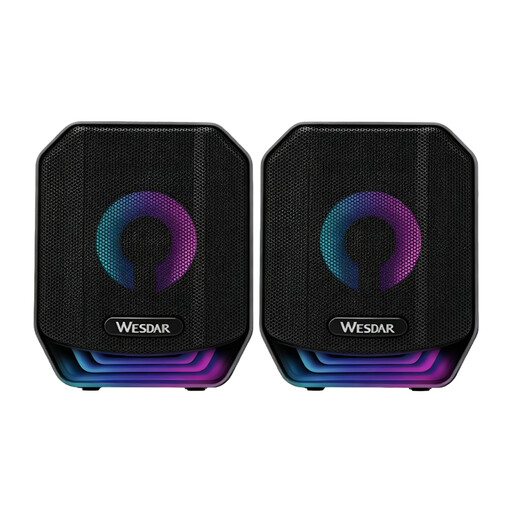
This set is described as suitable for playing music through two speakers connected to a computer or multimedia workstation.
The product description lists USB-A power, a separate audio cable and 52 mm drivers.
 No image available
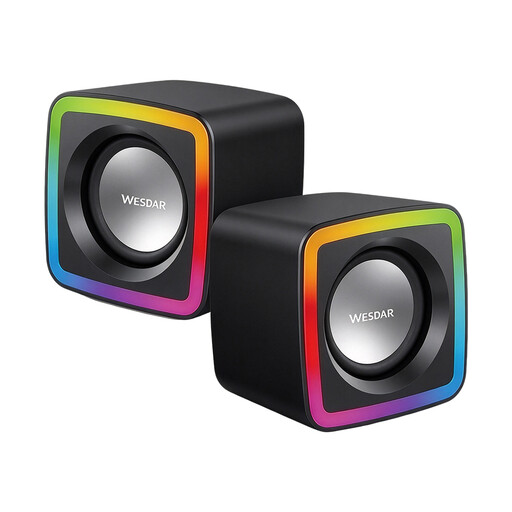
This wired set is described as suitable for stereo playback from a computer or multimedia workstation.
The product description lists USB-A power, 52 mm drivers and integrated RGB lighting.
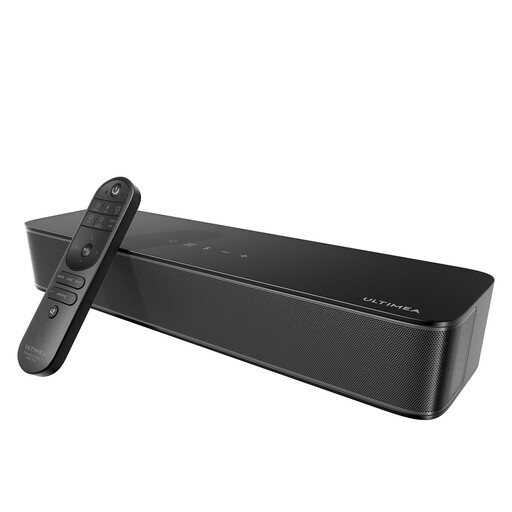 No image available
This soundbar is described as a single device for placing on a shelf or beneath a television, with a built-in subwoofer.
Connections include Bluetooth 5.4, optical input, AUX, USB and SUB OUT. The product description also lists adjustable bass profiles.
If you only have room for one speaker, a single device can be a practical place to start. For two separate stereo channels, you’ll need two compatible speakers and space on both the left and right. Sonos has specific model requirements for creating a pair.
Not necessarily. First, check the bass with your planned speaker placement. If you want extra deep bass, make sure there’s a suitable output and somewhere appropriate to put the subwoofer. Genelec points out that placing one against a wall or in a corner increases the level, but doesn’t necessarily deliver the most even frequency response.
Check the inputs against your audio sources and find out whether you need an adapter or amplifier. Sonos specifies an input adapter for AUX on the Era 100; KEF lists HDMI ARC and USB-C, among other connections, for the LSX II LT. Teufel describes the ULTIMA 20 as passive, which means you’ll need a compatible amplifier or receiver.
No, there’s no blanket permission to play music at any volume. Under the conditions set out in § 117 OWiG, excessive noise that could seriously disturb the public or neighbours is prohibited. The German Federal Ministry for the Environment also refers to rules set by federal states and local authorities, as well as building regulations. The local rules that apply therefore depend on where you live.