
Lieferung heute & morgen

Qualitätsgarantie

Willkommens-Angebote freischalten: KOSTENLOSE Lieferung | Bis zu 80 % RABATT | Kostenlose 30-Tage-JoyPlus-Testphase
App herunterladen
A small saucepan is useful for all sorts of tasks around the home: warming milk, making sauces, cooking side dishes, preparing porridge or heating a small portion of soup. But choosing one isn’t just a matter of diameter. Unclear information about hob compatibility, delicate coatings and awkward handles can mean that an apparent bargain gets little use in everyday life.
A saucepan with a diameter of 14, 16 or 18 cm can hold different amounts depending on its height, base shape and rim design. A small model is often enough for a single portion of sauce. If you want to prepare side dishes for two, though, check the stated capacity as well.
A pan for small portions should also suit the way you cook. A very shallow pan is better for reducing sauces, while a taller milk pan can make it easier to stir and heat liquids.
A small pan for induction needs a magnetic or induction-compatible base. Gas, ceramic and electric hobs have different requirements. Check whether the manufacturer specifically lists induction, gas, electric and ceramic hobs.
An induction symbol alone doesn’t tell you much about the size of the usable base. With very small pans, the hob may not reliably detect the pan and switch on. So it’s worth checking the manufacturer’s stated minimum hob diameter.
A non-stick pan can make it easier to release food and clean up afterwards. But that doesn’t mean metal utensils, high heat or scouring products are safe to use. For ceramic coatings, it’s often recommended that you cook over a low to medium heat and use wooden or silicone utensils.
A stainless steel saucepan usually has no internal coating and, depending on its design, can be used with metal utensils. However, overheating, starchy foods or mineral-rich water can cause visible discolouration. This doesn’t necessarily mean there’s a problem with the material, and the marks can often be removed with suitable mild cleaning products.
Look beyond the top diameter and check the base diameter, height and capacity too. A 14 cm saucepan with a one-litre capacity serves a different purpose from a taller model with a smaller base.
Aluminium heats up relatively quickly and is often combined with a coating. Stainless steel is neutral in taste and available without a coating. A multi-layer or encapsulated base can help distribute heat more evenly.
For an induction-compatible pan, the base should sit flat on the hob and be explicitly approved by the manufacturer for your hob type. On a gas hob, the flame shouldn’t extend beyond the edge of the base, as this can unnecessarily heat the handle and outer surfaces.
A saucepan with a lid is handy when you want to heat liquids more quickly or keep food warm. Glass lids let you keep an eye on the cooking, while a well-fitting stainless steel or coated lid is often particularly robust.
With a saucepan, the handle should sit far enough away from the cooking zone. Bakelite or plastic handles can heat up if exposed to heat for a long time, so follow the relevant safety instructions. Also check whether hand washing is recommended or if the pan is dishwasher-safe. For coated models, gentle cleaning and soft sponges can often help extend their lifespan.
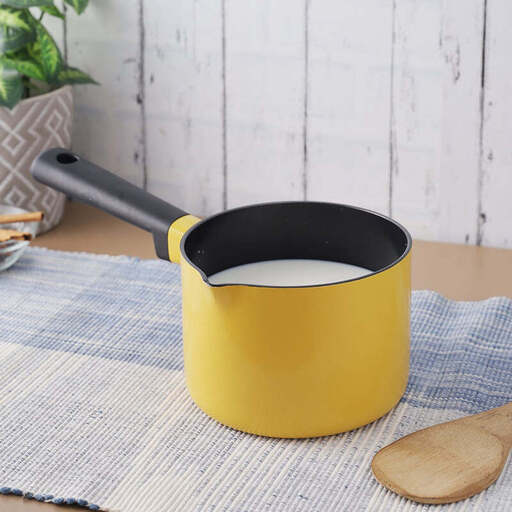
Why it suits this profile: This 14 cm milk pan is designed for small quantities, milk and sauces, and is listed as suitable for induction, gas, electric and ceramic hobs.
The specific size and stated compatibility with several hob types reduce the risk of choosing the wrong pan. Use the ceramic coating over low to medium heat and with suitable kitchen utensils.
14 cm aluminium body, ceramic coating inside and out, and a Bakelite handle; hand washing is recommended.
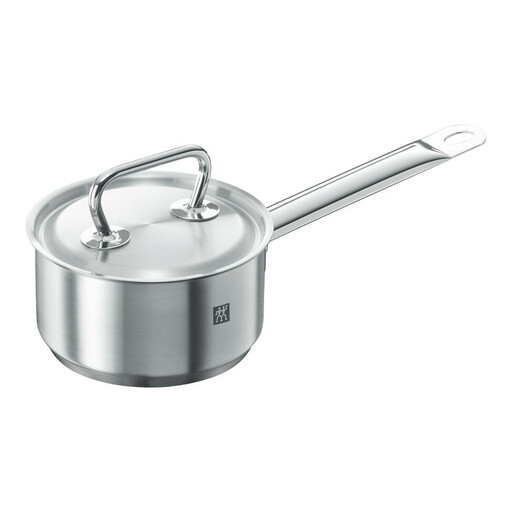
Why it suits this profile: Made from 18/10 stainless steel with a SIGMA Classic sandwich base, this pan is aimed at households looking for a small, uncoated saucepan for sauces and small quantities.
The material is clearly specified. As the product isn’t described as non-stick, you don’t need to follow the care requirements associated with a coated interior.
1 litre capacity, lid, integrated measuring scale, drip-free pouring rim, and compatibility with induction and other hob types.
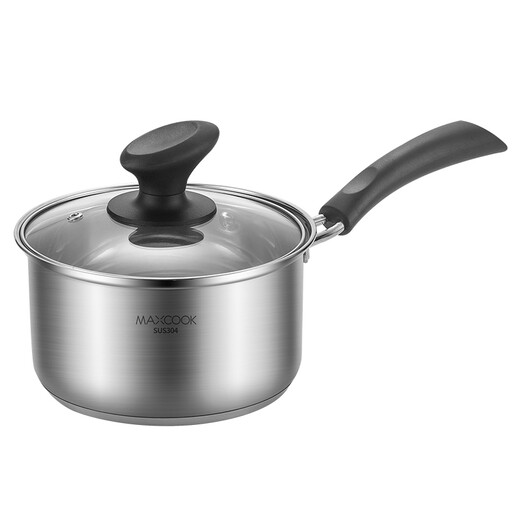
Why it suits this profile: The 304 stainless steel, encapsulated base and glass lid are designed for regularly preparing small portions.
The details clearly specify the material, base construction and hob compatibility. The manufacturer recommends hand washing and low to medium heat, helping you avoid care and overheating mistakes.
16 cm diameter, 304 stainless steel, glass lid, encapsulated base, and compatibility with induction, gas, electric and ceramic hobs.
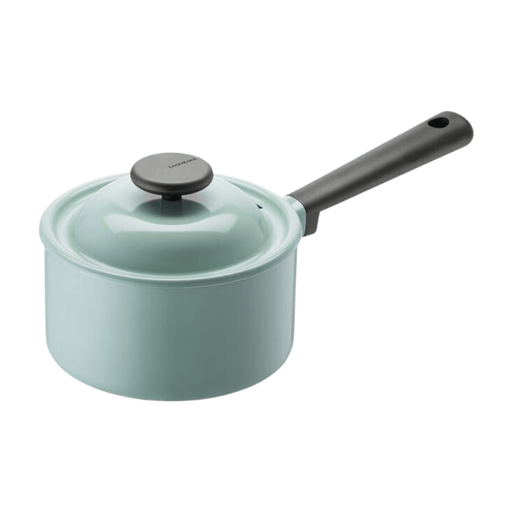
Why it suits this profile: This 18 cm model offers more room than a milk pan and is suitable for sauces, soups and everyday portions for one or two people.
It’s listed as suitable for all the hob types mentioned. The care instructions help reduce the typical risks associated with a ceramic non-stick surface.
18 cm aluminium body, ceramic coating inside and out, and a Bakelite handle; listed as suitable for induction, gas, electric and ceramic hobs.
We’ve put together a complete, regularly updated list of products that meet these strict selection criteria and the safety requirements in force across the EU.
A 14 to 16 cm pan is often enough for milk, sauces and small side dishes. For larger portions or two people, an 18 cm model gives you more room. Capacity and pan height are important too.
Choose a model whose product description specifically says it can be used on an induction hob. A magnetic base and a sufficiently large, flat contact surface are essential. Also check the minimum size your hob requires to detect a pan.
Use wooden, plastic or silicone utensils, avoid heating the pan when empty, and let it cool before cleaning. A soft sponge and the cleaning method recommended by the manufacturer will help protect the surface. With stainless steel, use medium heat and remove residue without harsh scouring products.