What should you look for when buying?
First decide whether you’ll mainly photograph whole figures or very fine surface details. Then consider depth of field, lighting and the complete set-up.
| Priority |
What to check before buying |
Who should pay particular attention? |
| Capturing small details |
Check the magnification ratio and minimum focusing distance of the specific lens, and make sure its mount and framing suit your needs. |
If I want to show tiny tool marks clearly, the magnification I can achieve matters more to me than the camera body’s pixel count alone. Around 33% of consumers prioritise this level of detail. |
| Keeping deep figures in focus |
Check whether the camera body supports focus bracketing or focus stacking, and whether you can set it up securely. |
For a three-dimensional figure, I want the front and back to be as sharp as possible throughout; a suitable focus-bracketing function matters more than simply having a wide maximum aperture. Around 27% of consumers have this as their main priority. |
| Keeping photographs of my work consistent |
Consider adjustable white balance, a tripod mount and space to control or supplement the lighting. |
When I photograph my work repeatedly in changing window light, I want to keep the composition and colour reproduction consistent. Around 20% of consumers prioritise being able to take repeatable photographs of their work. |
| Getting started simply |
Check what’s included, the lens mount and any extra equipment needed to capture the level of detail you want. |
For my first wider shots, I want a straightforward set-up and will only consider extra lenses when I need more detail. Around 20% of consumers are focused on getting started. |
Joybuy cameras for this subject
The Joybuy products below are general camera options. Before buying, pay particular attention to the focusing range and suitability for close-ups when photographing small sculptures. With mirrorless cameras, also check whether a suitable lens is compatible.
 No image available
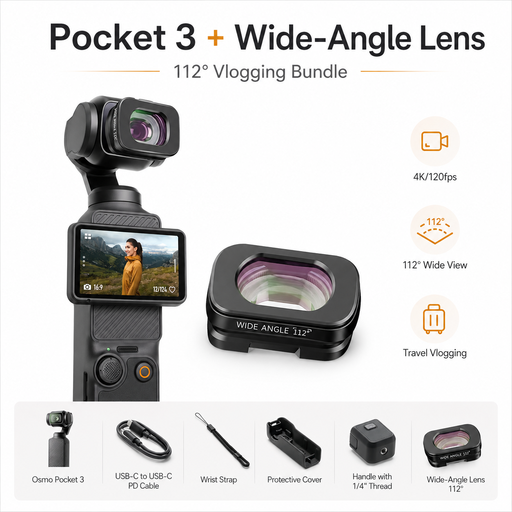
DJI Osmo Pocket 3 Standard Combo with ULANZI F35 112° wide-angle lens
The product title describes a camera for photography and vlogging; the bundle lists a 1-inch CMOS sensor and a 112° wide-angle lens. For close-ups, check that the angle of view and focusing range suit your sculpture.
Joybuy
 No image available
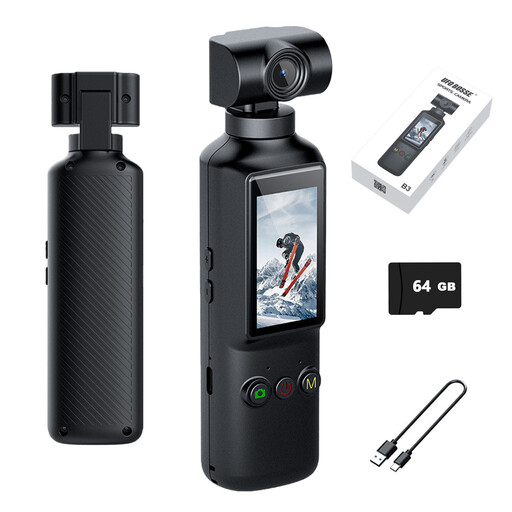
KINSI Mini Pocket Camera, 16 MP, 270° rotating lens
The title describes a compact camera for stills and 4K video with 16 MP. Before choosing it for sculptures, check whether its focusing range can capture your subject at the desired size from your shooting distance.
The product title also lists a 5.1 cm display.
Joybuy
 No image available
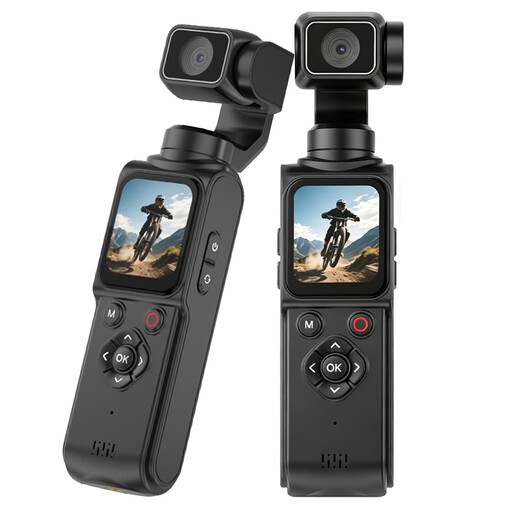
KINSI Mini Vlog Camera 4K, 64 MP, 330° rotating lens
The product details list a camera for photos and 4K video with 64 MP. If you want to capture small surface details, check the focusing range and the framing you can achieve with your specific subject.
The title also lists a 1.72-inch touchscreen.
Joybuy
 No image available
Sony Alpha 6100 APS-C with 16–50 mm power zoom lens
This kit combines an APS-C mirrorless camera with a 16–50 mm power zoom for flexible framing. For small sculptures, check what close-up shots the lens can manage and whether a compatible macro lens would suit your needs.
Joybuy
 No image available
DJI Osmo Pocket 4 Standard Combo
The title describes this model as a camera for vlogging and photography, and lists a 1-inch CMOS sensor. For sculptures, check whether the focusing range and framing will work for the detail shots you want.
Other details listed in the title include 4K/240fps, 3-axis stabilisation and 107 GB of built-in storage.
Joybuy
Frequently asked questions
Do I need a macro lens to photograph the whole small sculpture?
Not necessarily. First, check whether you can fit the whole figure into the frame from the distance available with your chosen lens. For very small details, the stated magnification ratio is useful: a 1:2 lens isn’t the same as a 1:1 macro lens, as Canon and Nikon’s specifications for their specific lenses show.
How should I set up my camera by the window?
Keep the sculpture and camera as still as possible for a repeatable composition. For close-up subjects with depth, you can stop down the aperture or, if your specific camera body supports it, take several shots at different focus points. An extra light source can also help reduce your reliance on changing daylight. Foto Erhardt and the Canon Academy cover these shooting conditions.
How can I keep the colours consistent across several shots?
Keep your lighting as consistent as possible and set the white balance deliberately. RAW files allow you to adjust white balance afterwards, but they can’t replace consistent lighting. Canon Germany explains the white balance settings.
Can I publish photographs of a sculpture in Germany?
Not automatically just because you own or have photographed the sculpture. Under Germany’s Copyright Act, original works of visual art may be protected, and the Act also governs their reproduction. The exception for works permanently located on public paths, streets or squares cannot be applied automatically to a sculpture by your own window. If the work belongs to someone else and is protected, check that you have the necessary rights for your planned publication.


