
Lieferung heute & morgen

Qualitätsgarantie

Willkommens-Angebote freischalten: KOSTENLOSE Lieferung | Bis zu 80 % RABATT | Kostenlose 30-Tage-JoyPlus-Testphase
App herunterladen
A small sofa is often the heart of a room, especially when space is limited. Whether for a first apartment, a shared flat, or a cosy reading nook, the search for the right 2-seater can quickly become overwhelming. Many models promise comfort and style, but not all of them live up to their product descriptions in everyday use. As your Joybuy Product Recommendation Officer, I'll help you identify the crucial features and avoid common purchasing pitfalls.
Furnishing small rooms requires thoughtful decisions. When choosing a sofa for a small apartment, many buyers encounter recurring problems that can significantly compromise their living comfort.
To make an informed decision, you should focus on a few objective core parameters. These will help you evaluate the quality and functionality of a sofa, independent of marketing promises.
The stability and longevity of a sofa depend significantly on its internal structure. There are two fundamental approaches here:
The upholstery fabric determines not only the look but also the feel and the maintenance effort.
For a sofa for small spaces, the overall dimensions are crucial. Measure not only the available floor space but also pay attention to the following values:
Based on these objective criteria, we have identified several models that are suitable for different needs and living situations.
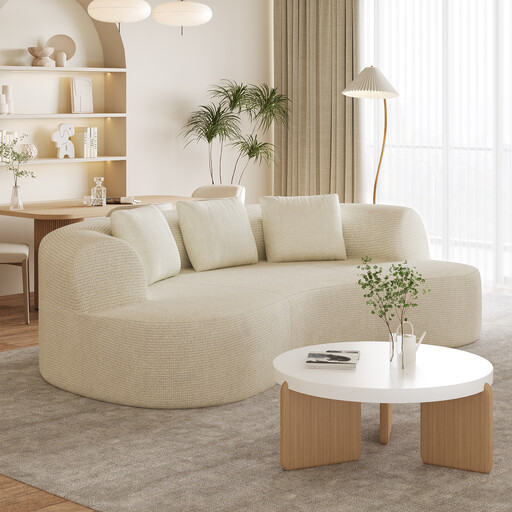
Why it's a great fit: Perfect for renters looking for a hassle-free, ready-to-use solution. Delivery in a compact box makes it easy to transport through narrow hallways and stairwells—a common problem in older city buildings.
This frameless sofa is genuinely assembly-free. It arrives vacuum-packed and expands on its own after unboxing, thus bypassing the "hidden" assembly effort trap.
The durable chenille cover is easy to maintain, and the high-density foam core prevents premature sagging. Its compact dimensions (168 cm width) are optimal for small rooms.
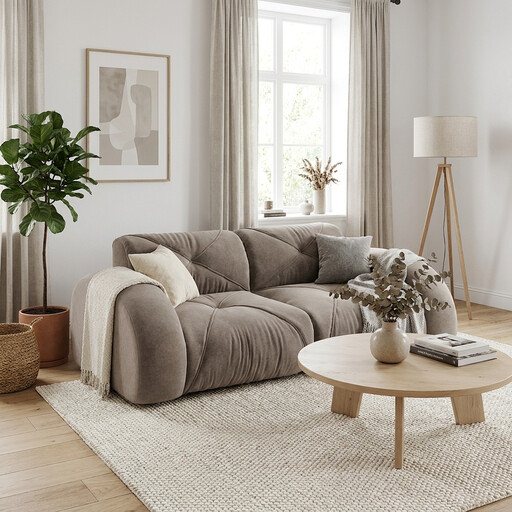
Why it's a great fit: For anyone seeking a "Cloud Couch" feel with maximum flexibility. The modular system allows you to combine the elements freely, creating a cosy lounge area that adapts to your space.
The construction from a single block of high-density 32D foam prevents instability and sagging (Pitfall 2). The durable chenille fabric is pilling-resistant and suitable for pets (Pitfall 3).
A high load capacity of up to 200 kg per seat element and modular flexibility, allowing the sofa to adapt to changing living situations. The rounded corners offer additional safety.
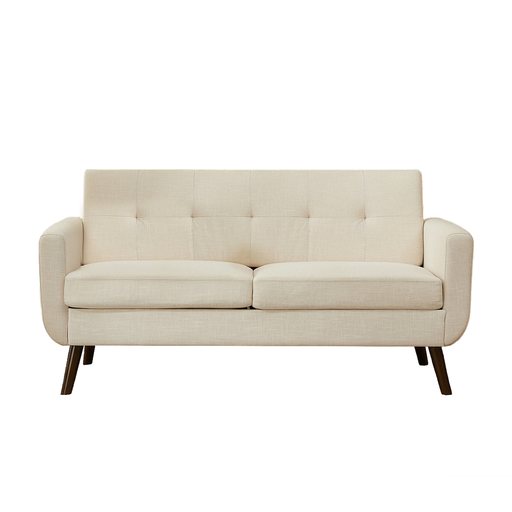
Why it's a great fit: This compact upholstered sofa, also known as a loveseat, brings a timeless mid-century look to small living rooms or offices with its tufted button design and tapered wooden legs.
It addresses the instability pitfall (Pitfall 2) with a solid wood frame and a spring system that, according to the manufacturer, allows for a load capacity of up to 300 kg.
The combination of classic design and robust construction. The padded feet protect delicate floors from scratches, which is an important consideration in rental properties.
We have compiled a complete, up-to-date list of products that fully meet these strict selection criteria and EU safety regulations.
1. How long does a vacuum-packed sofa take to regain its shape? A vacuum-packed, frameless sofa typically needs between 24 and 72 hours to fully expand and reach its final shape and firmness. Any slight wrinkles in the cover will disappear during this process. You can speed it up by gently patting the cushions. Please refer to the manufacturer's instructions for specific guidance.
2. Is a frameless sofa really stable? Yes, models made from high-quality, high-density foam are very stable and retain their shape. They provide even support without pressure points and avoid the typical creaking noises of wood or metal frames. Look for the foam density specification (e.g., 32D) and the maximum load capacity as indicators of quality.
3. How do I properly care for a chenille sofa? For regular maintenance, it is sufficient to vacuum the cover with a soft brush or an upholstery attachment. Stains should be treated immediately with a clean, slightly damp cloth and, if necessary, a mild soap solution. Always test cleaning agents on an inconspicuous area first. Avoid harsh rubbing and aggressive chemical cleaners.