Households without spare floor space
If there’s no suitable space on the floor, a tabletop dishwasher could be a good option. Make sure the appliance and its open door won’t get in the way of your work area or a walkway.


Start by looking at the space available, then consider how much washing up you get through in a typical day. A tabletop dishwasher takes up worktop space, a tank-fed model doesn’t need a fixed water supply, and a slimline freestanding dishwasher uses floor space. Before you buy, also check the door clearance, whether your dishes will fit, the water supply and drainage, and the Eco figures for the specific model. A smaller machine won’t necessarily be the most economical choice for your washing-up routine.
If there’s no suitable space on the floor, a tabletop dishwasher could be a good option. Make sure the appliance and its open door won’t get in the way of your work area or a walkway.
If you use lots of plates, bowls and glasses every day, compare the stated capacity and interior layout with the dishes you own. A spare spot for a slimline freestanding model could be a useful alternative to giving up worktop space.
A tabletop dishwasher specifically designed for tank operation may suit you if there’s no suitable fixed water supply. You’ll still need to be able to drain the wastewater safely at the chosen location.
First decide where the appliance can go. Then compare its capacity, water connections and consumption figures with your washing-up routine.
A good fit if: there’s no suitable fixed water supply and you usually have a smaller amount of washing up. MEDION lists the DWT30 (MD370022) as having capacity for three place settings, with the option of tank or mains water supply.
The trade-off: Its smaller interior may mean running it more often. You’ll still need to fill the tank and arrange safe drainage.
A good fit if: you have worktop space and a suitable water connection, but no room on the floor. Exquisit lists the GSP206-030D white as having capacity for six place settings and measuring 55 × 43,8 × 50 cm (W × H × D).
The trade-off: It takes up worktop space. For this model, Exquisit states a depth of 81 cm with the door open.
A good fit if: you have floor space for a freestanding appliance and suitable connections, and regularly have more washing up than a tabletop model can hold. Bosch lists the SPS4EMW02D as measuring 845 × 450 × 600 mm (H × W × D).
The trade-off: This type uses floor rather than worktop space. The width alone won’t tell you how economical the specific model is.
| What matters | What to check before buying | Who should pay particular attention |
|---|---|---|
| Space and door clearance | Measure the space where the appliance will go, including its type, width, height and depth. Allow for the extra room needed when the door is open. | If I want to open the dishwasher without blocking the worktop or a walkway, I’ll start by checking where it can go. Around 36% of consumers prioritise space and door clearance. |
| Room for your everyday dishes | Compare the capacity and basket layout with the plates, bowls and glasses you use. | If I want my dishes to fit in the machine until the next suitable wash, I’ll check the largest items too. Around 29% of consumers focus mainly on the amount and fit of their dishes. |
| Water supply and drainage | Check the permitted water supply, drainage options and installation instructions for the exact model. | If there’s no fixed water supply where my dishwasher will go, I’ll need a compatible way to supply water and a safe way to drain it. Around 21% of consumers prioritise water connections and drainage. |
| Consumption and noise | Compare the EU energy label figures on a like-for-like basis: kWh per 100 Eco cycles, litres per Eco cycle, programme duration and noise level. | If I want to compare running costs and noise levels for my kitchen, I’ll check the figures for the specific model. Around 14% of consumers focus mainly on consumption and noise. |
The open door of a tabletop dishwasher can extend much further into the room than the closed appliance. For the Exquisit GSP206-030D white, the manufacturer lists a depth of 81 cm with the door open.
Before choosing a model, measure the available space, the room in front of the door and the clearance beneath any wall cupboards.
With a tank-fed model, you’ll need to fill the water tank and plan a suitable drainage route.
Figures on the EU energy label are based on the Eco programme. The German Environment Agency bases its efficiency comparison with hand washing on a full load in the Eco programme.
Compare models on the same Eco basis, taking their capacity and your usual washing-up routine into account.
With small or frequent loads, your usage and consumption may differ from the figures for a full Eco load.
Slimline freestanding models could be an option if you have floor space available.
Tabletop models for smaller amounts of washing up, including a tank or mains water supply option on the model mentioned here.
Tabletop models with room for more dishes than a small model designed for three place settings.
Tabletop models to suit different capacity and water connection needs.
Slimline freestanding models are an option if you have floor space rather than worktop space.
This selection features freestanding 45 cm dishwashers for kitchens where worktop space is limited but there’s a suitable spot on the floor.
 No image available
For households with limited worktop space and a suitable spot on the floor.
45 cm wide; listed for 10 place settings and energy class C. The product description mentions a height-adjustable upper basket.
As a freestanding appliance, it needs a suitable spot on the floor.
 No image available
For everyday use when you have space for a slimline freestanding model and its stated capacity suits the amount of washing up you do.
Listed for 9 place settings; the product description gives water consumption of 9,0 litres per Eco cycle and mentions an adjustable basket.
As a freestanding appliance, it needs a suitable spot on the floor.
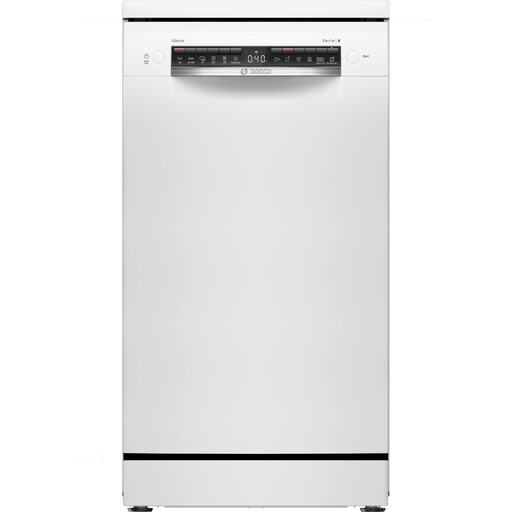 No image available
For households with space to keep the worktop clear and a suitable spot for an appliance on the floor.
45 cm wide and listed for 10 place settings; the product description gives water consumption of 8,9 litres per Eco cycle and mentions a height-adjustable upper basket. Energy class E, according to the title.
As a freestanding dishwasher, it needs a spot on the floor and, according to the product description, fixed water and electricity connections.
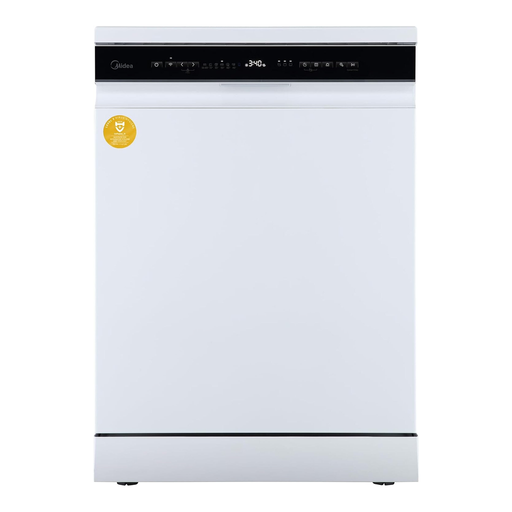 No image available
For households with limited worktop space and a suitable spot on the floor.
45 cm wide, listed for 10 place settings and energy class C, according to the title. The product description mentions a height-adjustable upper basket and a cutlery basket.
As a freestanding appliance, it needs a suitable spot on the floor.
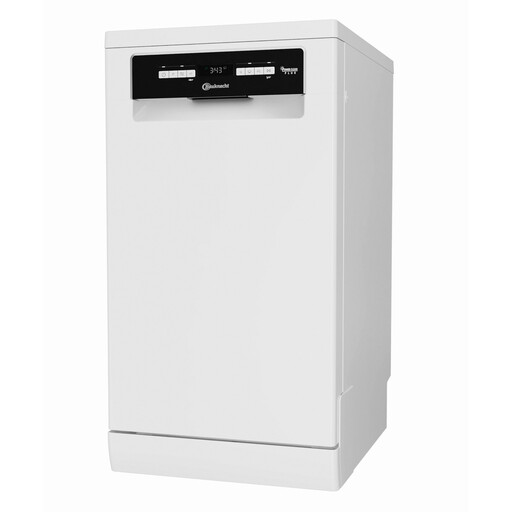 No image available
For households with space to keep the worktop clear and a suitable spot for an appliance on the floor.
45 cm wide and listed for 10 place settings; energy class D, according to the title.
As a freestanding appliance, it needs a suitable spot on the floor.
No. Use it to compare capacity, then check that your largest plates, bowls and glasses will fit in the baskets. For example, the small models featured here are listed for three or six place settings.
Only if the specific model is designed for tank operation and you can also arrange safe drainage and meet the other installation requirements at the chosen location. MEDION lists the DWT30 (MD370022) as suitable for tank or mains water supply, but that doesn’t mean every location is suitable.
Compare appliances on the same Eco basis: electricity use per 100 cycles, water use per cycle, programme duration, capacity and noise level. The European Commission says the EU scale has run from A to G since 1 March 2021; the older plus-rated classes aren’t directly comparable on the same scale.
Follow the instructions for the specific model. Bosch recommends checking your water hardness before using its dishwashers for the first time. The German Environment Agency explains why regenerating salt is important in dishwashers with water softeners. For the most efficient results, it recommends using the Eco programme with a full load where possible and not pre-rinsing with hot water.
When you buy from a business seller, you’re entitled to at least two years of statutory protection against faulty goods from the seller. Your Europe, the European Union’s information service, points out that an additional manufacturer’s guarantee doesn’t replace these rights. The details depend on the fault and the purchase contract.