Households with a narrow space
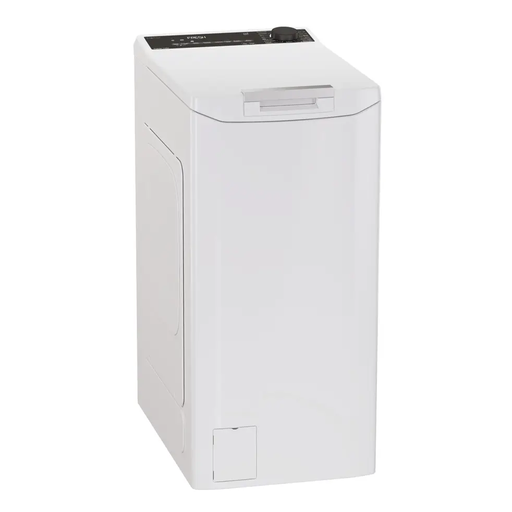
If width is your main constraint, a top loader could be a good fit. Bauknecht lists the DTL 6B BK W FF as 40 cm wide; be sure to check its height and depth too, along with the space needed to open the lid.


Start by measuring the width, depth and height, as well as the space needed to open the machine. If width is particularly limited, a top loader could be an option; if depth is the issue, consider a shallow front loader. You’ll also need to check the dimensions of the entire alcove, access to the lid or door, and whether the programmes suit the care labels on your pillowcases.
If width is your main constraint, a top loader could be a good fit. Bauknecht lists the DTL 6B BK W FF as 40 cm wide; be sure to check its height and depth too, along with the space needed to open the lid.
If there’s enough width but little depth, a shallow front loader may be worth considering. Hoover lists the HWQ4 47AMC/1-84 as 454 mm deep; remember to allow room for the door and connections too.
If you often wash pillowcases with other laundry, compare the capacity and available programmes with the amount of washing you usually do. AEG lists the LTR7A70260 as having a 6 kg capacity; the European Commission explains that EU energy label figures are based on a specified programme.
Measure the entire space before choosing a type of machine. A narrow appliance isn’t necessarily suitable if there isn’t enough room for the lid, door and connections.
A good fit if: width is your main constraint and there’s enough clearance above the machine to open the lid. Bauknecht lists the DTL 6B BK W FF as measuring 40 × 90 × 60 cm (W × H × D), with a 6 kg capacity.
Keep in mind: A narrow width won’t solve a lack of height or depth.
A good fit if: there’s enough width but limited depth. Hoover lists the HWQ4 47AMC/1-84 as measuring 600 × 454 × 850 mm (W × D × H), with a 7 kg capacity.
Keep in mind: You’ll need room in front to open the door, and space for hoses and connections too. Hoover lists different energy ratings on its product page, so check the product datasheet for the specific model.
A good fit if: you have an alcove that’s wide and tall enough. Bosch describes the WUU28T48 as suitable for under-counter installation and lists its dimensions as 845 × 598 × 590 mm (H × W × D), with an 8 kg capacity.
Keep in mind: This type won’t save you any width; check that the alcove dimensions and connections suit the space where you plan to install it.
The EU energy label shows, among other things, energy consumption per 100 cycles and water consumption per cycle. The European Commission explains that these figures relate to the programme used as the basis for the label; they don’t automatically represent consumption for every wash.
| Buying criterion | What to check before buying | Who it matters most to |
|---|---|---|
| Fit and access | Measure the appliance, alcove, connections and opening space separately. | If space is tight in my home, I still need to be able to access the machine. Around 36% of consumers prioritise fit and loading access when making a purchase. |
| Caring for pillowcases | Check that the available wash programmes match the care labels. | If I want to wash my pillowcases according to their fabric type, I choose a programme that follows the care label. Around 29% of consumers put fabric care first. |
| Load and consumption | Compare capacity and label figures on the same programme basis, such as kWh per 100 cycles and litres per cycle. | If I wash pillowcases with the rest of my laundry, both my usual total load and consumption matter. Around 21% of consumers prioritise load capacity and consumption. |
| Connections and water protection | Check the water inlet, drain, power supply and any suitable protection or installation services for the location. | If I’m installing the machine in a particular spot, I want to check the connections and any additional services beforehand. Around 14% of consumers first consider connections, water protection and possible follow-on costs. |
Even a narrow top loader needs depth and clear access from above. A front loader needs enough room for its door to open.
Measure the alcove, connections and opening space before choosing a type of machine.
Label figures relate to the programme specified as the basis for the label. The care label and wash temperature need to suit the fabric and the reason for washing.
Check the care labels on your pillowcases. For laundry contaminated with pathogens, the Verbraucherzentrale recommends a 60-degree programme with heavy-duty detergent.
Statutory rights for faulty goods, voluntary warranty terms and protection against water damage are different types of cover.
Read each set of terms separately and check exactly what’s covered before choosing an additional service.
The DTL 6B BK W FF top loader is an option if you’re looking for a machine that takes up little width.
The LTR7A70260 top loader may suit a narrow space, provided there’s enough room above it to load the machine.
The HWQ4 47AMC/1-84 front loader is an example of a shallow appliance that’s 600 mm wide.
The MF10ET70B is a top loader with documented cotton programmes.
The WUU28T48 under-counter front loader may suit an alcove that’s wide enough.
These products include top loaders and front loaders for washing pillowcases and other laundry. Check that the dimensions suit your chosen location.
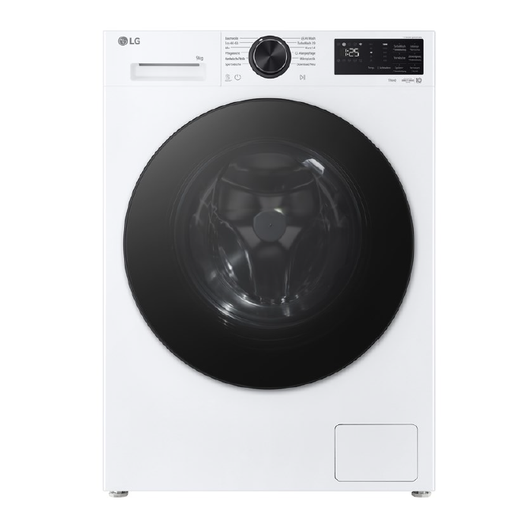 No image available
For washing pillowcases with other laundry, provided the appliance dimensions and space in front of the door are suitable.
The product name lists a 9 kg capacity, 1200 rpm and Slim Fit.
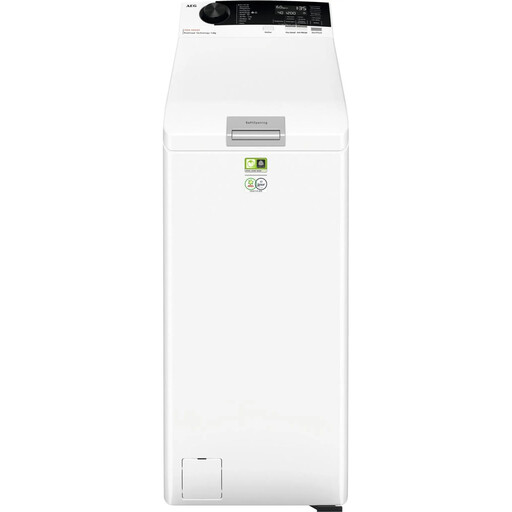 No image available
For a narrow space, as long as there’s enough room above the top loader to open it.
AEG lists a 6 kg capacity, 48 kWh per 100 operating cycles and 43 l per cycle on the label basis for this model.
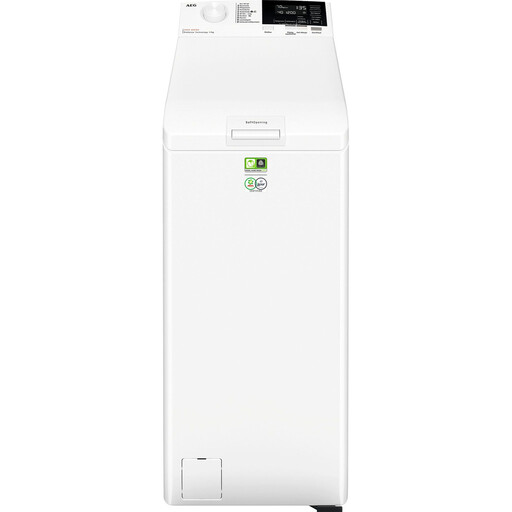 No image available
For washing pillowcases with other laundry, if a top loader suits the available space.
The product name lists a 7 kg capacity.
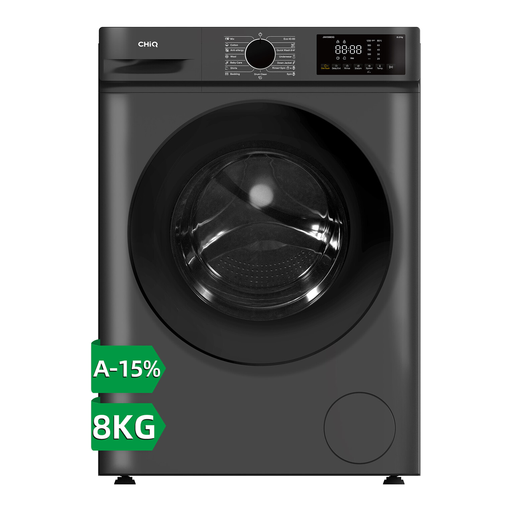 No image available
For pillowcases and additional laundry, provided there’s enough room to open the front door where you plan to install it.
The product name lists an 8 kg capacity, 1400 rpm and a slim width of 465 mm.
 No image available
For washing pillowcases with other laundry, if a top loader suits the alcove and there’s enough room to load it from above.
The product name lists a 7 kg capacity, 1400 rpm and energy efficiency class B.
No, there’s no one-size-fits-all temperature. Follow the care label; for laundry contaminated with pathogens, the Verbraucherzentrale recommends a 60-degree programme with heavy-duty detergent. It also points out that lower temperatures are suitable for healthy households.
Label figures apply to the specified programme used as the basis for the label, so they can’t be directly applied to a quick or 60-degree programme. The EU energy label includes, among other things, energy consumption per 100 cycles and water consumption per cycle.
Check the space and connections, and discuss any specific installation questions with your landlord. The Verbraucherzentrale says that installing a washing machine in your home is generally not something tenants can be prohibited from doing; the specific circumstances and any potential water damage are separate matters.
When buying from a trader in the EU, you’re generally entitled to at least two years of legal protection against faulty goods, starting from the date you receive the item. Your point of contact is the seller. Your Europe distinguishes these statutory rights from an additional voluntary guarantee.