Households making just a few packed lunches
If you only need a few slices each week, the net quantity matters more than the idea of a “half loaf”. Match the pack to how much you use and check the storage instructions once opened.


If you only make a few school lunch sandwiches, match the pack size to the amount you need and check the storage instructions once opened. If you want wholemeal bread, look for an explicit wholemeal description. If you need to avoid gluten, wheat and spelt toast are not alternatives to a product labelled accordingly.
If you only need a few slices each week, the net quantity matters more than the idea of a “half loaf”. Match the pack to how much you use and check the storage instructions once opened.
You may want explicitly wholemeal bread for the lunchbox without having to buy a large pack. Compare the wholemeal description, ingredients list and fibre content per 100 g for the specific products.
If you need to avoid gluten, a small pack does not determine whether a product is suitable. Check the ingredients, allergen information and any required gluten-free labelling for each variety.
First, check whether any ingredients need to be avoided. Then you can choose a pack size, wholemeal option and flavour to suit your packed lunch.
| Criterion | What to check when buying | Who it matters to |
|---|---|---|
| Pack size | Match the net quantity to your weekly usage and the storage instructions once opened. | If I only make a few packed lunches, I want to be able to finish the pack in time. For around 29% of consumers, choosing the right quantity comes first. |
| Wholemeal | Look for an explicit wholemeal description; compare the ingredients and fibre per 100 g. | I want to choose wholemeal bread for the lunchbox, rather than relying on a dark colour or visible grains. Around 36% of consumers put wholemeal first when choosing. |
| Gluten and allergens | Check the ingredients list, allergen information and, where needed, the gluten-free labelling on the specific pack. | If I need to avoid gluten or other specific ingredients, a small pack shouldn’t distract me from checking what’s in it. This requirement is the main consideration for around 14% of consumers. |
| Flavour and use | Choose a variety and slice shape to suit the filling you have in mind; check whether it is intended for sandwiches or toasting. | The packed lunch should suit your child’s taste and the planned filling. Around 21% of consumers say this is their main priority when choosing. |
Spelt is a type of wheat. A small pack of spelt sandwich bread is therefore not suitable for someone who needs to avoid gluten just because it is a smaller pack.
Check the ingredients, allergen information and, where applicable, the gluten-free labelling for the specific variety.
Visible grains don’t tell you how much wholemeal flour a loaf contains. For example, REWE lists Harry Körner Balance Sandwich as containing 8% wholemeal flour.
If you’re looking for wholemeal bread, check for an explicit wholemeal description, then compare the ingredients and fibre per 100 g.
Whether 250 g or 375 g is a better fit for your household depends on how many slices you actually eat and how you plan to store the bread once opened.
Plan around your usual weekly amount and follow the instructions on the pack, rather than choosing solely on the basis of the lower net quantity.
EDEKA points out that product information may differ from the packaging in front of you. The actual pack is especially important when checking ingredients and allergens.
Before putting the bread in your lunchbox, check the product’s ingredients list, allergen and trace warnings, net quantity and best-before date.
Schär’s gluten-free range includes sliced breads, such as Meisterbäckers Classic.
REWE sells sandwich breads under these ranges in 375-g packs, including a wholemeal and a seeded sandwich bread.
EDEKA describes its spelt and Körner Balance sandwich breads, sold in 375-g packs, as suitable for sandwiches and toasting.
REWE sells Golden Toast Butter-Toast in a 250-g pack and Golden Toast Vollkorn Sandwich in a 375-g pack.
REWE sells Harry Körner Balance Sandwich as a 375-g multigrain loaf.
These two Thinmax products come in small quantities for making just a few packed lunches: Danish Toast in two 85-g packs and Hokkaido Toast Bread in an 85-g pack. Flavour and instructions for using the bread once opened are also important when choosing.
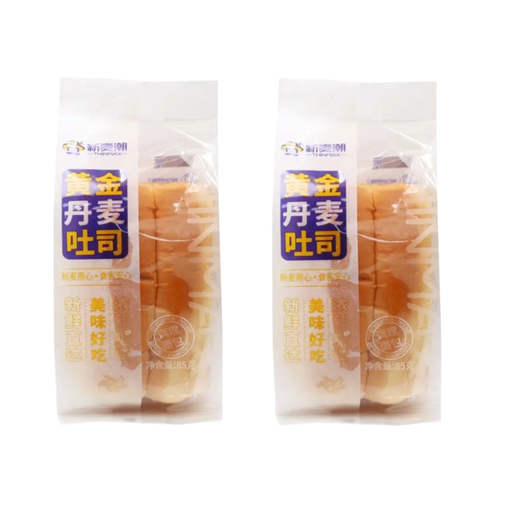 Image unavailable
The two small packs may suit you if you only make a few packed lunches and the sweet Danish toast goes well with your chosen filling.
This product is not suitable if you need to follow a gluten-free diet. If you have allergies, check the ingredients and allergen information on the pack. According to the product description, it should be eaten within 24 hours of opening to maintain the intended quality.
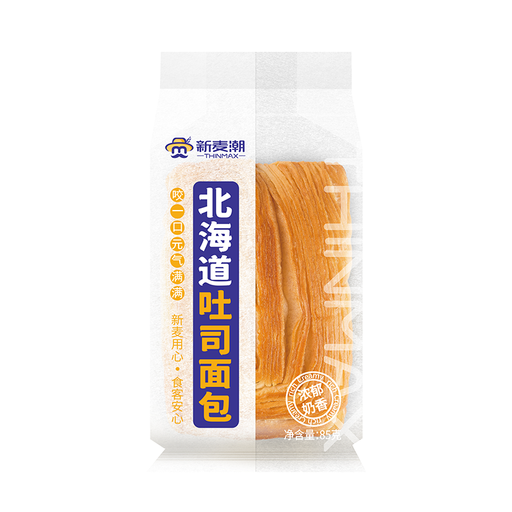 Image unavailable
The 85-g pack may suit you if you only need a small amount; the product description suggests using it for sandwiches.
This product is not suitable if you need to follow a gluten-free diet. If you have allergies, check the information on the specific pack. According to the product description, the bread should be used immediately after opening.
No. “Half loaf” is not a standard pack size for toast bread. Compare the net quantity shown on the pack with how much you use; the sandwich breads and toast breads mentioned here include packs of 250 g and 375 g.
No. Spelt is a type of wheat, so it is not a gluten-free alternative. Instead, check the gluten-free labelling, ingredients and other allergen information on the specific pack.
Read the ingredients list and highlighted allergen information on the packaging. The Federal Ministry of Agriculture, Food and Homeland lists gluten-containing cereals, including wheat and spelt, among the allergens that must be declared.
Yes. The Federal Centre for Nutrition says you can prepare it the night before and then store it in the fridge. Also follow the refrigeration and storage-life instructions for your chosen filling and bread.
No. Visible grains or a dark colour do not prove that a bread is wholemeal. The German Nutrition Society recommends looking specifically for “wholemeal” on the product when choosing wholemeal bread; the ingredients list can help you compare individual varieties.