
Lieferung heute & morgen

Qualitätsgarantie

Willkommens-Angebote freischalten: KOSTENLOSE Lieferung | Bis zu 80 % RABATT | Kostenlose 30-Tage-JoyPlus-Testphase
App herunterladen
Glasses that can take calls, play music, and even translate languages—the idea of smart audio glasses is alluring. They promise to simplify the daily lives of commuters, business travellers, and tech enthusiasts. However, the market is flooded with models whose advertised features often fail to deliver in practice. Before you make a purchase, it's crucial to understand the common pitfalls to avoid a poor investment.
As your Joybuy Product Recommendation Officer, I'm here to help you separate the good from the bad. This guide focuses on the objective criteria that define a quality pair of smart glasses and shows you what to look for.
Many products promise more than they can deliver. Pay close attention to these three weaknesses, which often only become apparent after the purchase:
To avoid the issues mentioned above, you should base your selection on a few key technical parameters. These define the everyday usability and true value of smart audio glasses.
The listening experience is central. Most models use open-ear technology, where sound is directed towards your ears via small speakers integrated into the frames. Unlike headphones that block the ear canal, your ears remain open. This offers two key advantages:
Look for models with at least two speakers and two microphones. This configuration not only improves sound quality for music but also ensures clear voice transmission for hands-free calling glasses by effectively filtering out ambient noise.
Reliable smart glasses should get you through the entire day. Check the manufacturer's stated usage time for continuous use, not just the standby time. A value of at least 8-10 hours of active use is a good benchmark for a full workday.
Connectivity is just as important. A stable connection is ensured by Bluetooth 5.3, which is also more energy-efficient. Another practical feature is the ability to connect the glasses to two devices simultaneously (Multi-Device Connection). This allows you to seamlessly switch between calls on your work phone and music from your personal smartphone.
An AI-powered pair of glasses extends functionality beyond just audio. Features like real-time translation or AI-generated meeting summaries can significantly boost productivity. For example, the LAWAKEN AI Chat City models integrate assistants like ChatGPT and offer translations for a wide range of languages.
Before buying, check if the glasses are compatible with your operating system (iOS/Android) and whether the advanced features require a separate app. For prescription wearers, the most important question is: Are the frames suitable for glazing by an optician? Look for explicit manufacturer statements on compatibility with corrective lenses.
Based on the criteria above, we have identified a few models that are well-suited for different user profiles.
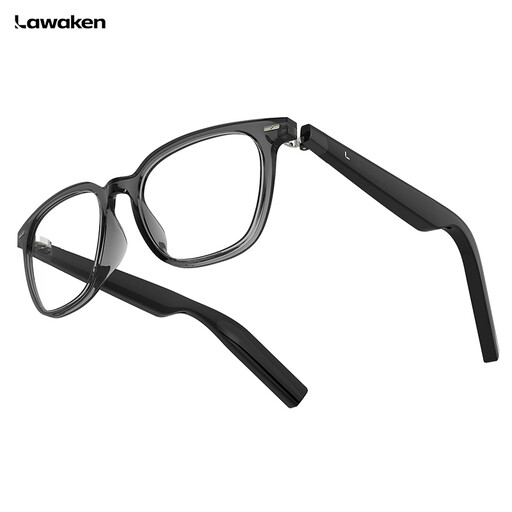
Why This Fits Their Persona: Ideal for the daily commute and long office days. The classic design is discreet, while the long battery life and stable connection ensure uninterrupted calls and music playback.
With a stated usage time of 12 hours, it directly addresses the concern of a dead battery in the middle of the day. The open-ear system is optimised for discreet listening in the office or on public transport.
Long Battery Life: Up to 12 hours of continuous use. Multi-Device Connection: Supports simultaneous pairing with two devices. Prescription-compatible.
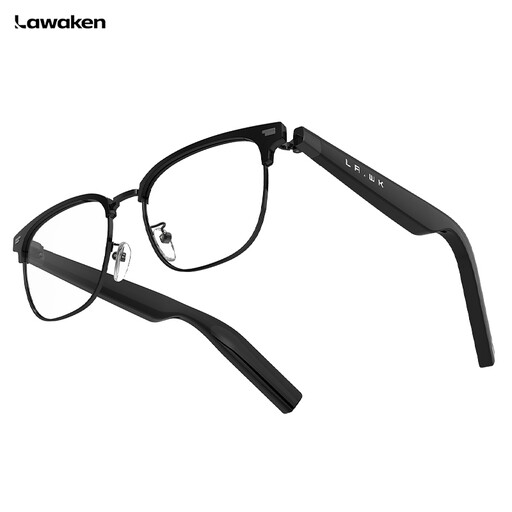
Why This Fits Their Persona: Perfect for international meetings and travel. The integrated AI features, like real-time translation and meeting summaries, turn the glasses into a powerful productivity tool.
These glasses are more than just an audio device. They deliver real value through AI-powered features that go beyond what many competing products label as "smart." Compatibility with corrective lenses makes them usable for any business traveller.
Real-Time Translation: Supports 128 languages, according to the manufacturer. AI Note Function: Records meetings and creates summaries. Lightweight Design: Weighs only 33g+ without lenses.
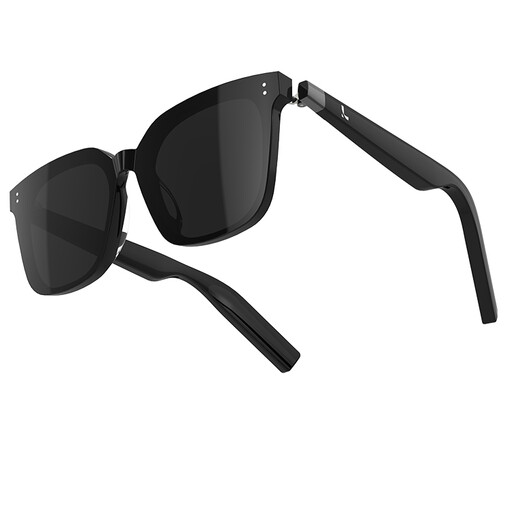
Why This Fits Their Persona: Combines the protection of sunglasses with the benefits of smart audio glasses. Ideal for sunny days, driving, or outdoor leisure activities without having to give up music, podcasts, or calls.
This model is not a compromise. It offers full UV protection while integrating the complete suite of smart features. The open-ear technology ensures that you remain safely aware of your surroundings, even outdoors.
Integrated Sun Protection: Combines smart technology with UV-protection lenses. IPX4 Water Resistance: Protection against sweat and splashes. Modular Design: Frames and lenses are interchangeable.
We have compiled a complete, up-to-date list of products that fully meet these strict selection criteria and safety regulations.
1. Can I use smart audio glasses with my prescription lenses? Yes, many higher-end models are designed for this. Look for a product description that explicitly mentions the frame is suitable for fitting with corrective lenses ("Prescription Lenses Compatible"). The glazing should then be done by a qualified optician to avoid damaging the electronics.
2. How long does the battery of smart glasses last with daily use? The battery life varies greatly depending on the model and usage. While basic models often last only 3-5 hours, models designed for professional use offer 8 to 12 hours of continuous use. This is usually enough for a full workday, including music, several phone calls, and using AI features.
3. Is the sound audible to other people nearby? With high-quality open-ear systems, the sound is barely, if at all, audible to outsiders at a moderate volume. The speakers are positioned to direct the sound specifically towards the wearer's ear canal. However, in very quiet environments like a library, there might be minimal sound leakage at high volumes.