
Lieferung heute & morgen

Qualitätsgarantie

Willkommens-Angebote freischalten: KOSTENLOSE Lieferung | Bis zu 80 % RABATT | Kostenlose 30-Tage-JoyPlus-Testphase
App herunterladen
A modern smart body fat scale with an app promises much more than just displaying your weight. It aims to be a central tool for health management, providing detailed insights into body fat percentage, muscle mass, BMI, and other metrics. However, the market is flooded with devices whose advertised features often fail to deliver in practice. Before you make a decision, it's crucial to understand the common pitfalls that can lead to inaccurate measurements and frustration.
This guide will help you separate the wheat from the chaff. We focus on the critical technical features and show you how to find a reliable bathroom scale with an app that genuinely supports your health goals.
Many users are disappointed after purchasing a smart scale because the results are unreliable or the device is complicated to use. Two problems are particularly common:
To avoid the problems mentioned above, you should check three core technical aspects before buying. These largely determine the accuracy and utility of your scale.
Modern body composition scales use Bioelectrical Impedance Analysis (BIA). This technology sends a very weak, unnoticeable electrical impulse through the body. Since fat, muscle, and water conduct electricity differently, the scale can calculate the body's composition from the resistance (impedance).
The following points are crucial for a precise measurement:
A good app should be intuitive to use and visualize data clearly. Before you buy, check if the corresponding app meets the following criteria:
In addition to standard values like weight, body fat, and BMI scale functions, some models offer advanced features. For example, a scale with heart rate measurement can provide additional insights into cardiovascular fitness. While such features are useful, they shouldn't be the main criterion. The foundation is always the accuracy of the core measurements.
Based on the criteria above, we have identified a few models that are well-suited for different needs and user groups.
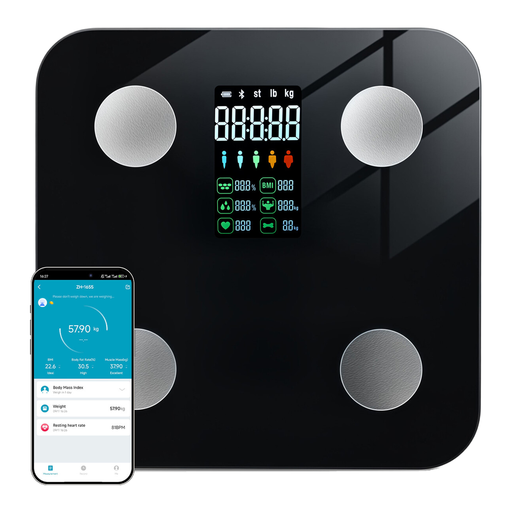
Why This Fits Their Persona: Ideal for users who want instant feedback and a broad set of data. The combination of body fat analysis and heart rate measurement provides a comprehensive overview of your physical condition directly on the display.
The color LCD displays key metrics directly, reducing reliance on the app for a quick check. The BIA technology provides a solid foundation for consistent measurements.
Integrated heart rate measurement and a clear color display for quick data insights without a smartphone.
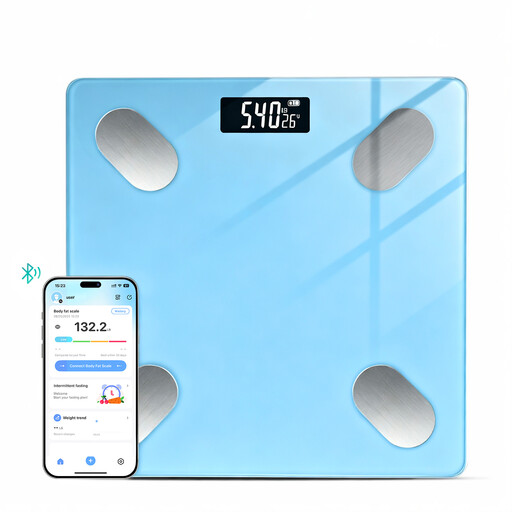
Why This Fits Their Persona: Perfect for households where multiple people want to manage their health data separately. The simple setup and automatic user recognition make it effortless.
The app explicitly supports multiple user profiles with automatic recognition. This prevents data from getting mixed up—a common problem with simpler models that are unsuitable for families.
Focuses on reliable multi-user functionality via the OKOK app and provides all essential metrics for a comprehensive body analysis.
We've compiled a full, up-to-date list of products that fully meet these strict selection criteria and safety regulations.
1. How accurate is a smart body fat scale with an app? The accuracy of a body composition scale depends on the quality of the sensors and correct usage. BIA technology provides estimates that are very useful for tracking trends over time. For consistent results, it's important to always weigh yourself under the same conditions (e.g., in the morning, on an empty stomach, after using the restroom) and to place the scale on a hard, flat surface.
2. Do I have to pay to use the app? With most reputable manufacturers, the basic functions of the app—such as saving and viewing measurements—are free. Some apps offer optional premium features or coaching programs for a fee. It's advisable to check the app description in the App Store or Google Play Store before purchasing to avoid unexpected costs.
3. Can multiple people use the same smart scale? Yes, many modern models are designed as a scale for multiple users. In the companion app, individual profiles can be created for each family member. The scale typically recognizes the person automatically based on their weight and assigns the measurement data to the correct profile. This is a key feature for use in families or shared living situations.