
Lieferung heute & morgen

Qualitätsgarantie

Willkommens-Angebote freischalten: KOSTENLOSE Lieferung | Bis zu 80 % RABATT | Kostenlose 30-Tage-JoyPlus-Testphase
App herunterladen
A smart body fat scale can display more than your body weight. Depending on the model, you may be able to record your BMI, body fat percentage, muscle mass, body water, bone mass and visceral fat in an app. This can be useful for fitness and weight management, provided the data is interpreted correctly.
However, body composition scales vary considerably in terms of measurement method, app connectivity, weight capacity and ease of use. If you focus only on a high number of body metrics or eye-catching display functions, it is easy to overlook important buying criteria.
Most models for measuring body fat use bioelectrical impedance analysis, or BIA for short. This sends a very weak electrical current through the body. The displayed values are estimates that can be affected by factors including body contact, hydration levels, time of day and skin temperature.
A digital bathroom scale with BIA should therefore not be viewed as a medical diagnostic device. The trend over a longer period is more meaningful, provided measurements are taken under comparable conditions wherever possible.
A Bluetooth body fat scale will generally only transfer data when your smartphone is within range and the relevant app is open or running in the background. Depending on the model, a Wi-Fi body fat scale can synchronise data directly to your user account. It requires a compatible Wi-Fi network, often in the 2.4 GHz band, as well as a configured app account.
Before buying, check the following:
A bathroom scale with a capacity of up to 180 kg is sufficient for many households. If you need a higher weight limit, look specifically for a bathroom scale up to 200 kg. A hard, level and dry surface is also essential. Carpets, soft mats and uneven tiles can affect the result and reduce stability.
The platform size matters too. Dimensions of around 28 × 28 cm save space, while larger models provide more room to stand on. Glass surfaces must be kept dry, as they can become slippery when your feet are wet.
Depending on the body analysis scale, the following measurements may be available:
A high number of measurements is most useful when the app stores your progress clearly. For everyday use, weight, BMI, body fat, body water and muscle mass are enough for many people. Athletes may also benefit from an athlete mode or segmented analysis.
The increment shows the intervals in which your weight is displayed. For several of the models listed, this is 0.05 kg below 100 kg and 0.1 kg from 100 kg. This does not automatically mean that every display reading reflects your actual body measurement with this level of accuracy.
For comparable results, you should:
Four electrodes on the platform are standard on classic BIA scales. Eight-electrode models with hand grips can also include your hands and upper body. This affects both the areas measured and how the scale is used.
Display options include a large LCD, an illuminated TFT display or a concealed LED display. If you do not want to use your smartphone every time you weigh yourself, look for readings that can be viewed directly. Automatic user recognition and multiple profiles are useful for families. Claims such as “up to eight” or “up to ten users” should be checked against the app’s actual functions.
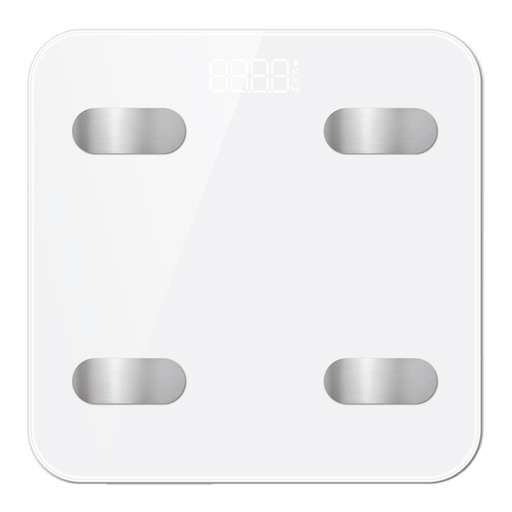
Why this product suits this profile: This model combines a compact platform with Bluetooth 4.2, an LED display and app data transfer. It is suitable for people who want to record basic body metrics regularly.
The product details clearly specify 24 measurements and a resolution of 0.05 kg below 100 kg. The app connects via Bluetooth rather than through an unclear multi-connection setup.
24 body metrics, 180 kg capacity, switchable units and batteries included.
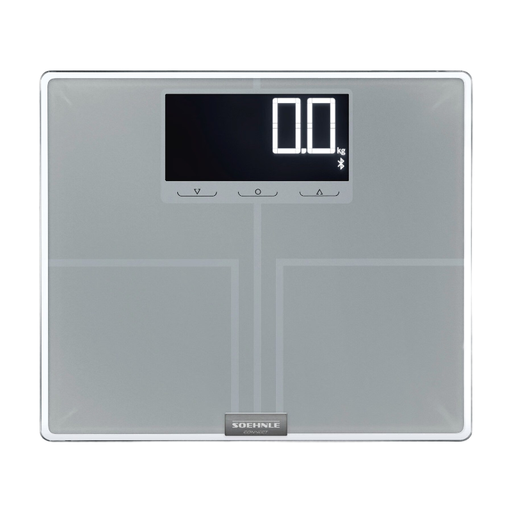
Why this product suits this profile: The scale supports weights of up to 200 kg, features an illuminated LCD and transfers data via Bluetooth to the MyScale app. It is designed for households that value clear readings and user profiles.
The details clearly state 100 g increments, automatic recognition for up to eight users and Bluetooth app connectivity. Athlete mode can be selected in the app.
200 kg maximum capacity, app history in daily, weekly, monthly and annual views, plus automatic switch-on and switch-off.

Why this product suits this profile: Families can use up to ten local user profiles, as well as baby and pet modes. Bluetooth synchronisation supports analysis through the app.
The 200 kg capacity and number of profiles are clearly stated. Baby and pet modes are used separately from body analysis and should not be confused with medical measurements.
25 body metrics, 200 kg maximum capacity, colour LED display and up to ten user profiles.
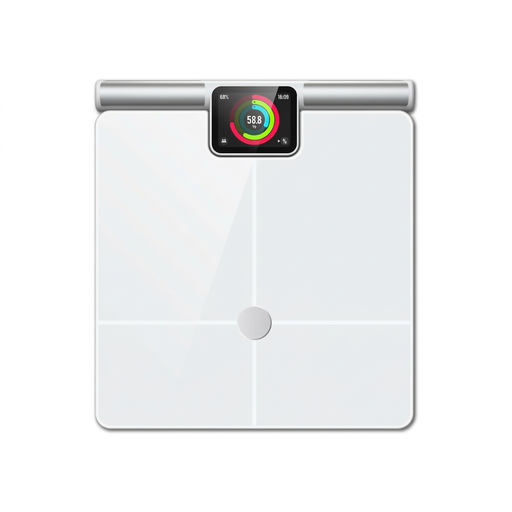
Why this product suits this profile: Eight electrodes, hand grips, dual-frequency BIA, Wi-Fi and Bluetooth appeal to users who want to view plenty of data both on the device and in the app.
The technical features are described in detail, including display size, Bluetooth 5.1, 2.4 GHz Wi-Fi and 180 kg capacity. This reduces uncertainty around connectivity and weight capacity.
56 stated body metrics, 3.36-inch TFT colour display, Wi-Fi and Bluetooth connectivity, plus eight electrodes.
We have put together a complete, regularly updated list of products that fully meet these strict selection criteria and the safety regulations applicable in the EU.
BIA readings should always be treated as a guide for monitoring your personal progress. The body analysis function is not intended for people with pacemakers, implanted electronic devices or certain metal implants. Additional restrictions may apply during pregnancy and for children, depending on the model. The manufacturer’s relevant safety instructions are binding.
Do not use the scale on a wet floor, and do not step onto a damaged glass surface. Batteries should be replaced according to the manufacturer’s instructions and removed if the scale will not be used for an extended period. A model with an app is only practical if its privacy settings, account management and compatibility with your own devices meet your needs.
First, insert the batteries or charge the rechargeable battery, install the relevant app and enable Bluetooth. Wi-Fi models also require a supported 2.4 GHz network. Next, create a user profile, place the scale on a hard floor and complete the pairing process according to the app’s instructions.
For monitoring your progress, regular measurements taken under similar conditions are usually sufficient, for example in the morning before breakfast. Weighing yourself more often can be useful if you are only tracking weight trends. Fluctuating BIA readings should not be interpreted in isolation.
Bluetooth and Wi-Fi scales usually require batteries or an integrated rechargeable battery. Running costs depend on the battery type, how often measurements are taken and the available energy-saving functions. Models with automatic switch-off, a rechargeable battery or a solar charging function can reduce battery consumption. The app may also require an account and an internet connection.