
Lieferung heute & morgen

Qualitätsgarantie

Willkommens-Angebote freischalten: KOSTENLOSE Lieferung | Bis zu 80 % RABATT | Kostenlose 30-Tage-JoyPlus-Testphase
App herunterladen
Choosing the right ceiling light significantly influences a room's atmosphere. Conventional lamps often offer only a fixed light colour and brightness. A smart ceiling light, on the other hand, adapts flexibly to your needs—from focused task lighting to a relaxed evening ambience. However, the sheer number of features and models can make the selection process complex.
This article serves as a guide. It explains the most important purchasing criteria and presents a selection of models with different specialities to help you make an informed decision.
To find the right model for your needs, several technical and functional aspects should be considered.
The method of control is a key feature. Most smart lights can be operated via a smartphone app. For seamless integration into your home, compatibility with voice assistants is crucial. Check if the light works as an Alexa smart home lamp or with Google Assistant.
Additionally, there are different connection technologies:
Modern LED technology allows for precise light customisation. Pay attention to the following terms:
The design should match your decor and the spatial conditions. A flat, modern ceiling light is ideal for rooms with low ceilings or for a minimalist style. For unobtrusive and flush-mounted lighting, smart LED recessed spotlights are a great alternative. They distribute light evenly and can be used to accentuate specific areas.
Based on the criteria mentioned, we have compiled a selection of products that cover different use cases.
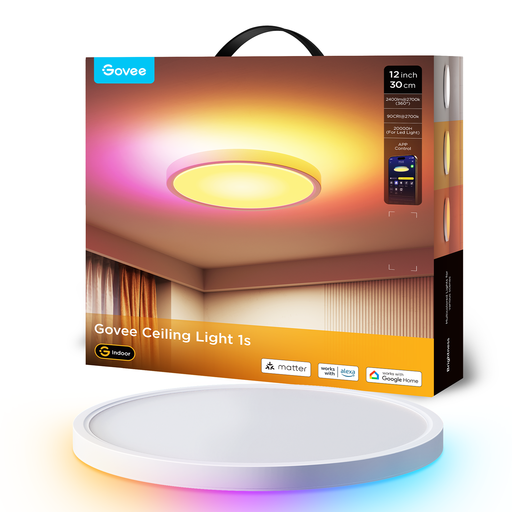
Why it stands out: This Govee ceiling light combines a main light for functional room illumination with an RGBIC backlight. This enables impressive, multi-coloured light effects on the ceiling.
Pros:
Who is it for? Ideal for users in gaming rooms, living rooms, or bedrooms who value atmospheric and entertaining lighting with dynamic colour effects.
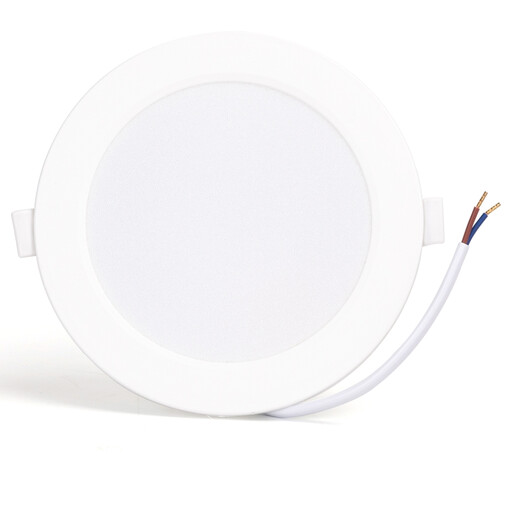
Why it stands out: This set of three smart recessed spotlights uses Bluetooth Mesh technology to create a stable and expandable lighting solution for entire rooms or hallways.
Pros:
Who is it for? Suitable for renovators and homeowners looking for an integrated and scalable lighting solution for hallways, kitchens, or larger living areas without a central ceiling lamp.
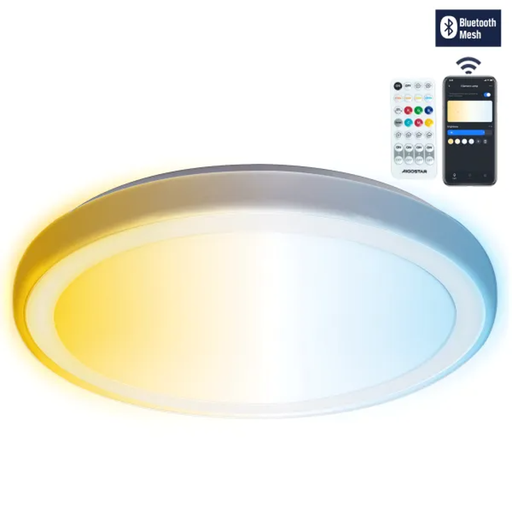
Why it stands out: With a very high light output of 3960 lumens, this model is designed to illuminate even large rooms completely and evenly.
Pros:
Who is it for? A great choice for illuminating large living rooms, offices, workshops, or open-plan living areas where a single, powerful light source is needed.
The models presented cover common use cases. However, if you prefer a different form factor or are specifically looking for other recessed solutions, it's worth taking a look at our wider range.
Find more designs and technical specifications in our Recessed LED Ceiling Lights category.
1. What is the difference between RGB, RGBW, and RGBIC?
2. Do I always need a bridge or a hub for a smart ceiling light? Not necessarily. Lights with a Wi-Fi connection connect directly to your router and do not require additional hardware. Models based on Bluetooth or Zigbee/Z-Wave often need a bridge (or a hub) to connect to the internet. This is particularly necessary for remote control when you're away from home or for using voice assistants like Alexa. Bluetooth Mesh systems can often be controlled locally without a hub, but one is usually recommended for advanced features.
3. Can I use a smart ceiling light with a standard wall switch? Yes, a conventional light switch can cut the power to the smart light, turning it on and off. However, the light loses its "smart" capabilities this way, as it needs a constant power supply to be controlled via app or voice. Furthermore, when turned on via the wall switch, the lamp usually starts in a default light mode. Using an external dimmer switch is not recommended by most manufacturers, as it can cause flickering or damage to the electronics.