
Lieferung heute & morgen

Qualitätsgarantie

Willkommens-Angebote freischalten: KOSTENLOSE Lieferung | Bis zu 80 % RABATT | Kostenlose 30-Tage-JoyPlus-Testphase
App herunterladen
A conventional ceiling lamp serves one basic purpose: providing light. But in a modern home, lighting needs change depending on the time of day and activity. Rigid, single-colour light quickly becomes inadequate when you want a cozy atmosphere for a movie night, bright illumination for work, or soft light for relaxation.
As your Joybuy Product Recommendation Officer, my mission is to provide you with clear, objective guidance in the smart lighting market. This article explains the essential features of a smart ceiling light and presents a selection of models worth considering for various use cases, based on their technical specifications and features.
Choosing the right model depends on your individual needs and existing tech infrastructure. The following three criteria will help you make an informed decision.
A key feature of smart lights is their seamless integration into your home. Before buying, check if the light is compatible with your smart home platforms. Most models support popular systems like Amazon Alexa or Google Assistant, enabling convenient voice control (Alexa ceiling light). Equally important is a functional ceiling light with app control, allowing you to adjust settings like brightness, colour, and schedules directly from your smartphone.
Modern LED technology offers much more than just on and off. Pay attention to the following specifications:
The design should complement the room's decor. A modern, low-profile ceiling light blends discreetly into most ceilings and is ideal for rooms with low ceiling height. Consider where the light will be used. A living room ceiling light benefits from diverse colour and scene modes, while for a bedroom ceiling light, features like a gentle night light mode or a sunrise simulator can be advantageous.
Based on the criteria above, we have compiled a selection of products that stand out for their technical features and functional versatility.
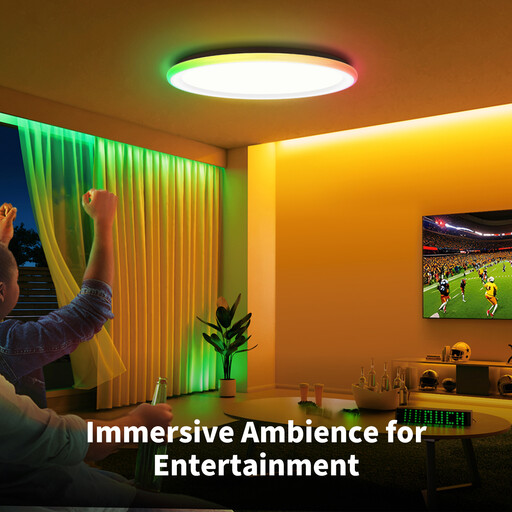
Why it stands out: This model is distinguished by its SideGlow lighting. In addition to the main downlight, it also projects coloured light towards the ceiling. The RGBICWW technology enables dynamic, multi-colour effects that immerse the entire room in an atmospheric glow.
Advantages:
Who is it for? For users who want to transform their living or entertainment room into a dynamic lightscape and value immersive, room-filling illumination.
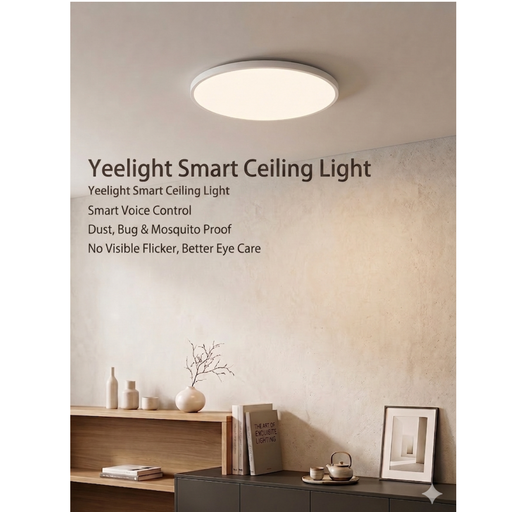
Why it stands out: This model's focus is on functionality and durability. The fully sealed design effectively protects the light from dust, insects, and water vapour, making it particularly low-maintenance and suitable for use in kitchens or more humid environments.
Advantages:
Who is it for? Ideal for users seeking a practical, durable, and low-maintenance lighting solution for everyday spaces like bedrooms, kitchens, or hallways, who also prioritise eye-friendly light.
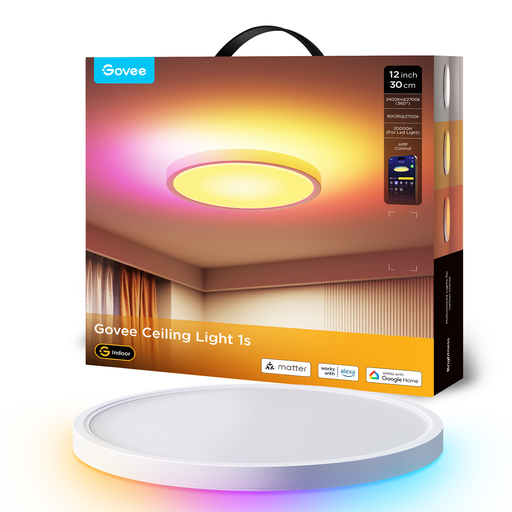
Why it stands out: The Govee ceiling light combines an RGBWW main light with a separate RGBIC backlight. This dual light source allows for exceptional customisation, from functional white lighting to vibrant, multi-colour gradients on the ceiling.
Advantages:
Who is it for? For tech enthusiasts and creatives who want maximally customisable lighting and wish to fine-tune the light mood down to the smallest detail or synchronise it with music.
While a central ceiling light illuminates a room evenly, some areas require more targeted lighting. If you want to accent specific objects or flexibly direct light to different parts of a room, spotlights could be a suitable alternative.
Discover our selection of adjustable LED ceiling spotlights to find flexible and directional lighting solutions for your home.
Yes, a smart ceiling light can be turned on and off with a standard wall switch. However, to use smart features like dimming, colour changing, or app control, the switch must remain permanently on, as the light requires a constant power supply. Control is then managed via the app, voice command, or a remote.
RGBIC is an evolution of RGB technology. While a standard RGB light can only display one colour across all its LEDs at a time, a light with RGBIC (Independent Control) has a chip that allows different segments of the LED strip to be controlled independently. This enables the display of multiple colours simultaneously, creating flowing colour gradients and dynamic lighting effects.
The physical installation of a smart ceiling light is typically no more complicated than that of a conventional lamp. Many models feature quick-mount systems that simplify the process. However, for safety reasons, the electrical connection should always be carried out by a qualified electrician in accordance with local regulations. After mounting, the setup is completed via an app, which is usually self-explanatory.