
Lieferung heute & morgen

Qualitätsgarantie

Willkommens-Angebote freischalten: KOSTENLOSE Lieferung | Bis zu 80 % RABATT | Kostenlose 30-Tage-JoyPlus-Testphase
App herunterladen
Long periods of sitting in a home office or at work often lead to discomfort and back pain. An ergonomic office chair is frequently touted as the solution, but the market is overwhelming and full of marketing promises. Many chairs advertised as "ergonomic" turn out to be costly mistakes that do more harm than good.
As a Joybuy Product Recommendation Officer, I'll help you identify the crucial features and avoid common pitfalls. This guide will show you what to look for to make an informed decision for your health and comfort.
Before we dive into the important functions, let's highlight the most common traps that lead to disappointment and wasted money.
To avoid a bad buy, focus on objective, measurable functions. A truly ergonomic office chair adapts to you, not the other way around. Here are the three indispensable parameters.
One of the most important features for preventing back pain is effective lumbar support. It fills the natural curve of the lower spine and stabilises it. Look for the following features:
An office chair with lumbar support is not an option, but a necessity for anyone who sits for several hours a day.
Static sitting is stressful for the body. A synchronous mechanism ensures that the backrest and seat tilt in a coordinated ratio to each other. When you lean back, the seat also tilts slightly back and up. This promotes circulation, relieves pressure on the intervertebral discs, and supports an active sitting posture. A simple swivel chair with a rocking mechanism, where only the backrest moves, does not offer this benefit.
A good office chair for the home office or workplace must be adaptable to your body measurements.
Instead of making a blanket recommendation, we have selected models tailored to specific needs and budgets.
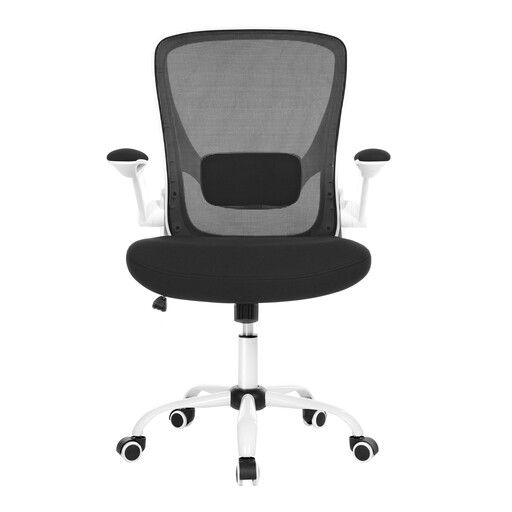
Why This Fits Their Persona: Ideal for students or a first home office. This model offers the basic ergonomic functions without breaking the budget. The flip-up armrests are also practical for small spaces, as the chair can be pushed under the desk to save space.
It bypasses the "marketing trap" by offering an adjustable lumbar support and a rocking function despite its low price. The breathable mesh fabric avoids the disadvantages of soft padding that quickly wears out.
Good value for money; flip-up armrests for space-saving storage; breathable backrest.
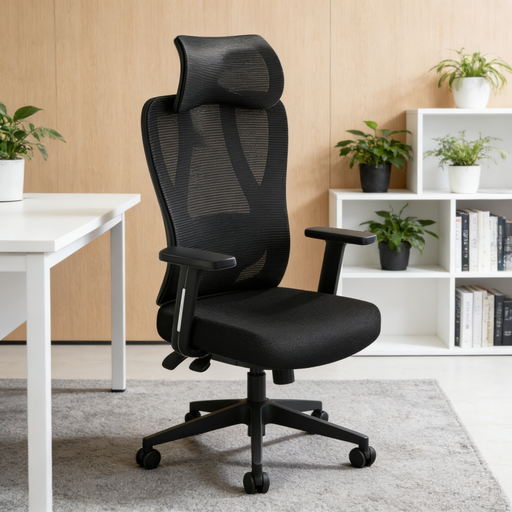
Why This Fits Their Persona: For people who sit for more than eight hours a day, whether for work or gaming. This chair offers advanced adjustment options required for intensive and prolonged use to prevent fatigue.
This chair escapes the "one-size-fits-all" trap with its 4D-swiveling lumbar support and adjustable backrest height. These specific, customisable features provide a significantly better fit than standard models.
Fully customisable 4D lumbar support; large recline angle (up to 140°) for relaxation phases; pressure-relieving seat cushion.
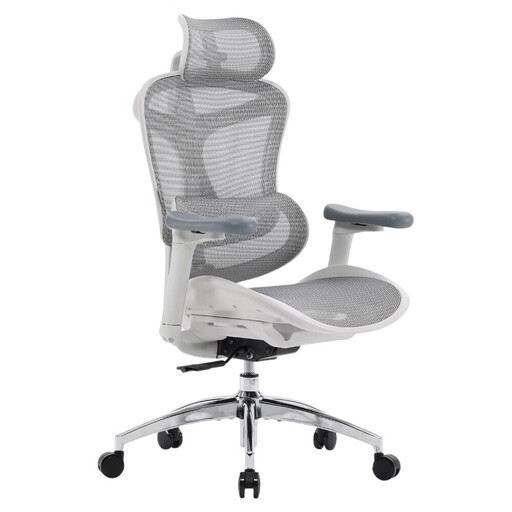
Why This Fits Their Persona: For users who value advanced technology, high-quality materials, and an aesthetic design. This chair integrates seamlessly into modern home and office environments while providing a high degree of automated comfort.
This model goes far beyond a simple "ergonomics" promise. It offers a self-adaptive lumbar support and an intelligent weight sensor. These features are objectively verifiable and provide real added value compared to chairs with static ergonomics.
Dynamic, self-adjusting lumbar support; 3D armrests that synchronise with the recline; intelligent weight sensor for automatic adjustment.
We have compiled a complete, up-to-date list of products that fully meet these strict selection criteria and safety standards.
The lifespan of an ergonomic office chair depends heavily on material quality and usage. Models with certifications like BIFMA or SGS have been tested for durability and load capacity. A chair with a steel frame and high-quality mesh or foam can easily last five to ten years with daily use. Regular maintenance, such as tightening screws, also contributes to its longevity.
Not every gaming chair is automatically ergonomic. Many models focus on a racing seat aesthetic. However, an ergonomic gaming chair should meet the same criteria as a good office chair: adjustable lumbar support (often implemented as a cushion), customisable armrests, and a synchronous mechanism. If these features are present, such a chair can also be a good choice for long workdays, especially if it has a more understated look.
For an upright working posture at a desk, lumbar support is clearly more important. It supports the most stressed part of the spine and is crucial for preventing back pain. A headrest is primarily useful in reclined positions to relieve the neck during breaks or while reading. It is less relevant for focused work.