
Lieferung heute & morgen

Qualitätsgarantie

Willkommens-Angebote freischalten: KOSTENLOSE Lieferung | Bis zu 80 % RABATT | Kostenlose 30-Tage-JoyPlus-Testphase
App herunterladen
A dead car battery is more than just an annoyance—it often means unexpected downtime, missed appointments, and extra costs. A suitable car battery charger is therefore not a luxury item, but an essential tool for every vehicle owner. However, the market is confusing and full of marketing promises that often create more confusion than clarity. Before you make a decision, it's important to know the most common pitfalls that can lead to a bad purchase.
Common Pitfalls When Buying a Battery Charger:
To find the right device for your needs, you should focus on a few, but crucial, technical features.
These two values determine how quickly your battery will be charged. The rule of thumb is: The recommended charging current in amps (A) should be about 10% of the battery capacity in amp-hours (Ah).
Before buying, be sure to check which type of battery is installed in your vehicle. You can usually find this information directly on the battery.
Depending on the use case, a combination device can be useful.
Here are some recommendations tailored to different user profiles that take the aforementioned pitfalls into account.
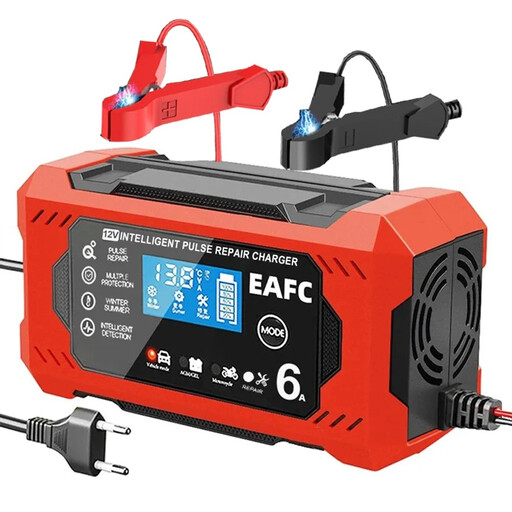
Why this device is a good fit: Ideal for users looking for a straightforward and affordable device for standard charging tasks and occasional maintenance. It's well-suited for small cars, motorcycles, or as a second device in the garage.
The device clearly states which battery types it is suitable for (Lead-Acid, AGM, GEL), thus avoiding the compatibility trap. It has basic protection features (reverse polarity, short circuit) and doesn't promise unrealistic repair results.
Simple operation with an LCD display and an automatic charging mode. The integrated pulse repair charging process can provide support for slightly sulfated batteries.

Why this device is a good fit: Perfect for owners of vehicles with start-stop systems, hybrid drives, or a collection of cars and motorcycles. Its broad compatibility and intelligent charging functions offer safety and flexibility.
It explicitly supports AGM, EFB, and Lithium (LiFePO4) batteries, bypassing the compatibility trap. The desulfation mode is a controlled, multi-stage process that stands out from simple high-voltage modes.
The integrated thermal sensor adjusts the charging cycle to the ambient temperature, preventing overcharging in summer and undercharging in winter. The 10A charging current allows for rapid charging even of larger batteries.
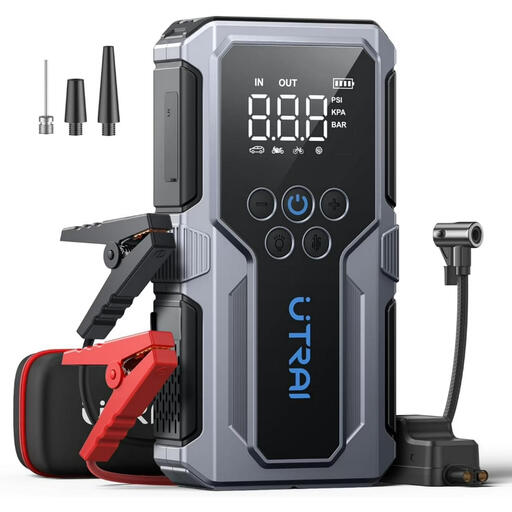
Why this device is a good fit: The Swiss Army knife for drivers, campers, and outdoor enthusiasts. It combines a powerful jump starter for large engines with a practical compressor for tires and a power bank for mobile devices.
This device clearly positions itself as an emergency tool, not a maintenance charger. It avoids the trap of being a "jack-of-all-trades" with no clear focus by concentrating its strengths on jump-starting and mobile air supply.
The combination of 3000A peak current for jump-starting and a 150 PSI compressor in a compact package. The digital display for presetting tire pressure is a particularly convenient feature.
We have compiled a complete, up-to-date list of products that fully meet these strict selection criteria and safety regulations.
1. How long does it take to charge a car battery? The charging time depends on the battery's capacity (in Ah) and the charger's current (in A). A simple approximate formula is: Battery Capacity (Ah) / Charging Current (A) = Charging Time in Hours. A 60 Ah battery that is 50% discharged (i.e., 30 Ah to recharge) will take about 5 hours with a 6 A charger. Smart chargers reduce the current towards the end of the charging cycle, which can slightly extend the total time.
2. Can I leave a charger permanently connected to the battery? Yes, as long as it is a modern, smart charger with a maintenance charging function. These devices monitor the state of charge and automatically switch to a maintenance mode once the battery is full. They then only supply small current pulses to compensate for self-discharge. This is ideal for the winter storage of motorcycles, classic cars, or boats. With older, simple chargers without this automatic function, there is a risk of overcharging.
3. What does the repair mode on a car battery charger do? The repair mode aims to reverse sulfation in lead-acid batteries. During discharge, sulfate crystals form on the lead plates, reducing the battery's performance. A good repair mode uses targeted current pulses to dissolve these crystals and restore the active surface of the plates. This process can extend a battery's life, but it cannot restore heavily aged or physically damaged batteries.