
Lieferung heute & morgen

Qualitätsgarantie

Willkommens-Angebote freischalten: KOSTENLOSE Lieferung | Bis zu 80 % RABATT | Kostenlose 30-Tage-JoyPlus-Testphase
App herunterladen
A smart colour-changing solar wall light combines wireless installation, automatic lighting and adjustable light colours. It sounds like a simple solution for your balcony, patio, garden or entrance. In practice, however, unclear IP ratings, misunderstood battery life and limited app compatibility can often lead to a disappointing purchase.
This buying guide explains which details to check before buying an outdoor solar wall light, and which features are suited to different situations.
The IP65 rating means that an enclosure is dust-tight and protected against water jets from different directions. However, it doesn’t automatically tell you anything about UV resistance, frost tolerance, material quality or how well the solar panel connection is sealed.
When choosing an outdoor light, buyers should also check:
A basic RGB outdoor wall light can often only display preset colours. If you also need practical white light, look for RGB-CCT. As well as RGB colours, this lets you choose different shades of white, for example from warm white at 2700 K to cooler white at 6500 K.
A dimmable LED wall light with RGB-CCT is therefore better suited to different situations: warm light by your seating area, more neutral lighting at the entrance or colourful accents on the façade. Check whether these settings are available through an app or only via a remote control.
Claims such as “up to 24 hours” are usually maximum figures based on specific charging and operating conditions. In winter, in shaded locations or when the light is kept at a high brightness, the run time may be shorter.
Before buying a solar-powered wall light, check the following:
A suitable IP rating is essential for façades, patios and balconies. An IP65 outdoor light is protected against dust and water jets. If you plan to install it in a permanently exposed location, also check the installation instructions and the temperature ranges specified by the supplier.
The lights covered here are listed as having ABS and PE housings. That alone doesn’t prove their quality. The finish, sealing, fixings and positioning of the solar panel are more relevant.
Light output is measured in lumens. A model with 200 lm is better suited to pathway lighting and decorative accents than to illuminating a large courtyard. When choosing a light, consider which of these three purposes matters most:
For an RGB-CCT solar light, also check whether the white colour temperature can be adjusted continuously or only in set increments.
Depending on the model, a solar light with app control may use Bluetooth, Bluetooth Mesh or another wireless technology. Bluetooth Mesh is particularly useful if you want to control several lights together. However, the range depends on walls, metal surfaces and the position of the devices.
Before buying, check:
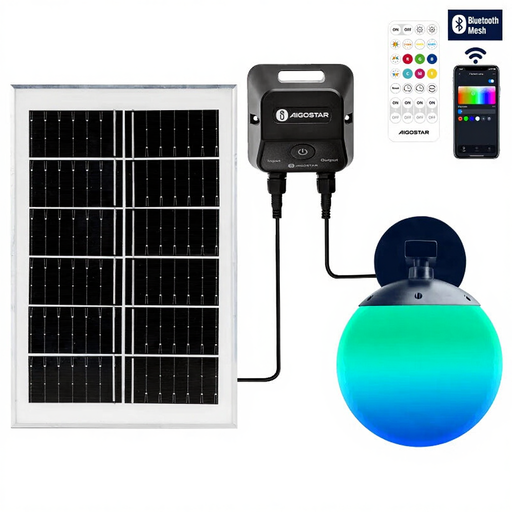
Why it suits this profile: This light combines wireless installation with RGB-CCT control, making it a good choice if you want to try smart outdoor lighting without installing fixed electrical wiring.
The stated specifications include IP65, RGB plus 2700–6500 K, and a separate solar panel with a 5 m cable. This makes it easier to check the IP rating, lighting options and installation requirements before you buy.
200 lm light output, a 5 W monocrystalline solar panel and, according to the product specifications, Bluetooth Mesh control for more than 200 devices.
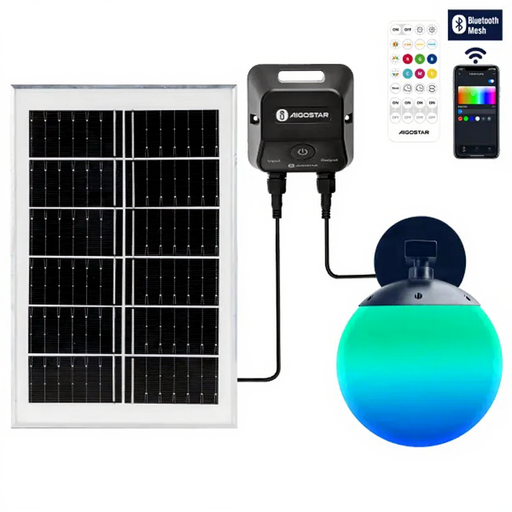
Why it suits this profile: If you want to link several lights around your patio, façade or garden, the product description says this model offers Mesh connectivity and adjustable shades of white.
The product specifications list the battery, charging time, temperature range and light colour spectrum. These details make it easier to compare the light with solar models that have less complete descriptions.
4000 mAh battery, RGB plus 2700–6500 K, a 5 m solar cable and Bluetooth Mesh for more than 200 devices, according to the supplier.
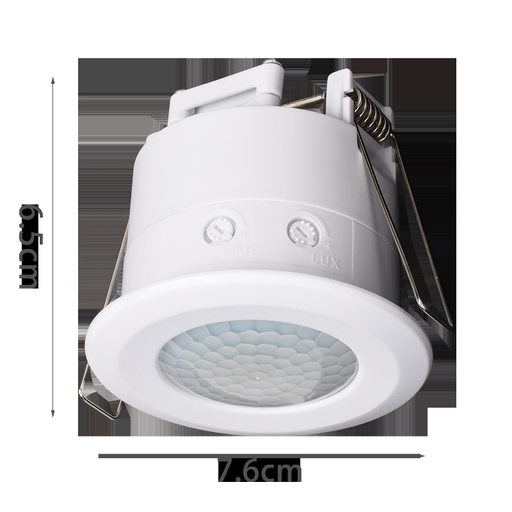
Why it suits this profile: This model may appeal if you’re looking for bright, automatic lighting at 6500 K. Check the specific conditions of use particularly carefully before buying.
The available information gives conflicting indications about indoor and outdoor use. Before installing it outdoors, confirm the IP rating, solar panel, sensor function and installation instructions on the product page.
The stated specifications are 60 W, 6500 K and a solar panel. Check the product details against your planned installation location before placing an order.
We’ve put together a complete, regularly updated list of products that meet these strict selection criteria and the safety requirements applicable in the EU.
Many models can be installed without fixed electrical wiring. Position the solar panel where it won’t be shaded for long periods. If the panel is separate, a longer cable makes it easier to position. Before drilling, check the wall material, fixings and recommended mounting height.
Its lifespan depends on factors including the battery, charging cycles, temperature, UV exposure and sealing. A stated LED lifespan of, for example, 30,000 hours doesn’t automatically indicate how long the battery or housing will last. Spare parts availability and warranty terms may also be worth checking.
During normal use, the solar panel supplies the energy, so you won’t have mains electricity costs as you would with a hard-wired light. However, the actual benefit depends on sunlight, location, battery condition and the brightness setting. A smart solar light will also need occasional cleaning, and the battery may need replacing after several years.