
Lieferung heute & morgen

Qualitätsgarantie

Willkommens-Angebote freischalten: KOSTENLOSE Lieferung | Bis zu 80 % RABATT | Kostenlose 30-Tage-JoyPlus-Testphase
App herunterladen
By the Joybuy Product Recommendation Officer
For performance-oriented cyclists, constantly glancing at a bike computer or smartphone to check performance data and navigation cues is not only a distraction but also a potential safety risk. Smart cycling glasses offer a solution by projecting relevant information directly into your field of view, keeping your hands on the handlebars and your eyes on the road. This article provides an overview of the available technologies and presents a selection of models to help guide your choice.
Choosing the right model depends on your individual needs. The following criteria offer a framework for your decision.
The method of information display is a key feature. Simpler models use sports glasses with a Head-Up Display (HUD) to show basic data like speed or heart rate as a static overlay. More advanced models, often called AR sports glasses, dynamically integrate information into your surroundings. This allows, for example, navigation arrows to be projected directly onto the road. Pay attention to specifications like brightness, resolution (e.g., 640 x 480 px), and the field of view (FOV) to assess readability in various light conditions.
Cycling glasses with a camera enable hands-free recording of your rides from a first-person perspective. Important parameters here are video resolution (e.g., 4K Ultra HD), the camera's field of view (e.g., 120° wide-angle), and storage options. Connectivity via Bluetooth 5.3 or higher ensures a stable connection to smartphones and external sensors (e.g., heart rate monitors, cadence sensors). Also, check for compatibility with your operating system (iOS/Android) and the battery life, which should be sufficient for extended tours.
Data glasses for cycling must remain comfortable even on long rides. A low weight (under 100g), adjustable nose pads, and a robust frame are crucial. UV protection (e.g., UV380 or UV400) is essential for protecting your eyes. Look for certifications like CE and UKCA, which confirm compliance with European and British safety standards. The protection class indicates resistance to dust and water (e.g., IPX4).
Based on the criteria mentioned, we have compiled a selection of models that cater to different needs and use cases.
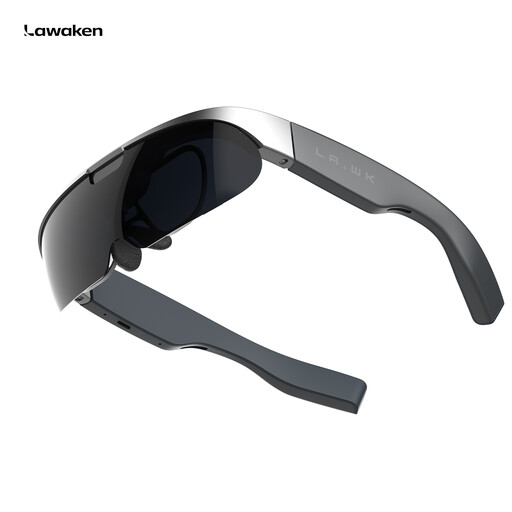
The LAWAKEN LAWK ONE is a pair of glasses specifically designed for cycling, combining AR features, data recording, and AI support. It targets data-driven athletes looking for an all-in-one solution.
Why it stands out: This model integrates a binocular AR display for navigation and performance data directly in your field of view. The built-in camera allows for ride recording, while the AI integration (including ChatGPT) enables features like real-time translation or voice-controlled queries.
Pros:
Who it's for: For ambitious cyclists and outdoor enthusiasts seeking comprehensive cycling navigation glasses with recording and AI features to track performance and capture experiences without reaching for a smartphone. Those looking to specifically buy the LAWK ONE will find a complete package tailored for cycling.
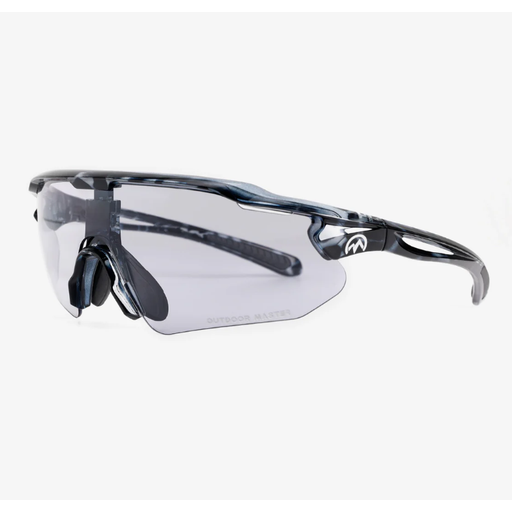
The OutdoorMaster HAWK LT is a traditional yet technologically advanced pair of sports glasses without digital features. Its focus is on optical quality and comfort.
Why it stands out: It combines photochromic and polarised lenses in an extremely lightweight frame. The lenses automatically adapt to light conditions while simultaneously reducing glare, which improves visibility and safety.
Pros:
Who it's for: For cyclists who prioritise first-class optics, low weight, and high comfort, and who consciously choose to forgo digital displays and connectivity.
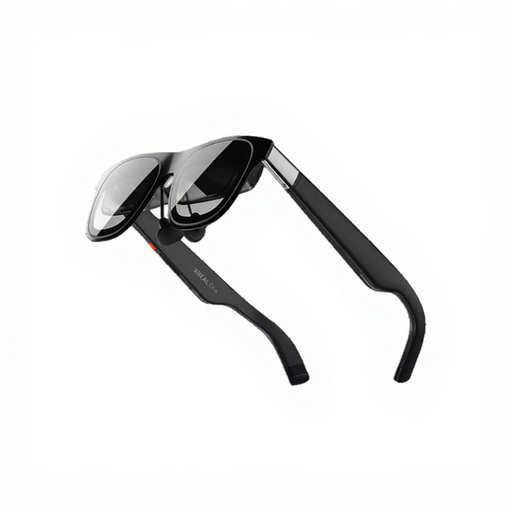
The XREAL One is a versatile pair of AR glasses primarily designed for connection to laptops, smartphones, or gaming consoles. It offers a high-quality visual experience but is not a dedicated pair of sports glasses.
Why it stands out: The model features a high-resolution OLED display with a 120 Hz refresh rate and a brightness of 5000 nits. This creates a sharp and fluid image equivalent to a 147-inch screen.
Pros:
Who it's for: For tech enthusiasts looking for high-quality AR glasses for media consumption, work, or gaming. They are only suitable for cycling to a limited extent, as the manufacturer explicitly advises against using them while driving or in any situation where full attention to the surroundings is required.
Haven't found the right model for your needs yet? Sometimes, specific features like a special lens tint for contrast enhancement can make all the difference. In our Orange Glasses category, you'll find more sports glasses optimised for various light conditions.
1. How does navigation work with smart cycling glasses? Navigation is typically handled via a paired smartphone app. The app sends directional instructions via Bluetooth to the glasses, which then display them as arrows or map segments on the display. This enables turn-by-turn navigation without having to look at your smartphone.
2. Are smart cycling glasses with a camera legal in Germany? The use of a camera in public spaces is subject to the provisions of the General Data Protection Regulation (GDPR) and the right to one's own image. Simply recording your own ride is generally not problematic. However, if other people are recognisably filmed, these recordings may not be published without their consent. When used as a dashcam in the event of an accident, the admissibility of the footage may be decided by courts on a case-by-case basis.