
Lieferung heute & morgen

Qualitätsgarantie

Willkommens-Angebote freischalten: KOSTENLOSE Lieferung | Bis zu 80 % RABATT | Kostenlose 30-Tage-JoyPlus-Testphase
App herunterladen
The search for the right educational toy can quickly feel like a daunting task. The market is flooded with products that promise playful learning, but not all of them deliver on their initial appeal. As a parent, grandparent, or relative, you want to find a gift for children that not only brings a sparkle to their eyes but also offers genuine developmental benefits.
However, many well-intentioned purchases end in disappointment. To help you navigate these pitfalls, we will highlight the three most common problems and show you what to look for to make an informed decision.
To avoid a bad buy, you should check a few fundamental criteria before making a decision. These will help you objectively assess the quality and long-term value of a toy.
A child's safety is the top priority. Look for the CE marking, which confirms that the product complies with current EU requirements. Durable materials like high-quality ABS plastic are often an indicator of longevity. For toys intended for toddlers, it is also crucial that there are no small, swallowable parts. The manufacturer's warnings provide reliable information on this.
Educational toys can target various areas of development. Motor skill toys promote hand-eye coordination, while interactive toys teach an understanding of cause and effect. Consider which skills you want to encourage: Is it logical thinking, creativity, social skills through role-playing, or specific knowledge like letters and numbers? High replay value is achieved when a toy is open to interpretation or can be combined with other sets.
The type of interaction should match the child's age.
To make your choice easier, we have matched some products to different requirement profiles.

Why it's a great fit: It is specifically designed for the motor skills and exploratory drive of toddlers. Simple actions like moving the lift or driving down the ramp promote hand-eye coordination and an understanding of cause and effect.
Compatibility with other products in the Toot-Toot Drivers world ensures long-lasting fun and avoids the trap of a closed-ended system.
Magic Sensors trigger phrases and melodies in compatible vehicles, playfully supporting language development.
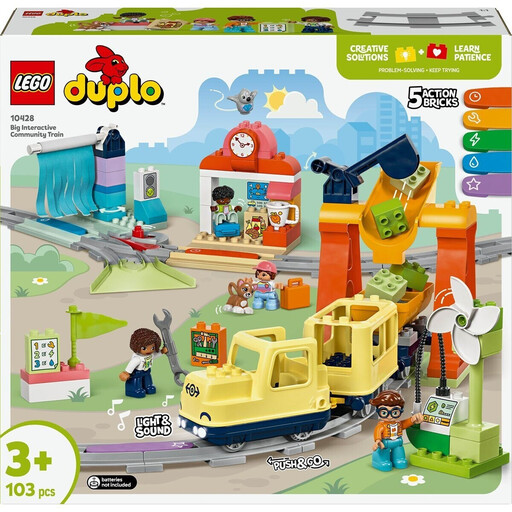
Why it's a great fit: This set promotes creative role-play, problem-solving skills, and fine motor development. Children can load the train, send it to the wash station, and invent their own stories around the station.
As part of the LEGO DUPLO system, it can be combined with other sets, which enormously expands its play value and bypasses the pitfall of short-lived fun.
Five interactive Action Bricks trigger light and sound effects when the train passes over them. This creates a captivating, interactive experience that goes beyond simple building.

Why it's a great fit: For curious school-aged children interested in geography, cultures, and animals. The globe combines tactile exploration with digital content, promoting independent learning.
With over 9,000 facts and four different game modes (Explore, Quiz Show, Globe Detectives, World Race), the globe offers enormous depth of content and variety that prevents boredom.
The combination of a physical globe and a screen with audiovisual content creates an immersive learning experience that goes far beyond that of a traditional atlas.
We've compiled a complete, up-to-date list of products that fully meet these strict selection criteria and European safety regulations.
Look for the CE marking on the packaging, which confirms that the product complies with EU safety standards. Check the workmanship for any sharp edges or loose parts. For toys intended for children under three, it is especially important that they do not contain any small, swallowable parts. The manufacturer's warnings are the most reliable source for this information.
For toys with electronic components, you should only wipe the surface with a dry or slightly damp cloth. Never submerge it in water, as this could damage the electronics. Always follow the specific cleaning instructions provided by the manufacturer. Detachable plastic parts without stickers or electronics can often be cleaned under running water.
High replay value comes from versatility. Look for toys that are expandable (e.g., train track systems, building kits), offer multiple game modes or difficulty levels, or encourage free, creative play (e.g., role-playing sets, construction toys). Toys that stimulate the imagination rather than performing just one function typically remain engaging for longer.