
Lieferung heute & morgen

Qualitätsgarantie

Willkommens-Angebote freischalten: KOSTENLOSE Lieferung | Bis zu 80 % RABATT | Kostenlose 30-Tage-JoyPlus-Testphase
App herunterladen
A flat car battery always seems to happen at the worst time: in a car park, just before you leave for work or while you’re travelling. A car jump starter power bank can be a portable alternative to jump leads and a second vehicle in situations like these. Depending on the model, it may also work as a power bank, an LED emergency light or a tyre inflator.
It’s worth checking the technical specifications carefully before you buy. A high amp rating, a large capacity figure or a maximum pressure of 150 PSI alone won’t tell you whether a device is suitable for your vehicle.
Many suppliers quote a very high peak current. This figure describes the power available for a short time during starting; it is not the same as battery capacity or a continuous current rating. That’s why the manufacturer’s guidance on engine size and vehicle type matters.
For example, a device designed for petrol engines up to 8.0 litres may not be suitable for a large diesel engine. If you own a van, SUV or motorhome, check the specifications for petrol and diesel vehicles separately.
A car jump starter delivers power for a short time to start the engine. A car battery charger, by contrast, charges the battery from a mains socket and, depending on the model, may offer maintenance or specialist repair modes. If you want to charge or maintain a battery over a longer period, or keep it topped up while the vehicle is parked, you’ll need a different device.
A so-called repair or pulse mode also won’t fix a damaged, leaking or frozen battery. Use these features only as directed by the manufacturer.
A power bank with a compressor and a 150 PSI tyre inflator may be suitable for various tyres and inflatables. However, the maximum pressure alone doesn’t tell you how quickly it can inflate a car tyre. Also check the airflow, automatic shut-off, available pressure units and recommended operating time.
The tyre pressure recommended by the vehicle manufacturer is usually listed in the owner’s manual, on the B-pillar or inside the fuel flap. Use this as your guide, not the device’s maximum pump pressure.
Most cars, motorcycles and light commercial vehicles use a 12V battery booster. A 12-volt device must not be used with a 24-volt electrical system. Before you buy, check:
Look for clearly explained safety features such as reverse-polarity protection, short-circuit protection, overcurrent protection and an indicator confirming correct connection. An audible signal or a display on the smart clamps can make the device easier to use, but you should still check the polarity yourself.
Connect the red clamp to the positive terminal and the black clamp to the negative terminal or designated earthing point. Keep starting attempts short, and allow the device to cool down between attempts.
A portable car battery charger is suitable for regular charging and maintenance, but it needs a mains socket. A car jump starter power bank is designed for emergencies on the go and may offer additional features, depending on the model.
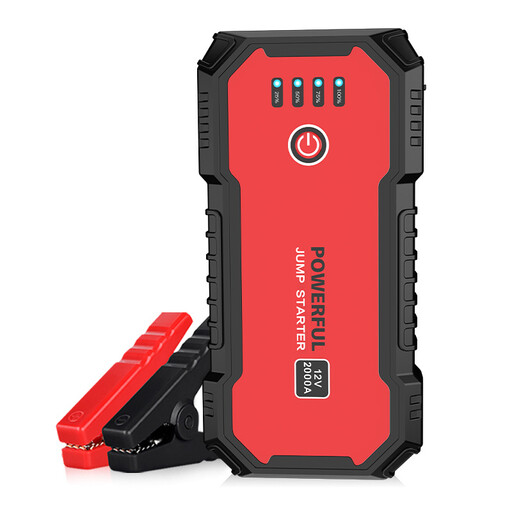
Why it suits this type of buyer: This portable jump starter is designed for 12-volt petrol and diesel vehicles. It combines jump-starting, USB charging and an LED emergency light in a compact housing.
The product specifications state that it’s designed for petrol engines up to 8.0 litres and diesel engines up to 6.0 litres. This makes it easier to check compatibility than relying on the capacity figure alone.
2000 A peak current, according to the product description, a 20.000-mAh capacity and three lighting modes, including an SOS signal.
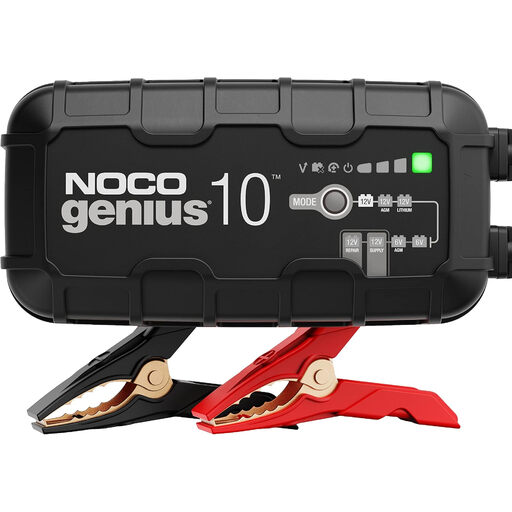
Why it suits this type of buyer: This car battery charger is designed to charge and maintain 6- and 12-volt batteries, making it a good choice for garages, seasonal vehicles and longer periods of storage.
It’s presented as a mains-powered charger and maintainer, not as a portable jump starter for emergencies. This keeps the two functions clearly separate.
10 A charging current, automatic charge maintenance, temperature monitoring and support for AGM, Gel, EFB, lead-acid and LiFePO4 batteries, according to the product specifications.
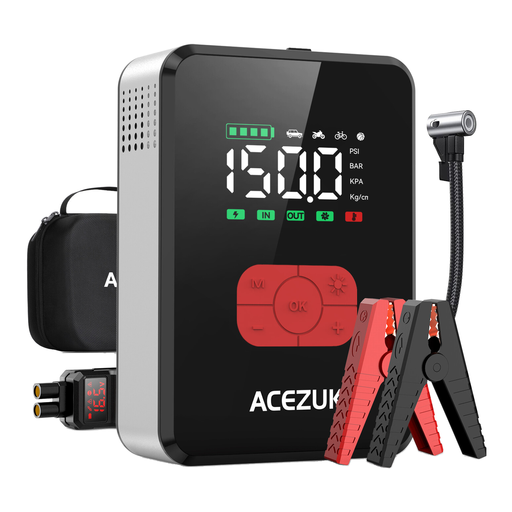
Why it suits this type of buyer: A good fit for frequent drivers, campers and owners of larger vehicles, this device combines jump-starting and lighting with a stated 150-PSI air pump.
The display, automatic shut-off and four preset pump modes make it easier to set the pressure than with a pump that has no display.
7000 A peak current, a capacity of 26.800 mAh according to the product specifications, a 150-PSI compressor and an LED light with steady, flashing and SOS modes.
Before using the device for the first time, fully charge it and read the instruction manual. Store it somewhere dry and away from excessive heat. Many lithium jump starters should be recharged every two to three months, even when they’re not in use.
Don’t use the jump starter if it’s visibly damaged, or if the battery is leaking or frozen. After attempting to start the vehicle, remove the clamps in the order specified by the manufacturer. When using the compressor, take breaks to let the device and air hose cool down.
We’ve put together a complete, regularly updated list of products that meet these strict selection criteria and fully comply with the safety regulations in force in the EU.
It depends on the model and how long it’s been in storage. As a general guide, many manufacturers recommend checking and recharging it every two to three months. After using it to start a vehicle, charge it fully again.
No. The key factors are the vehicle’s electrical system voltage, engine type, engine size and the manufacturer’s compatibility guidance. A 12-volt device isn’t suitable for a 24-volt lorry. For diesel vehicles, the maximum supported engine size is often lower than for petrol engines.
A battery booster can be a good choice for a one-off emergency on the go. A car battery charger is more practical for regular charging, winter storage or maintaining a battery. If you need to cover both situations, you may need two different devices, or a model whose features suit your needs.