
Lieferung heute & morgen

Qualitätsgarantie

Willkommens-Angebote freischalten: KOSTENLOSE Lieferung | Bis zu 80 % RABATT | Kostenlose 30-Tage-JoyPlus-Testphase
App herunterladen
The right lighting combines functionality with atmosphere. The smart E27 filament bulb, in particular, has become a popular choice for design-conscious homes. It merges the nostalgic charm of a vintage-style bulb with modern control technology. However, the variety of models, connectivity standards, and shapes can be overwhelming.
This guide is designed to clarify the technical differences and provide you with clear guidance in making your selection. We will introduce various models and explain which features are most relevant to your specific needs.
To find the perfect bulb for your home, three criteria are crucial: the connection type, light control, and design.
The way the bulb communicates with your network determines the setup and scalability of your system.
Modern smart bulbs offer extensive customisation options that go far beyond simple on/off switching.
The visible filaments are the hallmark of filament bulbs. Their shape plays a key role in their aesthetic appeal.
Based on the criteria mentioned, we have compiled a selection of models from the Aigostar Smart Home brand that cater to different needs.

Why It Stands Out This model combines straightforward Wi-Fi connectivity with a classic vintage aesthetic. The amber-tinted glass and G80 globe shape make it a decorative element that's ready to use right out of the box without any extra hardware.
Pros
Who Is It For? For users who want to make one or more lights smart in a simple and cost-effective way. It's a great entry point into smart lighting, especially for pendant lights in the living or dining room.
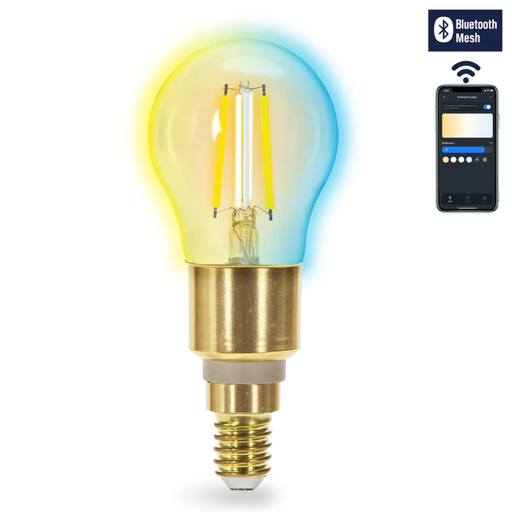
Why It Stands Out The G45 is a compact powerhouse. Its small "golf ball" shape with an E27 base is perfect for installations where space is tight, such as string lights or multi-bulb fixtures. The Bluetooth Mesh technology enables stable networking of many bulbs.
Pros
Who Is It For? For users looking to smartly control large-scale installations like garden string lights, vanity mirrors, or ceiling fixtures with many sockets. An Aigostar Bluetooth Hub (sold separately) is required for remote access and voice control.
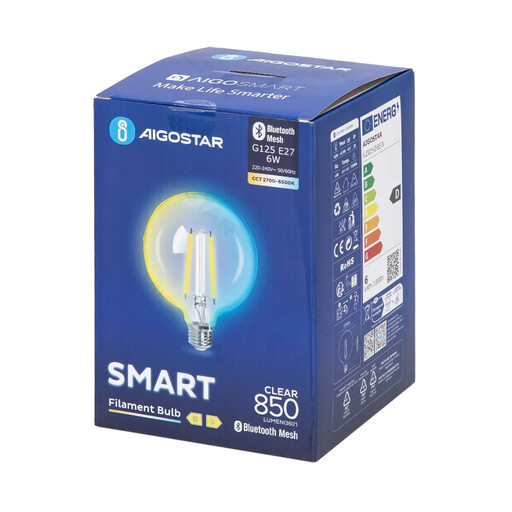
Why It Stands Out With a diameter of 125 mm, the G125 is a clear design statement. It is designed for use in minimalist sockets or large, open fixtures where it serves as a central focal point. Its Bluetooth Mesh capability also makes it suitable for sophisticated lighting concepts.
Pros
Who Is It For? For design-oriented users who want to use a light as a striking interior design element. It is ideal for high-ceilinged rooms, galleries, or as a standalone lamp over a dining table, where both aesthetics and the stability of a mesh network are important.
The models presented cover common use cases. However, if you are looking for a different size, shape, or specific technical features, other alternatives are available.
For a wider selection of shapes and sizes, including various globe lamps, visit our G-Series Bulbs category.
No. The brightness of a smart bulb is controlled digitally via the corresponding app or by voice command. Connecting it to an external, physical dimmer switch can cause flickering and damage the bulb's electronics.
A Wi-Fi bulb connects individually and directly to your router. This is simple and ideal for a few bulbs. A Bluetooth Mesh bulb builds its own network where the bulbs communicate with each other. This is more stable and has a better range when you have many lights spread over a large area. However, mesh systems usually require an additional hub for control from outside your home.
Yes. They are based on modern LED technology, which consumes significantly less energy than traditional incandescent or halogen lamps. For example, a 6W smart LED filament bulb can produce the brightness of a traditional 60W incandescent bulb, which reduces energy consumption by about 90%.