
Lieferung heute & morgen

Qualitätsgarantie

Willkommens-Angebote freischalten: KOSTENLOSE Lieferung | Bis zu 80 % RABATT | Kostenlose 30-Tage-JoyPlus-Testphase
App herunterladen
The idea of having digital information directly in your field of view or interacting hands-free with AI assistants is no longer science fiction. AI glasses promise to simplify daily life, whether at work, while travelling, or during sports. However, the market is filled with models whose advertised features often fail to deliver. Before you make a decision, it's crucial to understand the common pitfalls to avoid a bad investment.
This guide will help you separate the wheat from the chaff by highlighting what truly matters when choosing a pair.
Many models entice with impressive marketing buzzwords, but their weaknesses quickly become apparent in practical use. Pay special attention to these three points:
To find the right AI glasses, you should match your requirements with the technical specifications. The following three parameters are of central importance.
The most fundamental distinction lies in how information is delivered.
Define your primary use case. Are you looking for smart glasses with a camera to capture experiences from a first-person perspective? If so, key metrics include resolution (e.g., 4K), electronic image stabilisation (EIS), and field of view (FOV). Or is your focus on international communication? In that case, the number of supported languages and the quality of the real-time translation are crucial. Also, check which AI assistants (e.g., ChatGPT, Gemini) are integrated and how seamless the control is.
Above all, glasses must fit well. Lightweight materials like TR90 offer a good balance of flexibility and stability at a low weight (often under 50 grams). For sports, data glasses for sports with non-slip nose pads, temple tips, and an aerodynamic shape are advantageous. Also, pay attention to the IP rating. A classification like IPX4 indicates protection against splashing water from all directions and is sufficient for use in the rain or during sweaty activities.
Based on the criteria mentioned, we have identified some models that are particularly suitable for specific user groups in Europe.
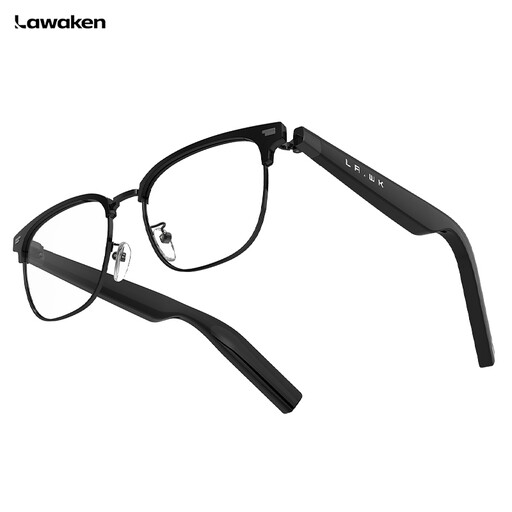
Why this model is a good fit: Ideal for business travellers and commuters looking for a discreet productivity solution. The glasses focus on audio functions like real-time translation in 128 languages and meeting summaries, without the distraction of a display. The classic design is office-appropriate.
The AI features are tailored to specific use cases (translation, notes). At approx. 33g, they are very lightweight, and the battery life of up to 12 hours covers a full workday. The manufacturer highlights its compliance with data privacy requirements.
Supports connection to two devices simultaneously. Compatible with prescription lenses.
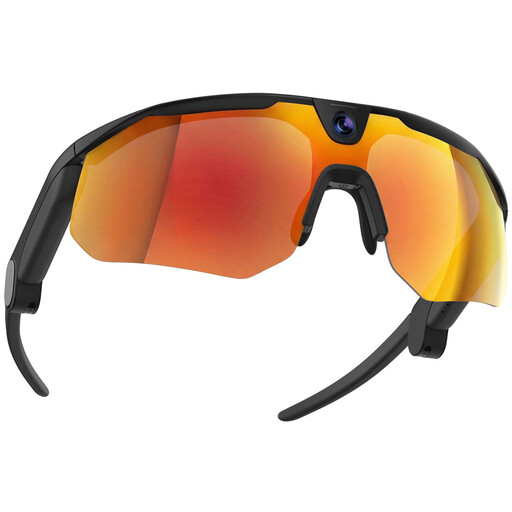
Why this model is a good fit: Designed for cyclists and outdoor enthusiasts who want to record their adventures hands-free. The combination of a 16 MP camera with 3K video and electronic image stabilisation (EIS) allows for high-quality recordings directly from the rider's perspective.
The glasses focus on a core competency—video recording—and provide clear performance data for it. The lightweight TR90 frame (49g) and open-ear audio system are optimised for sports, ensuring comfort and safety.
AI-powered video editing in the app. Wind noise reduction for clear calls at speeds of up to 40 km/h.
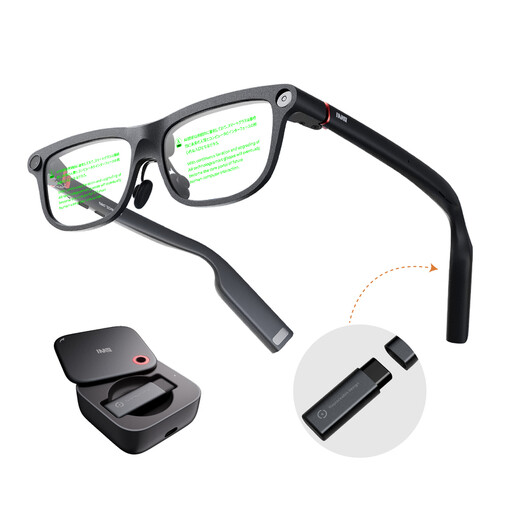
Why this model is a good fit: For tech enthusiasts seeking a true AR experience. These glasses project information directly into the field of view via a MicroLED display, enabling AR navigation and information retrieval without needing to reach for a smartphone.
Weighing only 58g, they are very lightweight for AR glasses and suitable for everyday use. The display's brightness of 1500 nits is a concrete metric that ensures readability even in sunlight, addressing a common weakness of AR glasses.
Combines AR navigation, real-time translation, and meeting notes in one device. The bright display is a clear differentiating feature.
We have compiled a complete, up-to-date list of products that fully meet these strict selection criteria and European safety standards.
1. What about data privacy with AI glasses in Europe? Look for manufacturers that explicitly mention GDPR compliance and are transparent about their data storage policies. Models that process data locally on the device or use encrypted cloud services in regions with strong data protection laws are preferable. Read the privacy policy carefully before purchasing.
2. Can I use AI glasses with my prescription lenses? Yes, many models, especially those with a classic frame design, are compatible with prescription lenses. Look for phrases like "prescription-ready" or "interchangeable lenses" in the product description. The lenses should be fitted by a qualified optician to ensure a proper fit and optical quality.
3. How long does the battery of smart glasses last with normal use? Battery life varies greatly depending on the model and usage. Audio-only glasses often achieve longer runtimes of 8 to 12 hours as they don't have to power an energy-intensive display. AR glasses with a constantly active display typically have a shorter usage time of 2 to 5 hours. Compare the manufacturer's stated "usage time" with your daily needs.