
Lieferung heute & morgen

Qualitätsgarantie

Willkommens-Angebote freischalten: KOSTENLOSE Lieferung | Bis zu 80 % RABATT | Kostenlose 30-Tage-JoyPlus-Testphase
App herunterladen
The right ambient lighting can completely transform a room. However, the market is flooded with products whose marketing promises often suggest more than the technology can deliver. From flickering colours to adhesive strips that lose their grip after just a few weeks—making the wrong choice is frustrating and costly.
This guide will help you identify the crucial features and avoid common pitfalls. We'll show you what really matters when making your selection, so you can find a durable and functional solution for your gaming room, living room, or child's bedroom.
Many products entice buyers with impressive features, but their weaknesses quickly become apparent in daily use. Pay close attention to these three points to avoid disappointment:
To find the right ambient lighting, don't be swayed by marketing buzzwords. Instead, focus on verifiable technical specifications.
The type of LEDs used is the primary factor determining your lighting's visual capabilities.
The method of control determines your daily convenience.
A stable installation and a suitable power source are essential for long-lasting and safe use.
Instead of making a single general recommendation, we have identified products tailored to specific needs and scenarios.
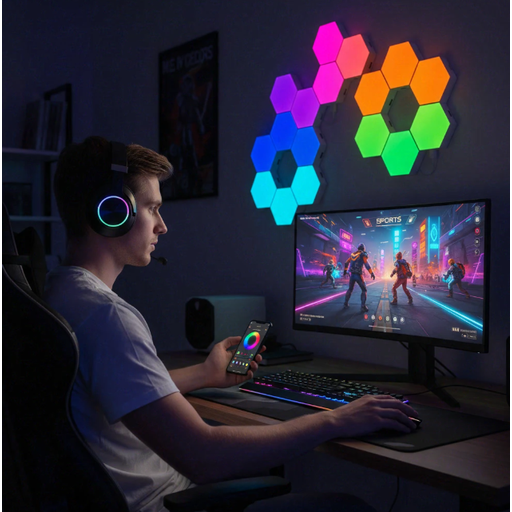
Why This Fits Their Persona: Ideal for gamers who want to customise their setup. The modular panels can be connected in any pattern to create a unique wall decoration that reacts to music and game audio.
Addresses the problem of weak adhesion by having the manufacturer recommend warming the adhesive tape before installation to significantly improve its grip.
Modular DIY Design: 8 independent RGB panels can be flexibly connected. Music Sync: The lights react to the rhythm of music or gaming audio.
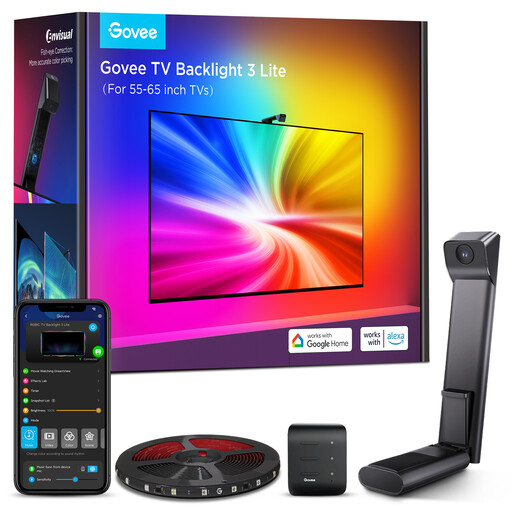
Why This Fits Their Persona: Designed for film and series fans who want to create an immersive atmosphere. The lighting is placed behind the television and enhances the viewing experience with indirect light that reduces eye strain.
Sidesteps the pitfall of inaccurate colours by using RGBICW technology. A dedicated warm white LED ensures a natural and pleasant colour temperature that pure RGB systems cannot achieve.
Comprehensive Smart Home Integration: Can be controlled via app, manually, or through voice assistants (Google Home, Amazon Alexa). RGBIC Technology: Enables smooth colour gradients along the strip.

Why This Fits Their Persona: A safe and child-friendly light source for the nursery. The soft material and rechargeable battery make it an ideal nighttime companion that can help alleviate a child's fear of the dark.
This product bypasses the danger of unsafe materials. According to the manufacturer, it is made of soft, food-grade, BPA-free silicone, has no sharp edges, and is drop-resistant.
Child-Safe Operation: Features simple touch controls and a 30-minute timer for automatic shut-off. Rechargeable: The integrated battery allows for 8-10 hours of wireless operation.
We have compiled a complete, up-to-date list of products that fully meet these strict selection criteria and safety regulations.
The power consumption of LED lighting is generally very low. A typical 5-metre LED strip consumes between 15 and 30 watts, depending on brightness and colour. A small children's night light often requires less than 1 watt. Compared to traditional light bulbs, the energy demand is minimal, even with several hours of daily use.
Direct installation on textured wallpaper is often problematic, as the uneven surface reduces the adhesive's grip. For a permanent installation, it is recommended to smooth the wall in the desired area or to screw small, flat mounting plates (e.g., made of thin plastic) to the wall, on which the lights can then be securely attached. Some manufacturers provide explicit instructions for improving adhesion, such as heating the adhesive tape before application.
The main difference lies in how the LEDs are controlled. With RGB strips, all LEDs always light up in the same colour. You can change the colour of the entire strip, but you cannot create colour gradients or multi-colour patterns. RGBIC strips have integrated chips (IC = Independent Control) that allow individual segments or even each LED to be controlled separately. This enables dynamic effects such as chasing lights, rainbow patterns, and the simultaneous display of many different colours on a single strip.