
Lieferung heute & morgen

Qualitätsgarantie

Willkommens-Angebote freischalten: KOSTENLOSE Lieferung | Bis zu 80 % RABATT | Kostenlose 30-Tage-JoyPlus-Testphase
App herunterladen
Choosing the right lighting is crucial for setting the atmosphere in a room. A smart LED ceiling light offers far more than just illumination. It allows you to adapt the light to any situation—from focused work to relaxed evenings. However, with the vast array of features and models available, the selection process can be overwhelming. This guide provides clear orientation, presenting objective criteria and a selection of models to help you make an informed decision.
To make an informed decision, several technical and functional aspects should be considered. The following points will help you find the right light for your needs.
A key advantage of smart lights is their seamless integration into an existing smart home ecosystem. Before purchasing, check if the light is compatible with the platforms you use. A ceiling light compatible with Alexa, or one that integrates with Google Home or Apple HomeKit, enables voice control. This allows you to turn the light on and off, dim it, or change its colour without using a switch or an app. This integration also forms the basis for creating automated routines, such as having the light turn on at a specific time or adapt to other smart devices.
Smart ceiling lights offer various ways to customise your lighting. It's important to understand the differences:
Beyond technology, design also plays a key role. A round ceiling light is a timeless classic that blends discreetly into most interior styles, making it particularly suitable for the bedroom or hallway. Pay attention to practical features as well. Models with a sealed design are dust-proof and insect-proof, which significantly reduces maintenance. For use in kitchens or bathrooms, an appropriate moisture protection rating is also relevant.
Here is a selection of models that cater to different needs. The descriptions are based on product data provided by the manufacturer.
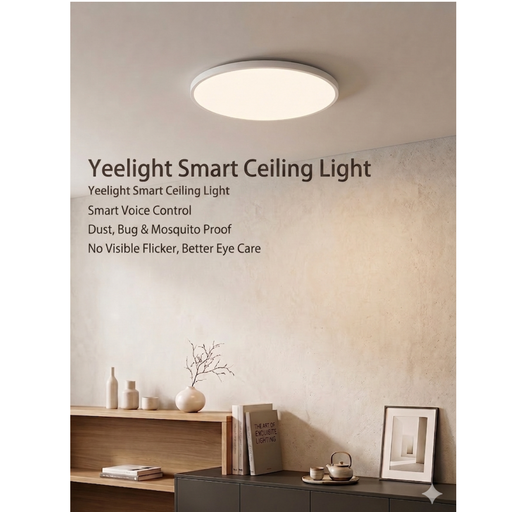
Why it stands out: This model focuses on high-quality, adjustable white tones and a particularly durable, protected construction.
Pros:
Who is it for? For users seeking a reliable and functional main light source. The focus is clearly on high-quality white light and durability, rather than colourful effects. It's ideal for anyone who prefers a practical, low-maintenance solution for living rooms, bedrooms, or the kitchen.
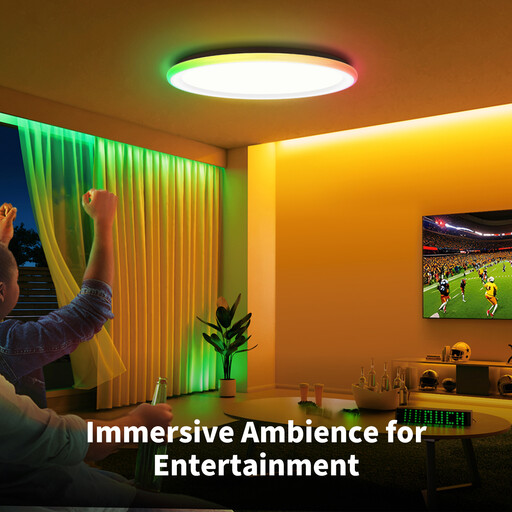
Why it stands out: The combination of a main light and a side-emitting ambient light with RGBICWW technology enables dynamic and room-filling light effects.
Pros:
Who is it for? For users who want to create an immersive atmosphere. This light is excellent for living rooms, gaming rooms, or party areas where dynamic colour effects are desired, without sacrificing a high-quality, functional main light.
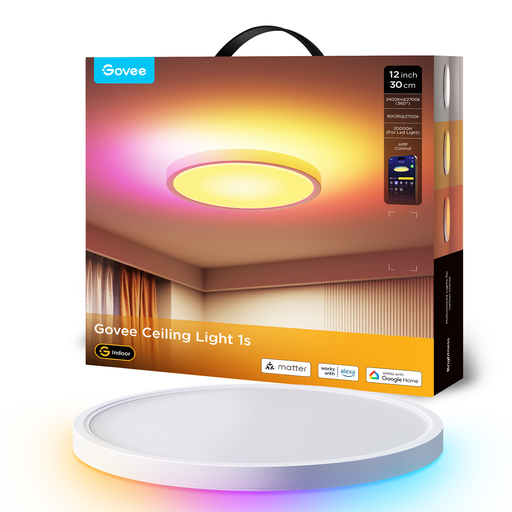
Why it stands out: This model combines an RGBWW main light with an RGBIC backlight and offers advanced features like music sync via the Govee Home app.
Pros:
Who is it for? For tech enthusiasts and users already active in the Govee ecosystem or who appreciate the app's advanced customisation options. The music sync and detailed scene modes make it a great choice for entertainment areas.
If a round surface-mounted light doesn't meet your needs and you prefer lighting that is flush-mounted into the ceiling, recessed lights could be the right choice.
Discover a wide selection of slim LED recessed lights to find a discreet and modern lighting solution for your home.
1. Can I use a smart ceiling light with a standard light switch? Yes, this is possible. However, turning the light off at the wall switch completely disconnects it from power. As a result, smart features (app control, voice commands) will be unavailable until the switch is turned back on. For optimal use, it is recommended to keep the light permanently powered and control it via the app, a voice assistant, or a compatible smart remote.
2. What is the difference between RGB, RGBW, and RGBIC?
3. How difficult is it to install a smart ceiling light? The installation is similar to that of a conventional ceiling light. Typically, you first attach the mounting plate to the ceiling, then connect the power cables, and finally fix the light to the plate. Since this involves working with your home's electrical system, it is recommended to have the installation performed by a qualified electrician, especially if you are unsure about the wiring. Always turn off the circuit breaker before starting any work.