
Lieferung heute & morgen

Qualitätsgarantie

Willkommens-Angebote freischalten: KOSTENLOSE Lieferung | Bis zu 80 % RABATT | Kostenlose 30-Tage-JoyPlus-Testphase
App herunterladen
Choosing the right ceiling light can transform a room. A modern, dimmable smart LED ceiling light promises comfort, atmosphere, and energy efficiency. However, the market is flooded with products whose promises often fall short in practice. Before you make a decision, it's crucial to understand the common pitfalls that can lead to disappointment and unnecessary expense.
As your Joybuy Product Recommendation Officer, I'm here to help you separate marketing hype from facts. This guide focuses on the critical features that define a quality smart ceiling light and shows you what to look out for.
To avoid the problems mentioned above, you should focus on three core technical aspects. These determine whether a light is worth its price and will bring you long-term satisfaction.
A truly smart light integrates seamlessly into your home. Look for clear information on compatibility.
The flexibility of the light is the main advantage of a smart ceiling light.
A ceiling light is also a design element.
Here are some recommendations tailored to different user profiles and requirements.
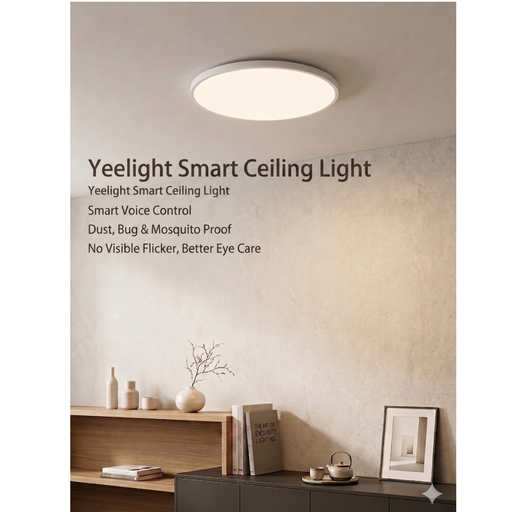
Why This Fits Their Persona: Ideal for users seeking complete and straightforward integration into their existing smart home ecosystem. Voice or app control for brightness and color temperature offers maximum everyday convenience.
This model bypasses the incompatibility pitfall through certified support for Alexa, Google Home, and SmartThings. Light quality is ensured with flicker-free dimming and a wide color temperature range.
Comprehensive smart home compatibility; dust- and insect-proof design; special moonlight mode with extremely low brightness for nighttime.
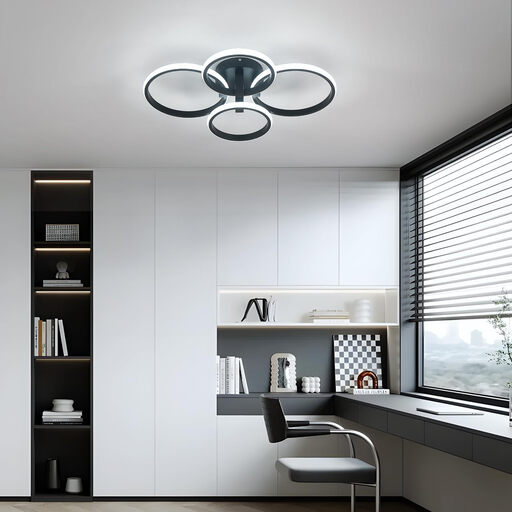
Why This Fits Their Persona: Perfect for anyone looking for a modern bedroom ceiling lamp or a living room light that serves as a visual centerpiece. The focus here is clearly on an expressive, sculptural aesthetic.
This model avoids the pitfall of false promises by focusing on its strengths: design and material quality. It doesn't promise smart features but delivers a high-quality, durable fixture with a strong visual presence.
Striking, three-dimensional four-ring design; high-quality aluminum base with a heat-resistant and rust-proof finish; glare-free acrylic cover for uniform light.
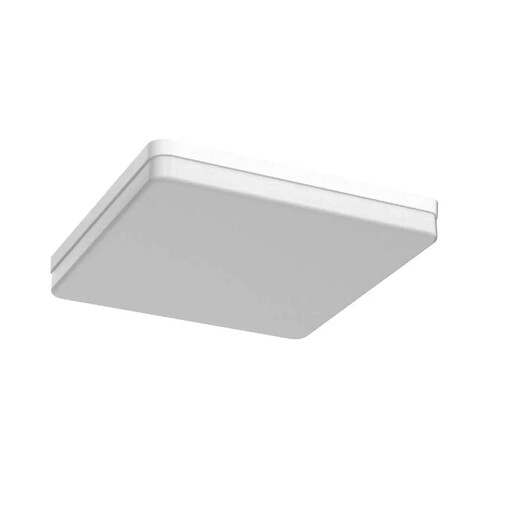
Why This Fits Their Persona: A functional and cost-effective solution for utility spaces like the kitchen, hallway, or bathroom. The focus is on reliable, bright illumination and an unobtrusive, low-maintenance design.
This model avoids the pitfall of unnecessary complexity. It offers no smart features, instead providing solid basic lighting with high energy efficiency and a very slim profile that integrates seamlessly into the ceiling.
Extremely low-profile design (approx. 3.5 cm); high energy efficiency with 3300 lumens at 36W; even, glare-free illumination with 4500K natural white light.
We have compiled a complete, up-to-date list of products that fully meet these strict selection criteria and safety regulations.
That depends on the model. Many modern lights connect directly to your Wi-Fi and don't require additional hardware. Others, especially those using the Zigbee protocol, require a bridge. The advantage of a bridge is often a more stable system that operates independently of your Wi-Fi network. Check the product description for terms like "hub required" or "direct Wi-Fi connection."
Integrated LEDs are designed for a long lifespan. Figures between 25,000 and 50,000 operating hours are common. With an average use of three hours per day, this corresponds to a lifespan of over 20 years. The advantage is that no bulb changes are necessary during this time.
Yes, as a rule, all smart ceiling lights can be turned on and off using a conventional wall switch. However, they often lose their "smart" settings (e.g., the last selected brightness or color) when disconnected from power. For full functionality, control via app or voice command is intended, while the wall switch remains permanently on.