
Lieferung heute & morgen

Qualitätsgarantie

Willkommens-Angebote freischalten: KOSTENLOSE Lieferung | Bis zu 80 % RABATT | Kostenlose 30-Tage-JoyPlus-Testphase
App herunterladen
A smart LED ceiling light should do more than simply brighten a room. Many shoppers look for app control, colour changing or voice commands, but overlook important details such as the IP rating, installation height and the amount of light actually required. As a result, a smart ceiling light may prove less practical in everyday use than expected.
Typical purchasing problems are mainly caused by three marketing traps:
When choosing a light, wattage is not the only factor to consider. The lumen rating describes how much light the fitting produces. According to the product specifications, a 22-W LED ceiling light producing approximately 2,400 lumens may be suitable for compact rooms of around 5 to 10 square metres. For a larger living room, check whether one light is sufficient or whether several light sources would be more suitable.
A dimmable LED ceiling light should also be able to reliably save different brightness levels or allow you to adjust them via the app. A ceiling light with colour temperature control is particularly practical when a room is used for working, relaxing and sleeping:
An RGB ceiling light adds coloured accents to these white light modes. However, it does not automatically replace a well-balanced main light in white.
For a ceiling light with voice control, the platform you want to use should be explicitly stated. The terms Alexa ceiling light and Google Home ceiling light are only meaningful if the specific product actually works with the relevant system.
Before buying, check the following:
According to the product specifications, the Yeelight Ultra Slim Smart Ceiling Light is set up via Wi-Fi without a hub and supports app and voice control through Alexa and Google Assistant. For any smart light, check the latest manufacturer’s information again before placing your order.
A slim LED ceiling light is practical in rooms with low ceilings. The Yeelight Ultra Slim model is specified as having a profile of 0.98 inches, or approximately 2.5 centimetres. A slim design reduces the amount the light protrudes from the ceiling and suits a modern ceiling light in living rooms, bedrooms or work areas.
For kitchens, bathrooms or balconies, the IP rating is crucial. Under suitable conditions, IP54 can provide protection against dust and water spray, but it is not automatically suitable for every wet area. Locations exposed to a direct jet of water remain unsuitable unless the product specifications expressly state otherwise.
When connecting the light permanently to the household electrical installation, it should be fitted by a qualified electrician. Disconnect the power supply before cleaning, removing or servicing the light. An integrated LED unit must not be modified or dismantled independently.
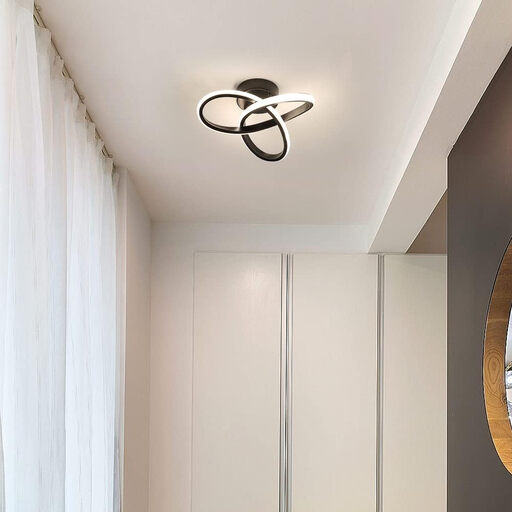
Why this product suits this profile: It is operated using the existing wall switch and, according to the product specifications, does not require an app or voice assistant platform. This is practical for hallways, balconies and small rooms where only a limited range of functions is needed.
The three selectable colour temperatures are clearly specified. This avoids promoting an imprecise “multicolour” function that would provide little useful information about everyday room lighting.
22 W, approximately 2,400 lumens according to the product specifications, and three settings at 3,000, 4,500 and 6,500 Kelvin.
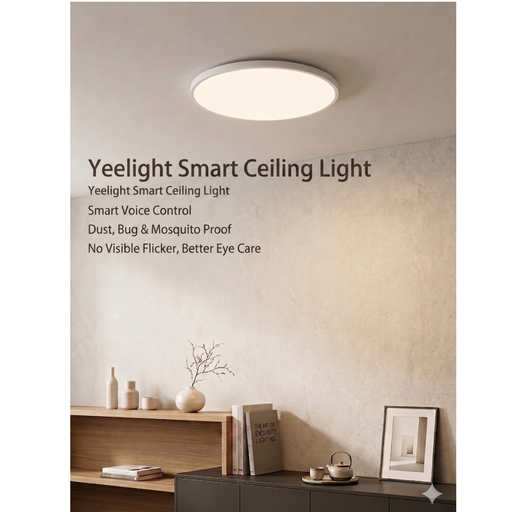
Why this product suits this profile: This smart ceiling light combines dimmable white light, colour temperature control, remote app access and support for Alexa, Google Home and SmartThings.
The product specifications name the supported smart home platforms specifically. This allows shoppers to check compatibility with their own system before setting it up.
Dimmable light, adjustable colour temperature, moonlight mode, app control and Quick-Mount structure according to the product description.
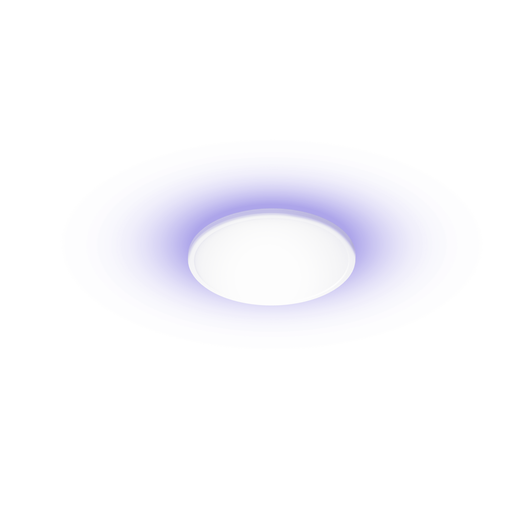
Why this product suits this profile: Its slim design is ideal for contemporary rooms with limited ceiling clearance. RGB background lighting, Wi-Fi control and the stated IP54 rating extend its possible uses in suitable indoor areas.
The specifications distinguish the RGB background lighting from the other functions. IP54 is also stated clearly, allowing the installation location to be assessed objectively.
0.98-inch profile, Wi-Fi without a hub, app and voice control, plus RGB background lighting with 160,000 colours according to the product specifications.
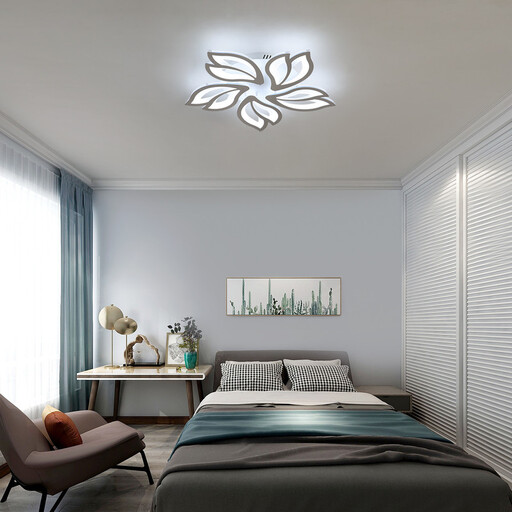
Why this product suits this profile: The petal-inspired design creates a striking feature in living rooms or bedrooms. According to the product specifications, the remote control and app control function allow you to adjust brightness and colour temperature.
The control options and the range from 3,000 to 6,500 Kelvin are clearly specified. This makes it easier to check whether the design and lighting functions are equally suitable.
Five light sources, 45 W, colour temperature from 3,000 to 6,500 Kelvin and a memory function according to the product description.
An energy-saving LED ceiling light is assessed according to its power consumption and operating time. The simple calculation is:
Wattage ÷ 1,000 × operating hours × electricity price = running costs
A 22-W light uses 22 kWh over 1,000 operating hours when calculated mathematically. The actual cost depends on your electricity tariff. Dimming, schedules and automatic switch-off can help reduce unnecessary operating time. However, they do not replace a suitable lighting plan.
We have put together a complete, regularly updated list of products that fully meet these strict selection criteria and the safety regulations applicable in the EU.
First, install the light according to the instructions and connect it to the mains. It is then usually connected to your Wi-Fi network through the manufacturer’s app. If supported, Alexa, Google Home or another smart home platform can then be linked. For a permanent electrical connection, you should consult a qualified electrician.
Its lifespan depends on the LED module, electronics, temperature, daily use and build quality. A fixed figure should only be relied upon if it is stated in the specific product data. Also check whether the LED module is replaceable or permanently integrated.
A Wi-Fi light generally continues to use a small amount of standby power so that it remains accessible within the smart home system. The exact consumption varies by model and should be checked in the technical data sheet. If you disconnect the light from the mains completely using a wall switch, remote access and automations will not be available during that time.