
Lieferung heute & morgen

Qualitätsgarantie

Willkommens-Angebote freischalten: KOSTENLOSE Lieferung | Bis zu 80 % RABATT | Kostenlose 30-Tage-JoyPlus-Testphase
App herunterladen
A smart LED ceiling light can do much more than simply illuminate a room. Depending on the model, you can control brightness, colour temperature and RGB colours via an app, voice command, remote control or automation. However, different designs and connection technologies are available for living rooms, bedrooms, kitchens, hallways and home offices.
Your choice should therefore be based on more than just the design or a high number of colours. The key factors are technical specifications that suit your home, existing smart home setup and installation location.
Many products advertise millions of colours. However, this says little about how suitable the light is for working, cooking or everyday room lighting. Check whether CCT or Tunable White is available alongside RGB. A range such as 2,700 to 6,500 Kelvin provides everything from warm white to daylight-like light.
With RGB-only lighting, white light may appear less clear or less bright, depending on the design. An RGBW ceiling light, or a light with RGB plus an adjustable white channel, is usually more practical for flexible main lighting.
A smart LED ceiling light can communicate via Wi-Fi, Bluetooth Mesh or a proprietary gateway. These systems are not automatically interchangeable:
Before buying, it is worth checking compatibility with Apple Home, Google Home, Amazon Alexa, Samsung SmartThings or Home Assistant. Having a voice assistant alone does not guarantee direct integration.
The IP rating is important for bathrooms, kitchens and cellars. IP54 offers limited protection against dust and protection against splashing water from different directions. However, this does not mean that the light is suitable for direct jets of water or installation inside a shower. IP20, on the other hand, is intended only for dry indoor areas.
With a smart recessed spotlight, you also need to consider the cut-out size. A ceiling cut-out that is too large can put excessive strain on the retaining springs, while one that is too small will prevent the light from sitting flush. You must also allow sufficient space for the wiring and heat dissipation.
Luminous flux is measured in lumens. For planning room lighting, it is more informative than wattage. A light with 1,800 lumens is not automatically sufficient for every room size, as ceiling height, wall colours and the desired brightness all play a role.
Wattage describes the electrical power consumption. When using several LED ceiling spotlights, you should consider the total power consumption. A CRI or Ra value of at least 80 is a common guide for many living areas. Higher values may be preferable for work areas, where specified by the manufacturer.
A dimmable LED ceiling light should ideally offer stepless dimming or clearly defined brightness levels. It is also important to check whether dimming is available only through the app or via a wall switch as well. Some models are explicitly not compatible with external wall dimmers.
Scenes, schedules and group controls can make everyday life easier. Check whether these require a cloud connection, a gateway or simply a local app connection.
Surface-mounted lights can usually be installed on the ceiling and are suitable for rented properties, provided you are permitted to modify the electrical installation. Recessed spotlights, by contrast, require a suitable ceiling cut-out and sufficient installation depth.
An intelligent ceiling light with IP54 may be suitable for certain more humid indoor areas. The specific installation zone and the manufacturer’s instructions remain decisive. An LED ceiling fan combines lighting with air circulation, but requires additional checks regarding ceiling height, mounting and the electrical installation.
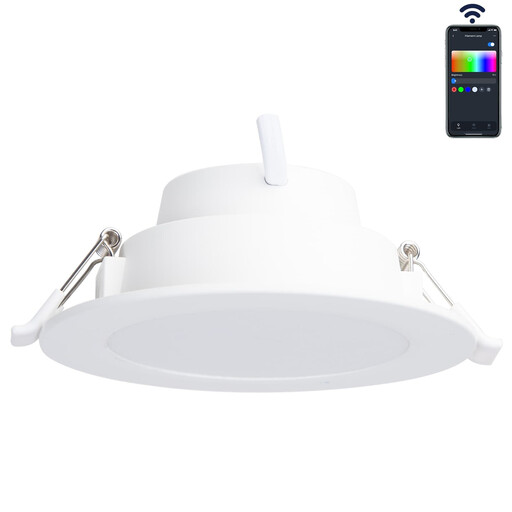
Why this product suits this profile: This 9 W model offers RGB, a range of 2,700 to 6,500 Kelvin, dimming and Bluetooth Mesh, with a stated luminous flux of 780 lumens. It is designed for dry indoor areas with a cut-out of 120 to 130 mm.
The relevant cut-out dimensions, IP20 rating and Bluetooth Mesh connection are clearly specified. According to the product data, this model is not designed for humid areas.
RGB+CCT, app and voice control via a compatible gateway, plus a stated standby power consumption of no more than 0.5 W.
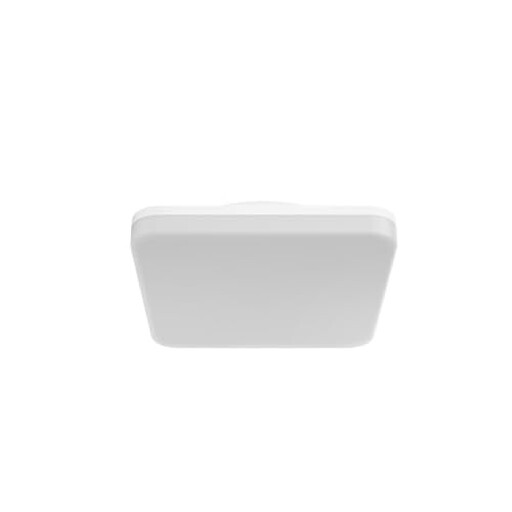
Why this product suits this profile: This surface-mounted light combines Wi-Fi with Matter support and lists compatibility with Apple Home, Google Home, SmartThings, Alexa, Home Assistant and Smart Life.
According to the product details, it connects directly via 2.4 GHz Wi-Fi, and no additional hub is required for the Hama Home app. Matter can optionally be used with compatible systems.
18 W, up to 1,800 lumens, stepless dimming, RGBW, 2,700 to 6,500 Kelvin and IP54 splash protection for suitable indoor areas.
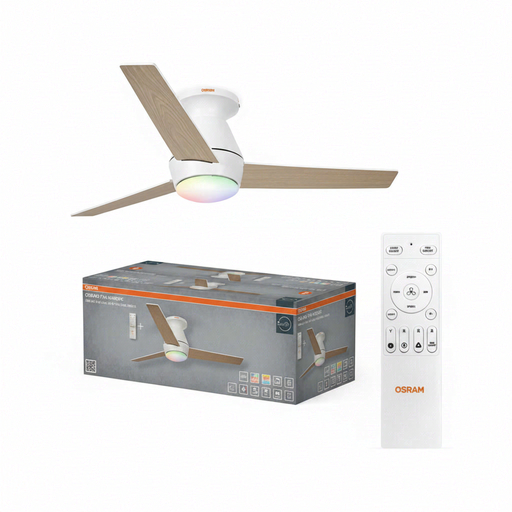
Why this product suits this profile: This LED ceiling fan combines an integrated 38 W LED with a fan function, CCT from 3,000 to 6,500 Kelvin, RGB backlighting and remote control.
The design makes it clear that, in addition to lighting requirements, you also need to consider the diameter, ceiling height, mounting and air circulation. With an IP20 rating, the light is specified for dry indoor areas.
2-in-1 design, 1,130 lumens, dimmable lighting and a diameter of approximately 107 cm according to the product data.
We have put together a complete, regularly updated list of products that fully meet these strict selection criteria and the safety regulations applicable in the EU.
For mains-powered lights with 220 to 240 V, installation should be carried out by a qualified electrician in accordance with local regulations. The power supply must be switched off before installation, cleaning or maintenance.
For a reliable connection, make sure the Wi-Fi router can be reached adequately from the installation location. With Bluetooth Mesh, check whether a gateway is required. You should also check whether the existing wall switch keeps the power supply permanently connected. If the light is completely disconnected from the mains, app control and schedules will not be available until the connection is restored.
Depending on the model, download the manufacturer’s app, connect the light to a 2.4 GHz Wi-Fi network or pair it with a gateway via Bluetooth Mesh. You can then link compatible voice assistants or Matter platforms. The exact sequence is explained in the relevant instructions.
Service life depends on the LED module, electronics, operating time, heat dissipation and switching cycles. For example, the Aigostar models mentioned specify 30,000 hours and 15,000 switching cycles, while the Osram ceiling fan is listed as lasting 50,000 hours. Manufacturer specifications are operating values and do not guarantee an identical service life in every household.
The light continues to use energy in standby mode to maintain its network connection. The exact amount depends on the model and operating mode. One of the Aigostar models is specified as having standby power consumption of no more than 0.5 W. If you are away for an extended period, switching it off completely may be sensible, provided this does not interrupt any automations you want to keep running.