
Lieferung heute & morgen

Qualitätsgarantie

Willkommens-Angebote freischalten: KOSTENLOSE Lieferung | Bis zu 80 % RABATT | Kostenlose 30-Tage-JoyPlus-Testphase
App herunterladen
A smart LED ceiling light can do more than simply illuminate a room. Depending on the model, you can adjust the brightness via an app, change the colour temperature or integrate the light into a smart-home system. At the same time, products vary considerably in terms of connection, IP rating, installation and wireless standard.
Anyone who focuses only on RGB colours or a high lumen rating may overlook important details. Three common purchasing misconceptions occur particularly often:
Luminous flux is measured in lumens (lm). Living rooms and bedrooms usually need pleasant, evenly distributed ambient lighting, while a higher brightness level may be useful in kitchens, hallways or work areas. A wide beam angle distributes light over a large area, whereas an LED ceiling spotlight creates more targeted lighting accents.
A warm white LED ceiling light typically has a colour temperature of around 2,700 to 3,000 kelvin. This type of light is often chosen for living rooms and bedrooms. Adjustable models also cover neutral and cooler white ranges. Depending on the model, the lights described here offer ranges from 2,700 to 6,500 K.
For coloured lighting, it is important to distinguish between RGB and RGBW. An RGBW ceiling light combines coloured LEDs with a separate white channel. This allows it to produce both coloured light and adjustable shades of white. It is more practical than a pure RGB solution if the light is to be used every day as standard room lighting.
Before buying, check whether the light works with the platform you already use. Options may include:
A ceiling light with voice control is only convenient if the connection remains stable and the app can be paired with your preferred voice assistant. With Bluetooth Mesh products, you should also check whether a hub is required for remote control.
With a surface-mounted light, a suitable ceiling fixing is usually all that is needed. Recessed spotlights, on the other hand, require a precisely matching ceiling cut-out. For the Aigostar model with 9 W, the specified cut-out is 120 to 130 mm, while the 6 W model requires 100 to 110 mm.
The IP rating is also important. IP20 is intended for dry indoor areas. A light with IP54 offers protection against splashing water and, according to the product information, can be used in areas including bathrooms, kitchens and cellars. However, it is not designed to be immersed in water.
The electrical connection to 220–240 V should be carried out in accordance with the instructions. Installation of permanently connected ceiling lights must be entrusted to a qualified electrician. Before installation, cleaning or maintenance, switch off the power supply at the consumer unit.
The following selection matches different designs and features to specific usage scenarios. Details such as power, luminous flux, wireless standard and IP rating are based on the respective product information.
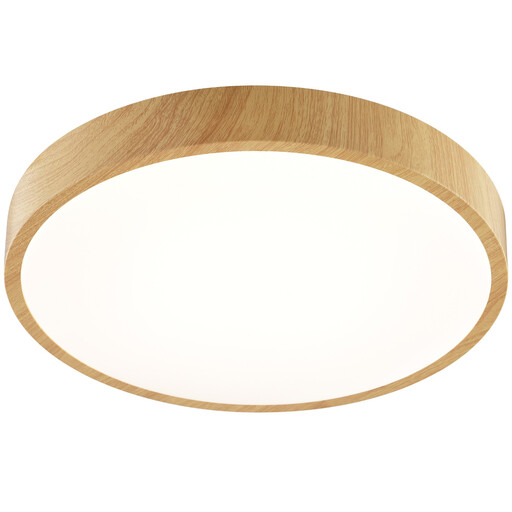
Why this product suits the profile: This permanently connected ceiling light is aimed at households looking for straightforward ambient lighting without an app, gateway or voice assistant.
The product details clearly state that the light is not dimmable. This avoids creating false expectations of a dimmable LED ceiling light.
24 W, 2,300 lm, 3,000 K warm white and a diameter of 38.5 cm; suitable for living rooms, bedrooms, hallways or dining areas.
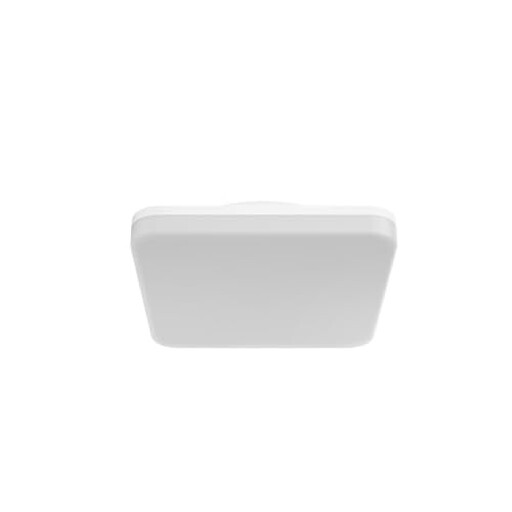
Why this product suits the profile: For households using several smart-home platforms, this light combines Wi-Fi, Matter, app control and voice control.
The details specify Matter support, compatible systems and the required 2.4 GHz Wi-Fi connection. This means the technical requirements can be checked in advance.
18 W, up to 1,800 lm, continuously dimmable, 2,700–6,500 K, RGBW and IP54 splash protection for specified indoor areas.
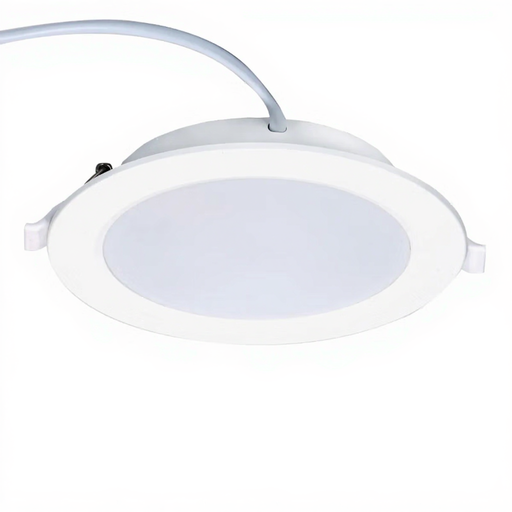
Why this product suits the profile: This recessed spotlight is suitable for renovations and rooms where several lights are to be used as a connected lighting system.
The required ceiling cut-out of 120–130 mm and the Bluetooth Mesh connection are explicitly stated. IP20 limits use to dry indoor areas.
9 W, 780 lm, 2,700–6,500 K, 120° beam angle and a stated lifespan of 30,000 hours; gateway required for remote control.
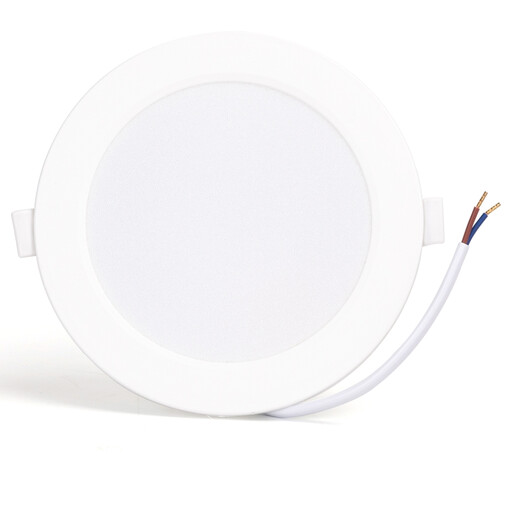
Why this product suits the profile: This compact version is designed for hallways, rooms, shops and areas without a central main light.
At 600 lm, 6 W, 2,700–6,500 K and with a cut-out of 100–110 mm, the key planning specifications are easy to verify. The IP20 rating rules out damp areas.
Bluetooth Mesh, dimming function, automatic switch-off, voice-control option via hub and a stated lifespan of 30,000 hours.
A ceiling light with a motion and presence sensor can be useful in hallways, storage rooms or secondary areas where you do not want to switch the light on manually. For living rooms and bedrooms, however, check whether the automation could trigger accidentally or switch off during longer periods of rest.
For sensor lights, the product details should specify the range, detection angle, overrun time and whether the sensor can be deactivated manually. A sensor function does not replace suitable ambient brightness. It automates switching, but does not automatically change how light is distributed around the room.
Energy-efficient LED lighting should be assessed according to its actual wattage and daily usage time. For example, an 18 W light operated for five hours a day uses approximately 32.85 kWh per year. The exact cost depends on the applicable electricity tariff.
Standby consumption can also be relevant if a light remains permanently connected to Wi-Fi or a gateway. The Aigostar 6 W model is specified as having a standby consumption of no more than 0.5 W. For a fair comparison, consider wattage, luminous flux, operating time and connection type together.
We have put together a complete, regularly updated list of products that fully meet these strict selection criteria and the safety regulations applicable in the EU.
Permanently connected models are normally wired directly to the mains. Installation should be carried out by a qualified electrician in accordance with the applicable installation regulations. With Wi-Fi lights, you will usually set up the app afterwards; some products also support Matter or voice assistants.
The lifespan depends on the design, operating conditions and usage. The Aigostar recessed spotlights mentioned here are specified as lasting 30,000 hours. This is a manufacturer’s stated figure, not a guarantee of identical service life in every household. Heat generation, frequent switching and the installation conditions can all affect the actual lifespan.
Running costs depend on wattage, daily operating time and the electricity price. A lower wattage reduces calculated consumption when usage is comparable. With connected lights, you should also factor in standby consumption. This is particularly worthwhile when using several recessed spotlights: calculate the cost for the complete lighting system rather than for just one light.