
Lieferung heute & morgen

Qualitätsgarantie

Willkommens-Angebote freischalten: KOSTENLOSE Lieferung | Bis zu 80 % RABATT | Kostenlose 30-Tage-JoyPlus-Testphase
App herunterladen
A smart LED ceiling light should do more than just brighten up a room: it needs to fit your existing smart home setup, offer a pleasant light colour and dim reliably. At the same time, LED ceiling lights differ significantly in brightness, installation, ingress protection and control.
If you only look out for terms like “RGB”, “app control” or a high wattage, you’ll miss important details. Three common buying mistakes are particularly frequent:
The lumen rating describes the light output. A model with 1,800 lumens suits a different room size than a light with 600 lumens. The wattage, on the other hand, primarily shows the electrical consumption. An app-controlled LED ceiling light should therefore be judged by both values.
Colour temperature is given in Kelvin (K):
A dimmable ceiling light with adjustable colour temperature offers more flexibility. With a purely warm white ceiling light, the colour remains fixed, which can simplify operation.
With a smart home ceiling light, you should check which system is actually supported before buying. Matter can simplify integration into compatible platforms such as Apple Home, Google Home, Samsung SmartThings, Amazon Alexa or Home Assistant. However, the prerequisite is that your platform and the respective app version are compatible.
A Wi-Fi ceiling light often connects directly to your router, but may require a 2.4 GHz Wi-Fi network. Bluetooth Mesh models work differently and may need a suitable hub for remote control. The term “ceiling light with voice control” should also be clarified: depending on the product, it may support Amazon Alexa or Google Assistant, for example.
Most ceiling lights are connected directly to the mains supply at 220–240 V. In the UK, this connection should be carried out by a qualified electrician. Before buying, you should also compare the diameter, recessed depth and existing drill holes.
For bathrooms, kitchens or cellars, the IP rating is important. A model with IP54 is protected against splashing water, but should not be submerged or exposed to areas with heavier water exposure. A product with IP20, on the other hand, is primarily intended for dry indoor rooms.
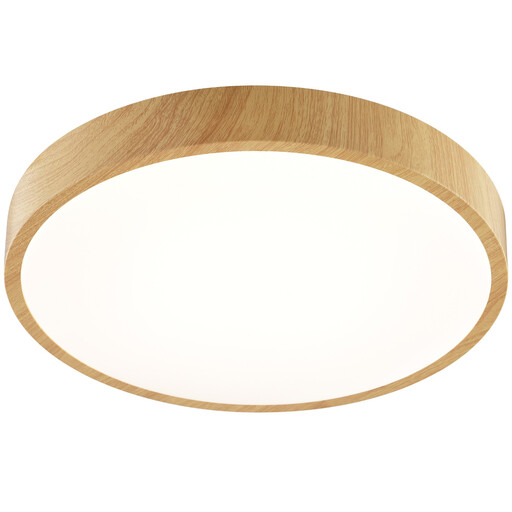
Why this product suits the profile: The fixed warm white lighting and simple ceiling installation are aimed at buyers who don’t need app or voice control.
The product data clearly states that the light is not dimmable. This avoids any unclear expectations about a smart function.
24 W, 2,300 lm, 3,000 K and a diameter of 38.5 cm; suitable for dry living and sleeping areas.
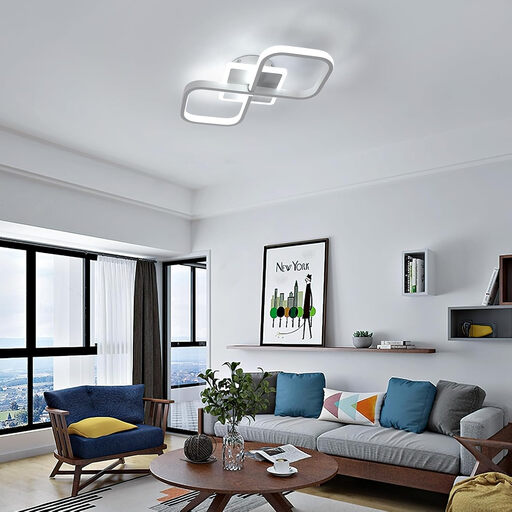
Why this product suits the profile: The combination of high light output, acrylic shade and geometric design makes it ideal for rooms where even, bright background lighting is needed.
The technical specifications clearly state 4,000 lm and 6,500 K. Buyers can therefore check whether the cool light colour suits their room and usage.
36 W, 4,000 lm and, according to the product description, a stated LED lifespan of 50,000 hours.
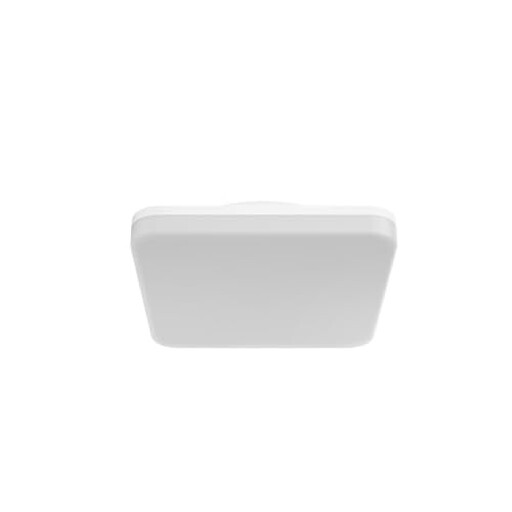
Why this product suits the profile: This RGBW ceiling light is aimed at users who want to combine scenes, schedules, app control and voice control across multiple rooms.
Matter, Wi-Fi, the 2.4 GHz requirement and IP54 rating are all clearly stated. This makes it easier to check compatibility with your own network and the intended room.
18 W, up to 1,800 lm, 2,700–6,500 K, stepless dimming as well as RGBW and Matter support.
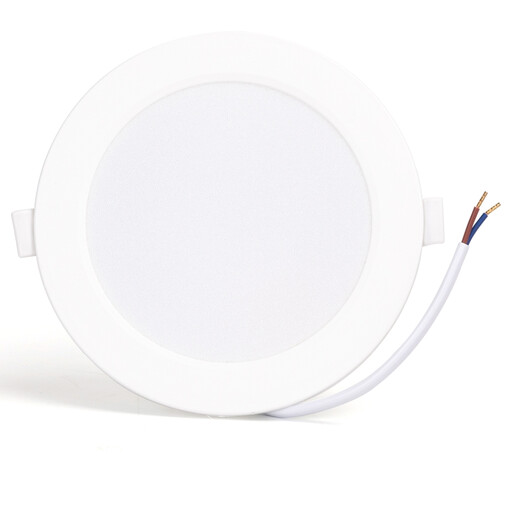
Why this product suits the profile: This recessed spotlight is designed for hallways, rooms or areas without a central main light and can be integrated into compatible Bluetooth Mesh setups.
The required cut-out of 100–110 mm, IP20 rating and possible hub operation are all specified. This makes it easier to assess the installation in advance.
6 W, 600 lm, 120° beam angle, 2,700–6,500 K and dimmable colour temperature via Bluetooth Mesh.
We’ve put together a complete, regularly updated list of products that fully meet these strict selection criteria and the safety regulations in force in the EU.
First, the light is professionally connected to the mains supply. Then, depending on the model, the connection is made via the manufacturer’s app, Wi-Fi, Bluetooth Mesh or Matter. Before buying, you should check your smartphone’s operating system, Wi-Fi frequency and desired voice platform.
The lifespan depends on the LED module, operating time, heat dissipation and switching cycles. With the products mentioned, the specifications range, for example, from 30,000 hours for the Aigostar model to a stated lifespan of 50,000 hours for the white acrylic light. These values are manufacturer claims and not a guarantee for every installation situation.
The consumption depends mainly on the wattage and daily usage time. An 18 W light requires less electrical power than a 36 W model for the same operating time. In addition, standby consumption can be relevant; for the Aigostar recessed spotlight, this is stated as a maximum of 0.5 W. For ongoing costs, how often the light is dimmed or switched on also plays a role.