
Lieferung heute & morgen

Qualitätsgarantie

Willkommens-Angebote freischalten: KOSTENLOSE Lieferung | Bis zu 80 % RABATT | Kostenlose 30-Tage-JoyPlus-Testphase
App herunterladen
The right ceiling light can transform a room. A smart LED ceiling light promises not just brightness, but also convenience, adaptability, and energy efficiency. However, the market is flooded with products whose promises don't always match reality. Before you make a decision, it's crucial to understand the common pitfalls that can lead to disappointment and unnecessary expense.
Many buyers invest in a supposedly "smart" light, only to find it works exclusively with a cumbersome, proprietary app and won't integrate with existing systems like Alexa or Google Home. Another common flaw is limited functionality: a light advertised as "dimmable" often provides only three fixed brightness levels, and the adjustable colour temperature doesn't cover a practical range. Finally, poor construction that allows dust and insects to enter quickly leads to unsightly shadows in the light beam and a shortened lifespan.
To make an informed decision, you should focus on a few crucial technical features. These parameters determine whether a light will genuinely enhance your daily life or just add another complicated remote control to the mix.
The term "smart" isn't regulated. A true app-controlled ceiling light should offer more than a standalone, isolated solution. Before buying, check its compatibility with major smart home platforms.
The ability to adapt the light to different situations is the core benefit of smart lighting. Here, the details are critical.
The physical design affects not only the aesthetics but also the durability and ease of maintenance of the light.
Based on these criteria, we have identified a few models that represent a considered choice for different user profiles and requirements.
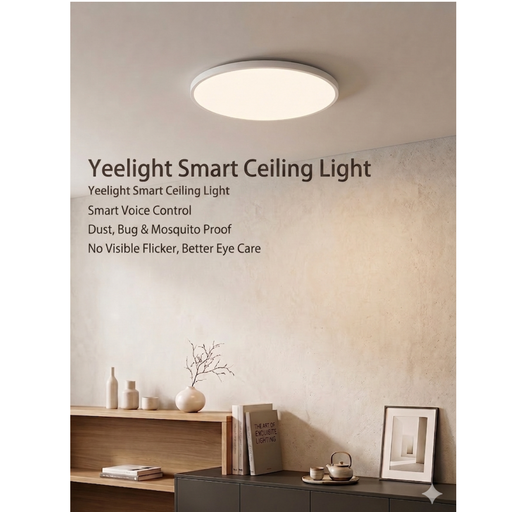
Why this model is a good fit: For users seeking seamless integration into their existing smart home ecosystem. The light offers full control over brightness and colour temperature for every conceivable situation, from focused work to a relaxing evening.
It bypasses the proprietary app trap through compatibility with common platforms like Alexa, Google Home, and SmartThings. The continuous adjustment of brightness and colour prevents the limitation of fixed presets.
Comprehensive AIoT platform support and a moonlight mode with extremely low brightness. The sealed design protects against dust and insects.
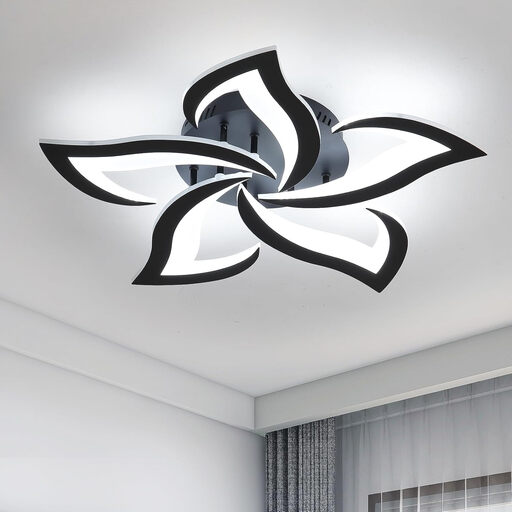
Why this model is a good fit: For users who prioritise aesthetics. This light is less a technical device and more a sculptural design object that serves as a focal point even when turned off.
This model avoids the trap of exaggerated promises. It focuses on a core competency: delivering bright, clear light in an exceptional design, without promising complex smart features it can't deliver.
Its striking petal-shaped design and high 60-watt output make it an ideal light source for large living or dining areas.
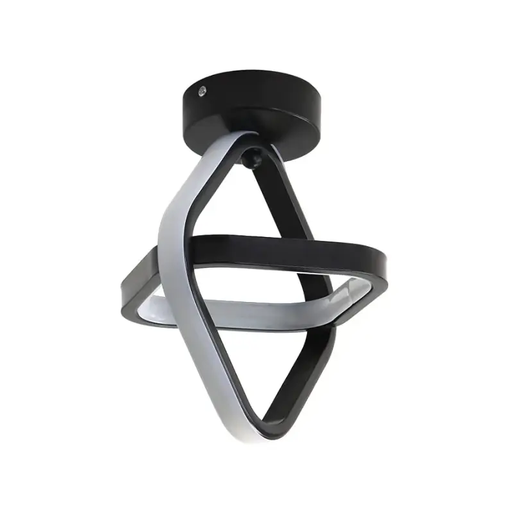
Why this model is a good fit: Ideal for secondary spaces like hallways, balconies, or small home offices where full smart control isn't necessary, but a modern, energy-efficient, and reliable lighting solution is desired.
It sidesteps the pitfall of hidden defects through its simplicity. The robust construction and clear function—providing warm white light—minimise potential points of failure that can occur with more complex electronics.
A compact design with a 22 cm diameter and an efficient 24-watt output, providing good illumination with cosy, warm white light (3000 K) for rooms up to 15 m?.
We have compiled a complete, up-to-date list of products that fully meet these strict selection criteria and German safety regulations.
Colour temperature is measured in Kelvin (K) and describes the colour of the white light. Lower values (approx. 2700 K - 3300 K) produce a "warm white" light with a yellowish tone, which is perceived as cosy and relaxing. Higher values (approx. 5000 K - 6500 K) produce a "cool white" or daylight-like light with a bluish tone, which promotes concentration and makes colours appear more true to life. A light with adjustable colour temperature offers the flexibility to adapt the lighting to the time of day and activity.
Yes, in most cases, that's possible. Smart lights can typically be controlled directly via the manufacturer's corresponding smartphone app. Some models also come with a remote control or a wall switch. So, you don't necessarily need a voice assistant like Alexa or Google Home to use basic functions like dimming or changing the colour temperature. However, the full potential, especially voice control and automation in conjunction with other devices, is only unlocked by integrating it into a smart home system.
The installation of a ceiling light is comparable to mounting a conventional lamp. Most models are designed for self-installation and come with the necessary mounting hardware and instructions. Nevertheless, it involves working with your home's electrical system. It is essential to turn off the circuit breaker for the corresponding circuit before starting the work. If you are unsure about electrical work, it is strongly recommended to have the installation carried out by a qualified electrician to ensure safety and proper function.