
Lieferung heute & morgen

Qualitätsgarantie

Willkommens-Angebote freischalten: KOSTENLOSE Lieferung | Bis zu 80 % RABATT | Kostenlose 30-Tage-JoyPlus-Testphase
App herunterladen
Smart LED lamps combine flexible lighting with app, voice or remote control. Depending on the model, you can adjust brightness, colour temperature and RGB colours. There is now a wide choice for tech-savvy households, families and decorative interior schemes – from E27 smart lamps and dimmable LED lamps to solar wall lights for outdoor use.
However, the technical specifications are not always directly comparable. For example, a high number of colours says little about the actual brightness. “Smart home compatible” can also mean different things depending on the product. The following criteria will help you avoid unsuitable purchases.
An RGB LED lamp can display numerous shades, making it suitable for accent or mood lighting. However, desks, kitchens and reading areas also require a sufficiently high luminous flux in lumens. Pure RGB light does not automatically replace bright white lighting.
You should therefore look at the combination of RGB or RGBW, lumen output and adjustable colour temperature. For example, a Matter LED lamp with RGBW can combine coloured and white light in a single product.
A Wi-Fi LED lamp can connect directly to your router, but often requires 2.4 GHz Wi-Fi. Bluetooth models, on the other hand, initially work locally or via a compatible gateway. With a Bluetooth Mesh lamp, several devices can communicate with one another without each light needing to connect to the Wi-Fi network individually.
Before buying, check the following:
An LED table lamp with IP20 is intended for dry indoor spaces. For balconies, patios or exterior walls, the protection against water and dust must be suitable for the installation position. For suitable products, the IP65 protection rating provides considerably more comprehensive protection than IP20. Nevertheless, you must follow the installation instructions and take account of cable routing and the power supply.
Solar lights involve additional considerations: a solar panel needs sufficient daylight, while battery life depends on the season, weather, orientation and charging time. Automatic night-time lighting may therefore last for less time in winter than in sunny conditions.
The lumen value describes luminous flux and is a more meaningful indicator of brightness than wattage. Power consumption in watts, on the other hand, shows how much electrical energy the product uses during operation. A dimmable LED lamp should ideally offer stepless adjustment or clearly defined brightness levels.
Colour temperature is important for white light:
With an E27 smart lamp, the fitting must also match the lamp. You should also check the maximum power rating and whether the lamp is suitable for enclosed shades.
Wi-Fi, Bluetooth Mesh and Matter fulfil different purposes. Matter can simplify integration with several smart home platforms, but requires a compatible control device or suitable platform. With Wi-Fi models, the range depends on your home network. Bluetooth Mesh is particularly useful when several lights in one area need to be controlled together.
Also check whether the lamp can still be operated via a switch, touch panel or Bluetooth if the internet connection fails. For children’s bedrooms, a local LED night light with touch control may be more practical than an app-based solution.
For a rechargeable LED night light, battery capacity, charging connection and stated operating time are important. Automatic timer shut-off can help prevent unnecessary energy consumption. A USB-C connection is advantageous for camping or flexible use, while a permanently installed smart home lamp generally remains connected to the mains.
Pay attention to the ambient temperature, IP protection rating and cleaning instructions. Battery-powered lights should not be exposed to high heat or moisture for extended periods unless they are explicitly designed for this.
The following models cover a range of uses. The information is based on the respective product descriptions and technical specifications.
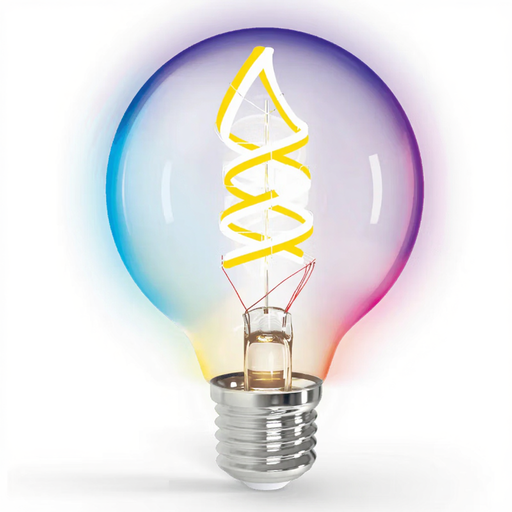
Why this product suits this profile: As a replaceable E27 smart lamp, it can be fitted into existing lights. App control via 2.4 GHz Wi-Fi, along with compatibility with Alexa and Google Assistant, covers the essential smart home applications.
The E27 base is easy to check before buying. The product data also specifies 420 lm, 4.9 W and the restriction to 2.4 GHz Wi-Fi.
RGBW coloured light, 2700 K warm white, 16 million colours, plus timer and grouping functions according to the product description.
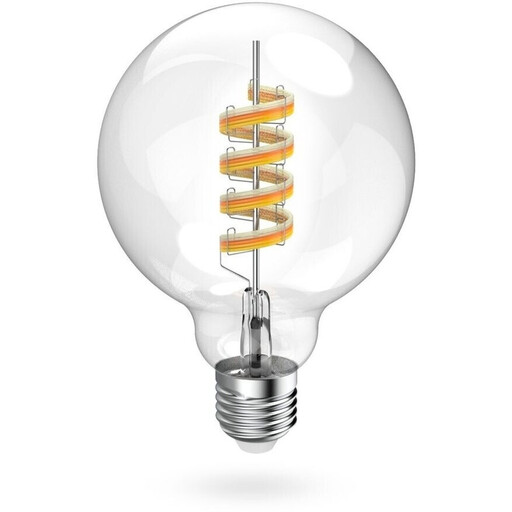
Why this product suits this profile: This model combines a decorative globe shape with RGBW, dimmable white light and Matter support for multiple platforms.
The product data specifies Matter compatibility, 2.4 GHz Wi-Fi, an E27 base and intended use in dry indoor spaces.
470 lm, 2700–6500 K, dimmable, app and voice control, plus timer functions.
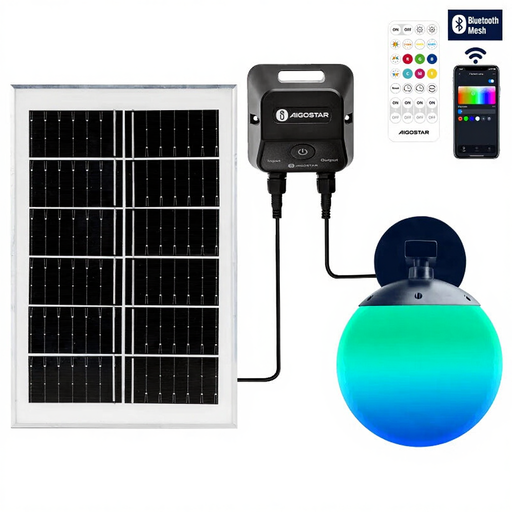
Why this product suits this profile: This solar wall light is designed for outdoor areas and, according to the product data, does not require fixed power cabling to the light. Bluetooth Mesh enables several devices to be connected.
The IP65 protection rating, 5 W solar panel and stated temperature range make the product’s usage limits easier to understand than a general outdoor advertising claim.
20 W, 200 lm, RGB plus 2700–6500 K, 4000 mAh battery and up to 24 hours of operating time according to the product description.
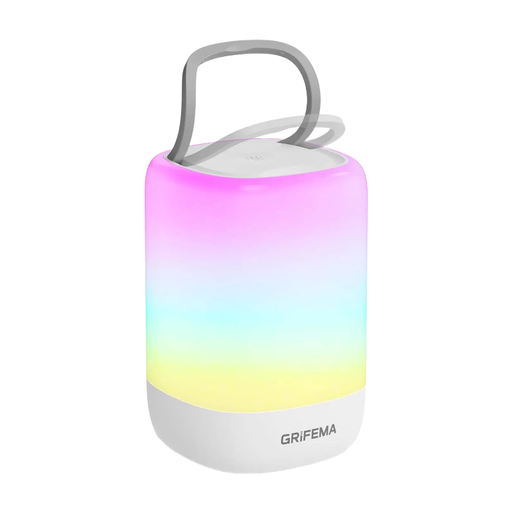
Why this product suits this profile: This portable LED night light requires no permanent installation and offers touch control, RGB colours, dimming and a USB-C connection for bedrooms, children’s rooms or camping.
The product data specifies the battery, charging method, timer and controls directly on the housing. This means no permanent app or Wi-Fi connection is required.
1500 mAh lithium-ion battery, up to 15 hours of stated battery life, seven RGB colours and a 30-minute timer.
We have put together a complete, regularly updated list of products that fully meet these strict selection criteria and the safety regulations applicable in the EU.
First, check whether your smartphone is connected to the required Wi-Fi band. Then install the appropriate app, switch on the lamp and pair the device according to the instructions. With Matter models, setup is often completed using a QR code and a compatible smart home hub. A gateway may be required for Bluetooth Mesh.
Lifespan depends on the LED module, operating time, heat dissipation and usage. Depending on the model, the product data may state figures ranging from 15,000 to 30,000 hours, for example. These are technical manufacturer specifications and do not guarantee an identical service life in every household. Frequent switching on and off, high ambient temperatures or an unsuitable enclosed fitting can alter the conditions.
Power consumption is stated in watts on the product data sheet. A 4.9 W lamp used for five hours a day would theoretically consume around 8.9 kWh per year. There may also be a small amount of standby consumption if the model remains permanently connected to Wi-Fi or a gateway. Wattage, daily operating time and standby consumption therefore all affect running costs.